Chemical cleaning is poisoning Chicago families.
While you scrub floors thinking you're protecting your kids, you're actually exposing them to the equivalent of smoking 20 cigarettes daily.
That's not my opinion.
That's what researchers at the University of Bergen found after studying 6,000+ participants for 20 years.
Chicago faces a perfect storm of indoor air quality disasters.
We have 400,000+ lead service lines—more than double any U.S. city.
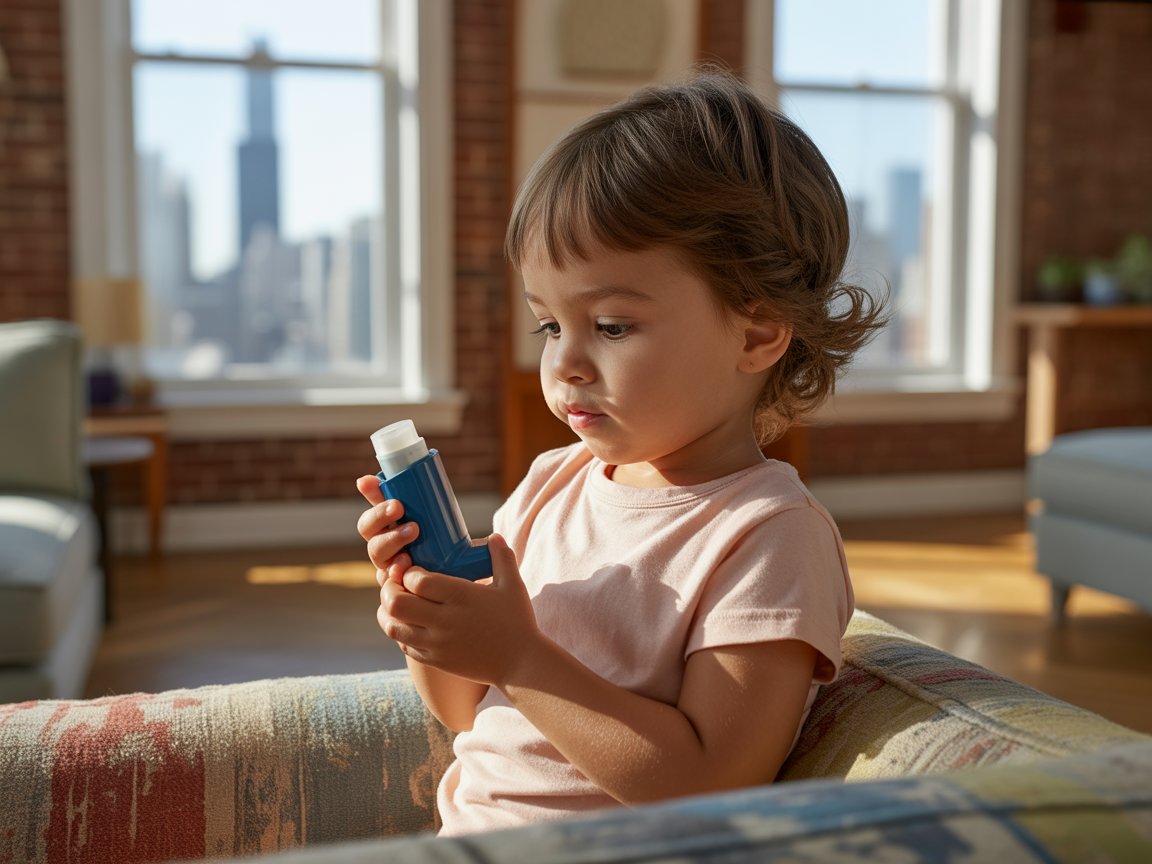
Our childhood asthma rate sits at 16% versus the 12% national average.
The Chicago Department of Transportation dumps 300,000 tons of road salt annually—and it all gets tracked into our homes.
Our water runs 130-150 ppm hard, creating soap scum that traps dirt instead of removing it.
And here's what keeps me up at night: indoor air is 2-5x more polluted than outdoor air—and 100x higher immediately after cleaning.
Many common household cleaners contain carcinogens, endocrine disruptors, and reproductive toxins.
This guide reveals how I've spent over 20 years perfecting chemical-free cleaning methods that achieve scientifically proven results.
Methods that protect babies crawling on floors.
Pets licking their paws.
And families breathing contaminated air 24/7 in homes now serving as offices, schools, and living spaces.
The Lincoln Park Wake-Up Call
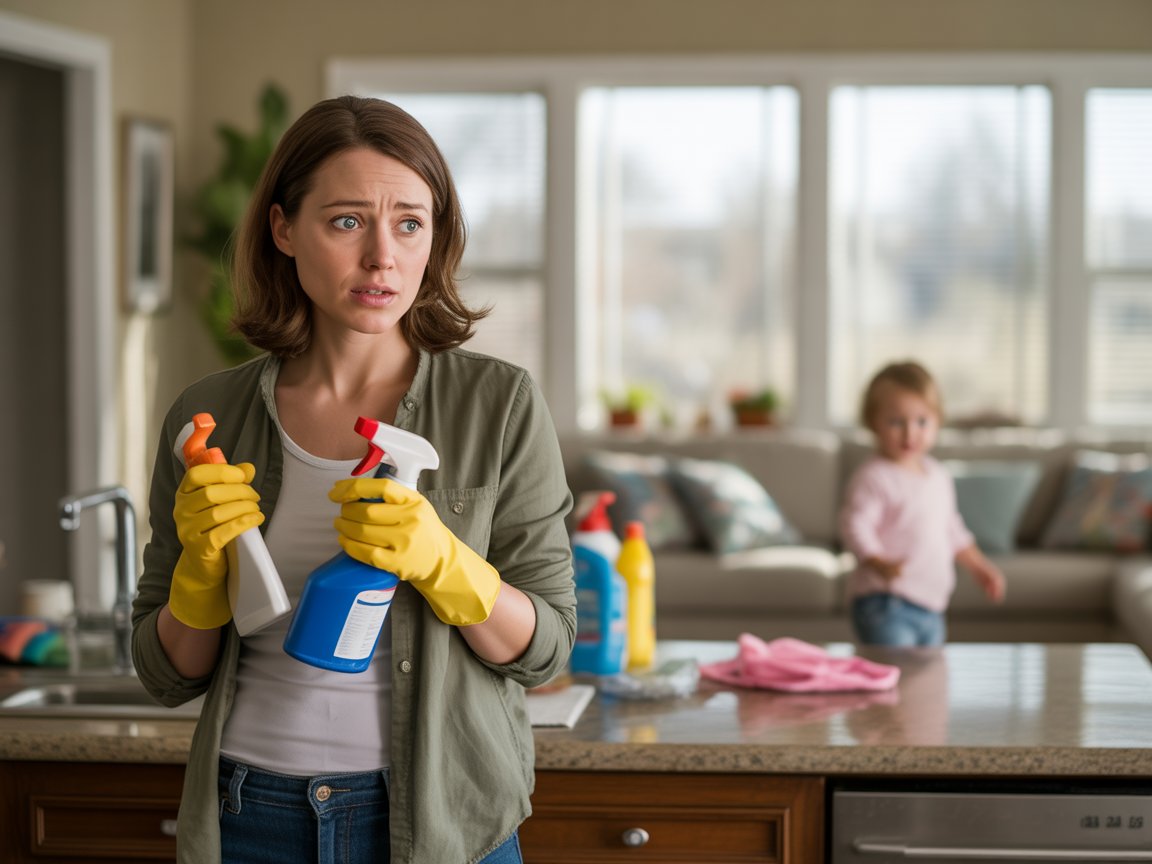
Three years ago, I walked into a Lincoln Park greystone where a mother had called in tears.
Her two-year-old daughter had developed severe respiratory issues.
The pediatrician couldn't find a cause.
She'd scrubbed every surface with "antibacterial" cleaners twice a week—convinced she was creating the cleanest possible environment.
When I tested her indoor air quality, VOC levels registered at 847 ppb.
Safe levels sit below 500 ppb.
Her floors, where her daughter spent eight hours daily, showed chemical residue readings off the charts.
The culprit wasn't dirt.
It was the cleaning products themselves.
Within two weeks of switching to our chemical-free protocols: DI water, steam vapor, and HEPA filtration, her daughter's symptoms improved dramatically.
Her air quality readings dropped to 127 ppb.
That family changed everything about how I approach cleaning in Chicago homes.
The Problem: Why Chemical Cleaning is Failing and Poisoning Chicago Families
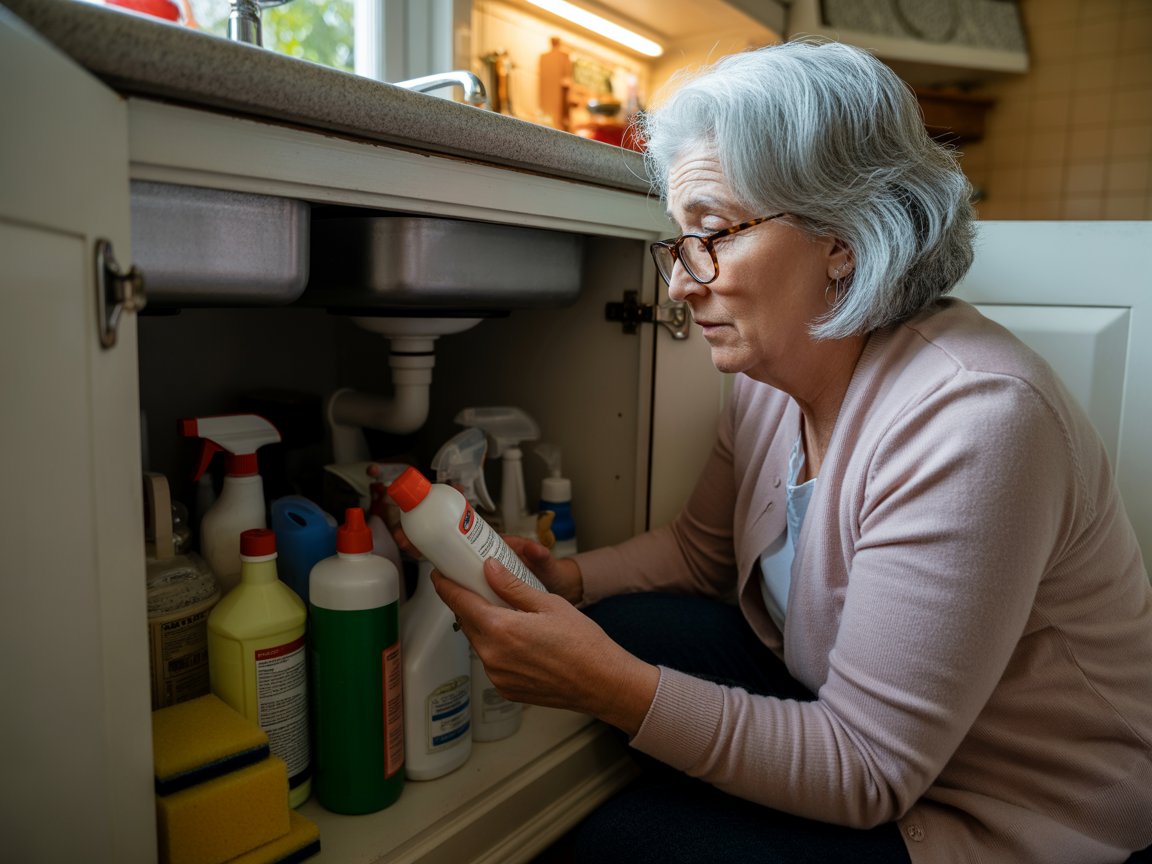
Short Answer: Chemical cleaning fails because it leaves toxic residues that accumulate over time, triggers the "re-soiling cycle" that makes surfaces dirtier faster, and exposes families to 6 billion pounds of cleaning chemicals annually. For Chicago families dealing with lead pipes, hard water, and 16% childhood asthma rates, chemical cleaners compound existing health risks rather than solving them.
The National Chemical Crisis
The scale of chemical cleaning damage extends far beyond what most families realize.
Cleaning & Maintenance Management reported in 2022 that Americans use 6 billion pounds of cleaning chemicals annually.
The average home contains 63 toxic cleaning products. But the most damning evidence comes from Norway.
The Bergen Study tracked over 6,000 participants for 20 years.
Women who cleaned regularly experienced lung function decline equivalent to smoking 20 cigarettes daily for the same period.
"When you think of inhaling small particles from cleaning agents that are meant for cleaning the floor and not your lungs, maybe it is not so surprising after all." — Dr. Øistein Svanes, University of Bergen
The study also showed cleaners have 40% higher risk of developing asthma than others.
Professor Cecilie Svanes, supervisor of the study, identified cleaning sprays as the main problem.
How Chemicals Enter Your Body
Chemical exposure happens through three pathways and your children face the highest risk from all three.
Ingestion affects children most severely.
Hand-to-mouth behavior means toddlers directly ingest chemical residues from every surface they touch.
Inhalation brings VOCs and aerosolized particles into developing lungs.
Heavier vapors settle at floor level—exactly where babies spend their days.
Absorption happens because skin is porous.
Transdermal absorption occurs whenever your family touches chemically-cleaned surfaces.
"The floor-level crisis affects children most severely. From 0-2 feet above ground, where babies live. VOC concentrations are highest, and developing lungs are most vulnerable to damage." — Author: Wells Ye
Who Chemical Cleaning Fails The Most
Parents with Children:
Sara, I know you're juggling career demands while trying to spend quality time with your kids.
You don't have time for half-finished cleaning tasks.
But here's what chemical cleaning does to your family:
80% of children and young adults with asthma are sensitive to dust mites, according to the NIEHS.
Heavier VOC vapors settle at floor level—exactly where your babies crawl.
Hand-to-mouth behavior means direct chemical ingestion with every toy, every floor touch, every exploration.
Work-from-home families breathe the same contaminated air 8+ hours daily.
And here's what I see constantly: kids interrupt cleaning, leaving half-finished tasks that promote mold growth in Chicago's humid basements.
Seniors and Traditionists:
Betty, I respect your commitment to a clean home—that discipline has served your family well for decades.
But physical limitations make chemical cleaning increasingly dangerous for you.
Bungalow basements require navigating stairs that become harder each year.
Two-flat stairways compound the challenge.
Meanwhile, aging lungs become more vulnerable to both chemicals AND allergens.
And reduced sense of smell means you can't detect dangerous fumes the way you once could.
Empty Nesters:
Jane, you've maintained your home beautifully for years.
But here's what decades of chemical cleaning create:
Buildup in mattresses, carpets, and radiators that routine cleaning can't address.
Your home needs specialized restoration, not more chemicals layered on top of existing residue.
Young Professionals and Students:
Megan, that Lakeview apartment you moved into last month?
The previous tenants' pet dander persists 4-7 months after they leave.
Work-from-home means you never escape indoor air pollution.
And small apartments concentrate VOCs to dangerous levels.
For university students near DePaul, Loyola, and UChicago: older buildings often contain lead paint and asbestos.
Rental mattresses rarely receive proper cleaning—and 45% of mattresses exceed dust mite thresholds that trigger allergic sensitization.
How Chemical Cleaning Failing Pet Owners—Especially Cat and Dog Families

This section could save your cat's life.
Cats lack the glucuronidation enzyme that processes phenols, according to the NIH.
Floor cleaners containing pine, tea tree, eucalyptus, or citrus are DEADLY to cats.
Here's how exposure happens: cats walk on cleaned floors, absorb chemicals through paws, then lick paws—creating dozens of daily micro-exposures.
Low-level repeated exposure accumulates to serious liver toxicity.
Indoor cats in Chicago apartments face concentrated exposure with no outdoor dilution.
Symptoms include: liver stress, GI upset (vomiting, diarrhea), neurological signs (tremors, weakness), and liver failure in severe cases.
Dogs have glucuronidation enzymes, so they tolerate phenols better than cats.
But dogs remain vulnerable to chronic chemical exposure from floor cleaners.
Paw absorption plus licking behavior creates daily exposure.
Small dogs face higher risk—lower body weight means higher concentration per pound.
Breeds with sensitive skin (Bulldogs, Retrievers, Terriers) are especially vulnerable.
Chemical residue on floors where dogs lie and sleep causes prolonged transdermal absorption.
"I've lost count of how many Chicago cat owners have called me after their vet diagnosed unexplained liver issues. When I ask about their floor cleaners, the answer is almost always pine or citrus-based products." — Author: Wells Ye
Pets have unique cleaning needs that go beyond choosing chemical-free products. Learn how to manage dander, odors, floor residue, pet beds, and indoor air quality in our pet-safe house cleaning guide.
Chicago's Unique Crisis: Why Chemical Cleaning Makes Everything Worse Here

Short Answer: Chicago's combination of 400,000+ lead service lines, 300,000 tons of annual road salt, 130-150 ppm hard water, and unique housing stock creates cleaning challenges that chemical products actually worsen. Chemical residues trap lead dust, react with hard water minerals to form soap scum, and provide carbon sources for mold growth—compounding rather than solving our city's indoor air quality crisis.
The Winter Residue Crisis
Chicago's road salt situation is unlike anywhere else in America.
The city applies approximately 300,000 tons annually.
Calcium chloride in road salt is hygroscopic, it absorbs moisture and keeps floors damp year-round.
This sustained dampness creates perfect conditions for dust mites and mold growth.
Salt creates an alkaline crust that destroys hardwood floors—a particular concern in our historic bungalows and greystones.
Shared vestibules in two-flats and greystones collect salt from multiple families for five months straight.
Why do chemical cleaners fail against salt?
Surfactants can't neutralize alkaline compounds.
They just spread salt residue across larger surface areas.
The chemical-free solution works because steam breaks salt bonds while DI water rinses without leaving additional residue.
The Stack Effect
Chicago's building physics create unique air quality challenges.
Cold air infiltrates lower levels and rises through buildings.
Lower-floor units operate under negative pressure, constantly pulling in street dust, vehicle exhaust, and lead particles.
Upper-floor residents in high-rises find "city grime" even on the 40th floor.
Modern high-rises are tightly sealed—which traps chemical off-gassing with nowhere for VOCs to escape.
"The stack effect explains why Chicago families can't out-clean their air quality problems with chemicals. The building itself works against you." — Author: Wells Ye
The Hard Water Chemistry Problem
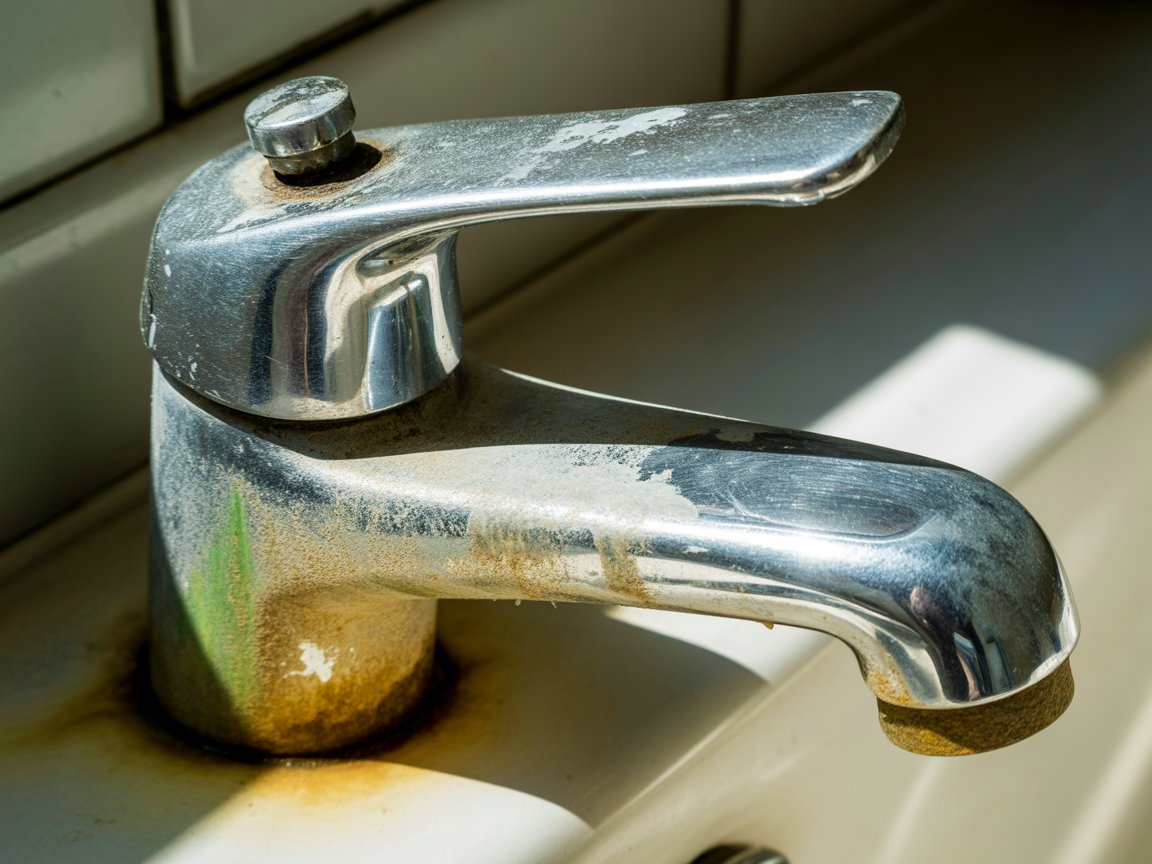
Chicago water runs 130-150 ppm hardness (7.6-8.8 grains per gallon), according to the CDWM.
Here's the chemical equation that explains why your cleaning efforts fail:
2C₁₇H₃₅COO⁻ + Ca²⁺ → (C₁₇H₃₅COO)₂Ca
Translation: Calcium in hard water plus soap creates insoluble soap scum.
This soap scum traps dirt and bacteria instead of removing them.
It provides a porous matrix for mold growth.
It creates sticky film on floors that attracts more dirt.
DI water solves this because it has zero minerals, leaves zero residue, and prevents soap scum formation entirely.
The Lead Pipe Emergency
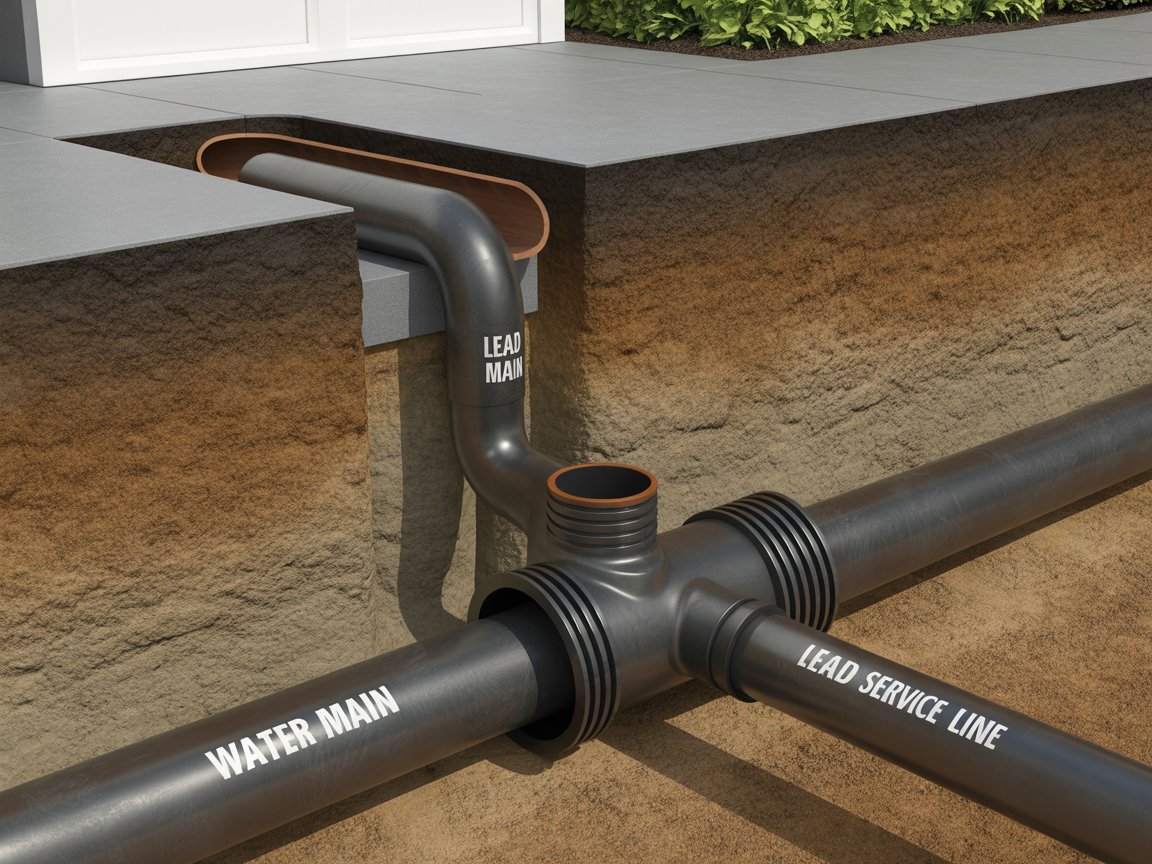
Chicago has 387,095-412,000 lead service lines—more than double second-place Cleveland's 185,000-235,000.
Three-quarters of Chicago's service lines contain lead.
A Johns Hopkins Study found 68% of Chicago children under 6 have been exposed to lead-contaminated water.
Geographic concentration hits West Englewood, Lawndale, and Humboldt Park hardest—with 75%+ prevalence.
Why does chemical cleaning make lead exposure WORSE?
Chemical cleaners can't remove lead particles—they just push them around.
Surfactant residue actually TRAPS lead dust on floors where babies crawl.
Chemical cleaning adds MORE toxins on top of existing lead exposure.
The chemical-free solution captures 99.97% of 0.3+ micron lead particles with HEPA filtration, removes residue with DI water, and steam doesn't aerosolize lead dust.
"Chicago's lead pipe situation makes chemical-free cleaning a public health necessity, not a luxury choice. Every chemical cleaner leaves residue that traps lead dust exactly where children contact it most." — Author: Wells Ye
Chicago Housing Stock Challenges
Bungalows (80,000+ = 1/3 of Single-Family Housing)
Cast-iron radiators trap decades of dust and volatilize chemical residue when heated.
Art glass windows suffer permanent damage from ammonia cleaners—the lead caming breaks down over time.
Chemical-free solution: Steam radiators without volatilization, DI water on art glass without ammonia damage.
Greystones and Two-Flats
Indiana limestone facades are porous and chemically sensitive.
Shared vestibules collect salt from multiple residents for five months.
Chemical-free solution: Steam for shared areas, DI water safe for limestone.
High-Rise Condos
Fan coil units breed algae in condensate pans.
Sealed buildings trap chemical off-gassing with nowhere for VOCs to escape.
Chemical-free solution: UV-C for fan coil unit disinfection, HEPA for trapped air, zero VOC off-gassing.
Garden Units
Below-grade units face constant humidity battles.
Chemical cleaners combined with humidity create prolonged VOC concentration.
Chemical-free solution: Dehumidification, steam kills mold, DI water prevents residue that feeds mold growth.
Neighborhood Pollution Profiles
Inland Areas (West Loop, Pilsen, Fuller Park—Within 500m of Expressways)
A Northwestern University study found residents near expressways experience double the nitrogen dioxide and PM2.5 exposure.
Urban dust contains tire rubber, brake dust, diesel soot, and heavy metals.
Petroleum-based grime clings to chemical residue, attracting MORE pollution.
Chemical-free solution: HEPA captures heavy metals, steam breaks petroleum bonds, zero residue means nothing to attract new pollutants.
Lakefront Areas (Edgewater, Lakeview, Rogers Park)
Higher humidity creates biological aerosol challenges.
Salt spray from Lake Michigan adds mineral deposits.
Mold FEEDS on chemical residues—the carbon provides a food source for regrowth.
Chemical-free solution: Enzymatic cleaners for biological matter, steam kills mold without feeding it.
The Chemical Cleaning Crisis: Three Deadly Mechanisms
Short Answer: Chemical cleaning fails through three mechanisms: the re-soiling cycle (surfactant residue attracts new dirt within hours), cancer risk from carcinogenic ingredients with 20-year cumulative lung damage equivalent to daily smoking, and VOC off-gassing that spikes indoor pollution to 100x normal levels on cleaning day, remaining elevated for days while Chicago's closed winter windows trap exposure indoors.
1. The Re-Soiling Mechanism (Why Floors Get Dirtier After Cleaning)
Here's why your floors look dirty again within days of cleaning.
Surfactants are designed to be "sticky"—that's how they grab soil.
Consumer cleaners don't rinse completely.
A microscopic film remains chemically active on every surface.
This creates a "magnet effect" that attracts NEW dust, pollen, and grime.
Your floors actually dirty FASTER after chemical cleaning.
Detergent residues become a carbon source for bacteria, feeding the organisms you tried to eliminate.
Chicago compounds this problem:
Road salt sticks to surfactant residue.
Hard water minerals react with surfactants to form soap scum.
The stack effect pulls NEW pollutants daily.
Residue TRAPS lead dust particles exactly where babies crawl.
Quote 6: "The re-soiling mechanism explains why many Chicago families feel like they're cleaning constantly without making progress. You're not imagining it, chemical residue is literally making your home dirtier." — Author: Wells Ye
For a deeper understanding of this phenomenon, read my detailed breakdown: Why Your Floors Are Still Dirty After Cleaning.
2. The Cancer Risk
Many common household cleaners cause cancer.
Products contain carcinogens in conventional formulations.
Endocrine disruptors affect hormone function.
Reproductive toxins impact fertility and fetal development.
VOCs are linked to elevated cancer risk over time.
The Bergen Study's conclusion: 20 years of regular cleaning equals smoking 20 cigarettes daily in lung damage.
3. The VOC Off-Gassing Timeline
Here's what happens to your indoor air quality each time you clean with chemicals:
Day 0 (cleaning day): Indoor pollution spikes to 100x normal levels, according to EPA research.
Days 1-3: Elevated VOCs continue affecting your family.
Days 4-7: Gradual decline toward baseline.
If you clean weekly, your family experiences CONSTANT elevated exposure.
Chicago winters make this worse: closed windows mean VOCs stay trapped indoors.
Radiators volatilize chemical residue when they heat—doubling exposure through both breathing AND skin absorption.
The consequences are measurable:
Families experience respiratory irritation, worsened allergies, and increased asthma attacks.
Children show reduced cognitive function, grades suffer when air quality drops.
Sleep quality declines, affecting everyone's health and productivity.
What Is the Difference Between Green Cleaning and Chemical-Free Cleaning
Short Answer: Green cleaning uses eco-friendly products with low-toxicity synthetic chemicals that still leave residue on surfaces. Chemical-free cleaning uses only physics-based methods—DI water, steam, HEPA filtration—that leave zero residue. For Chicago families dealing with lead dust and hard water, this distinction matters: green product residue still traps contaminants exactly where your children contact them.
Many Chicago families assume "green" means chemical-free.
It doesn't.
Green cleaning products certified by Green Seal or the EPA contain plant-based surfactants designed to be biodegradable and less toxic.
But they're still chemicals.
They still leave residue.
That residue still reacts with Chicago's 130-150 ppm hard water to form soap scum.
It still traps lead dust on your floors.
It still provides carbon sources for mold growth.
Chemical-free cleaning eliminates this problem entirely by using physics instead of chemistry: heat breaks bonds, pure water dissolves, filtration captures.
The result: surfaces that stay cleaner longer because nothing remains to attract new contaminants.
The Solution: True Chemical-Free Cleaning (4 Technologies Only)
Short Answer: True chemical-free cleaning uses only four physics-based technologies: Deionized (DI) water that attracts and dissolves dirt without residue, steam vapor achieving 86.7% allergen reduction, HEPA filtration capturing 99.97% of 0.3+ micron particles including lead dust, and Hypochlorous Acid (HOCl) as a targeted disinfectant used only when evidence-based triggers require it. These methods rely on physics rather than chemical reactions, leaving zero toxic residue.
What "Chemical-Free" Really Means
Let me be clear about what IS NOT chemical-free cleaning:
Vinegar, baking soda, and castile soap are still chemical-based cleaning.
"Green" products with plant-based surfactants still leave residue.
"Natural" essential oils (especially citrus and tea tree) are DEADLY for cats.
TRUE chemical-free cleaning is physics-based:
- Deionized (DI) Water
- Steam Vapor
- HEPA Filtration
- Hypochlorous Acid (HOCl)
Why does physics work better than chemistry?
Chemical cleaners bind to soil—residue remains.
Physics-based methods work differently: heat breaks bonds, water dissolves, filtration captures, oxidation disinfects.
The result: ZERO RESIDUE.
For a complete comparison, see: The Difference Between Green Cleaning and Chemical-Free Cleaning.
Technology 1: Deionized (DI) Water—The "Hungry" Cleaner
DI water is water in its purest form, completely free of minerals.
Its unbalanced chemistry seeks equilibrium—making it actively "hungry" for dirt and microorganisms.
DI water attracts and dissolves soil without leaving anything behind.
Why is DI water CRITICAL for Chicago specifically?
Our 130-150 ppm hard water ADDS minerals to surfaces.
DI water REMOVES minerals.
It leaves ZERO residue.
It breaks the re-soiling cycle permanently.
When combined with microfiber cloths, DI water achieves 99% bacteria reduction (versus 33% with cotton cloths).
The only residue: water that evaporates cleanly.
Surfaces stay cleaner longer.
For Babies and Toddlers: Zero toxic residue where babies crawl. No chemical ingestion from hand-to-mouth behavior. Surfaces are safe immediately after cleaning.
For Pets: Zero phenols, zero essential oils, zero surfactant residue. Safe for cats to walk on. Safe for dogs to lie on.
Technology 2: Steam Vapor—86.7% Allergen Reduction
Steam cleaning heats water above boiling (212°F) to 375°F.
The heat rehydrates dirt and breaks molecular bonds.
Soil wipes away easily without chemical intervention.
The effectiveness is scientifically proven.
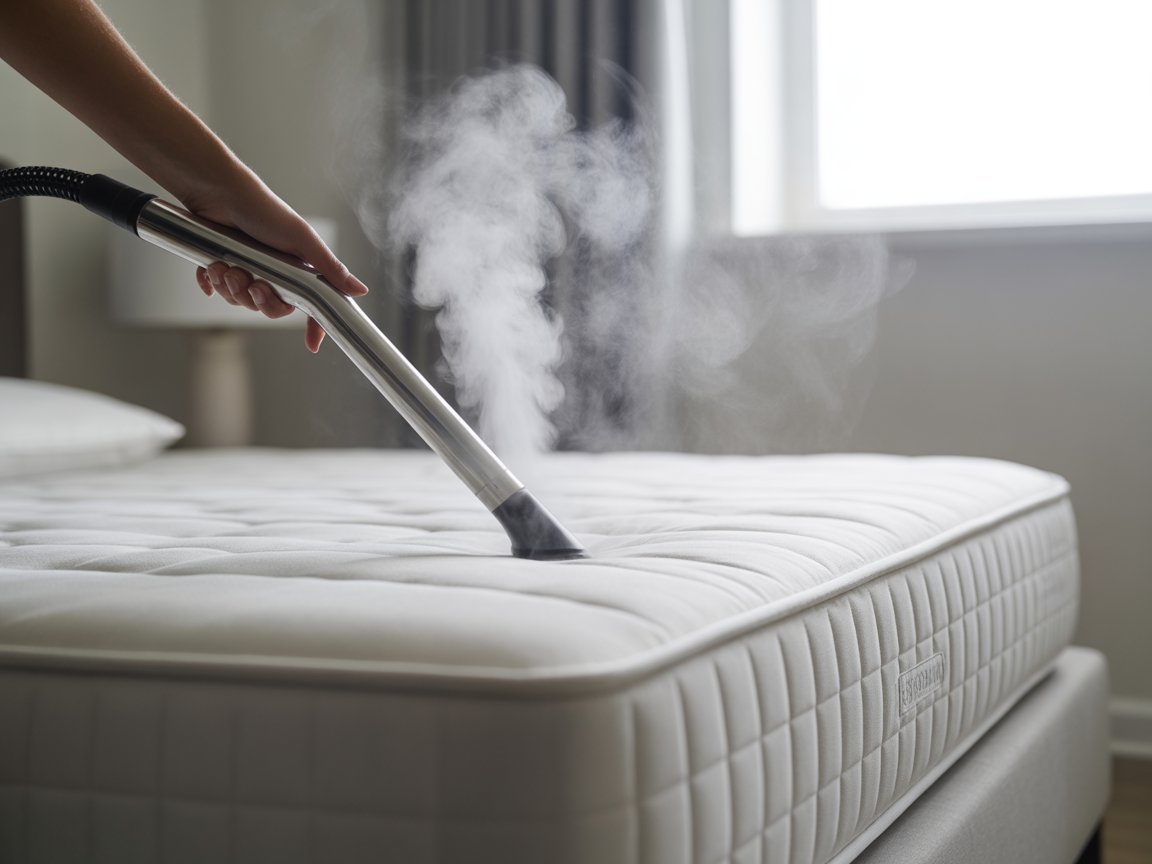
A study published in Clinical & Experimental Allergy found steam cleaning achieves 86.7% allergen reduction.
Steam kills 100,000+ dust mites per mattress instantly.
It provides complete sterilization with zero residues.
"Steam cleaning has considerable potential as a highly effective and efficient method of killing dust mites and reducing concentrations of Der p 1 [allergen] in domestic premises." — Clinical & Experimental Allergy Study
Steam cleaning works best for:
- Mattresses
- Chicago radiators (decades of trapped dust)
- Mold in humid basements and garden units
- Salt residue on entryway floors
For more on this approach, read: Steam Cleaning in Chicago: The #1 Spring Cleaning Trend for 2026.
"When I steam a mattress in a Chicago home, I'm not just cleaning. I'm eliminating a hundred thousand organisms that trigger asthma in 80% of sensitive children. No chemical can match that." — Author: Wells Ye
Technology 3: HEPA Filtration—99.97% Particle Capture
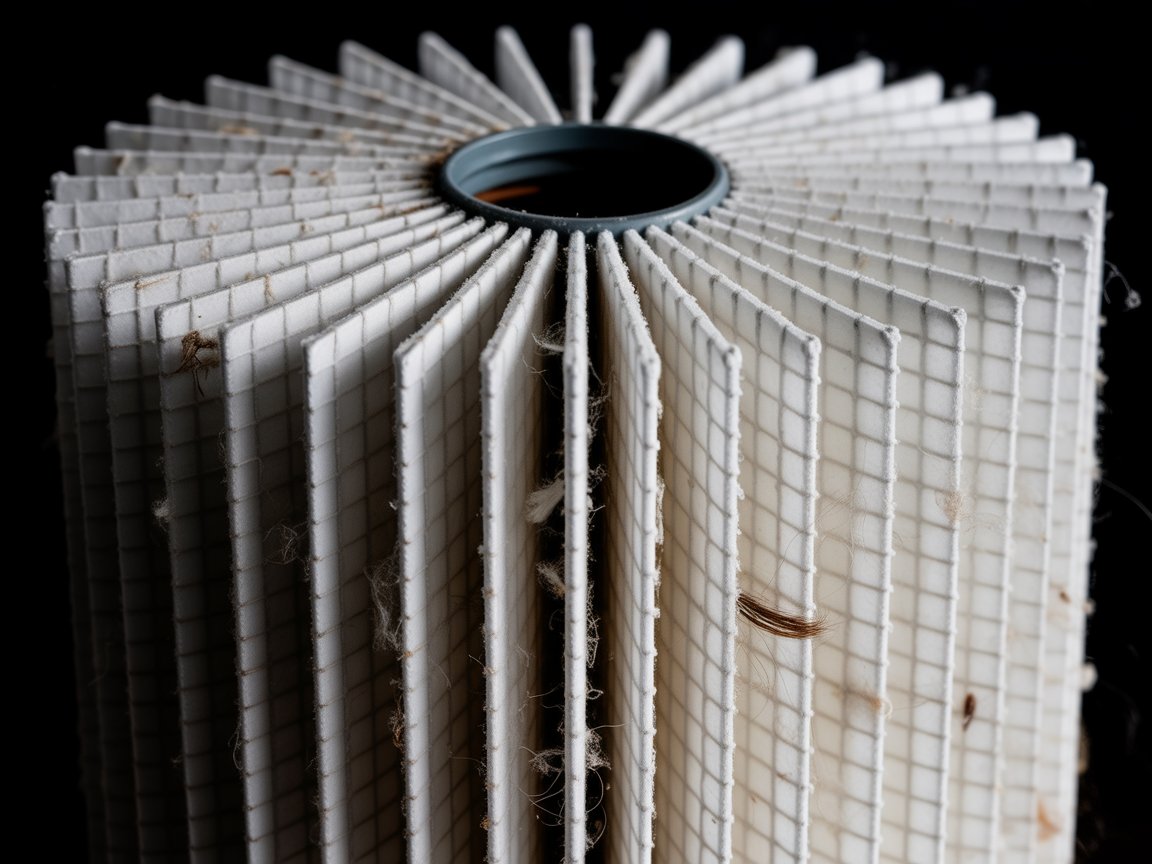
HEPA filtration captures 99.97% of 0.3+ micron particles, according to EPA standards.
"True HEPA" or "Sealed HEPA" means zero air leakage—particles stay captured.
Why do regular vacuums make things WORSE?
- They capture large particles.
- They BLOW fine particles back into the air.
- They redistribute allergens at breathing level.
- They miss: lead dust, pollen, pet dander, and mold spores.
HEPA is essential for Chicago because it captures:
- Lead dust (from 400,000 service lines)
- Road salt micro-particles
- Traffic pollution (tire rubber, brake dust, diesel soot)
- 8-month pollen season allergens
Microfiber cloths provide complementary benefits: fibers 100x finer than human hair with wedge-hook-loop shapes that trap dirt mechanically, achieving 99% bacteria reduction.
Technology 4: Hypochlorous Acid (HOCl)—Nature's Disinfectant
HOCl is the SAME molecule your white blood cells produce to fight infection.
It's 80-100x more effective than bleach, according to EPA data.
It kills 99.9% of pathogens.
And it breaks down to nothing but salt and water—zero toxicity.
CRITICAL: HOCl is a DISINFECTANT, not a cleaner.
The protocol matters:
- CLEAN FIRST (DI water/steam removes soil)
- DISINFECT LAST (HOCl spray and leave—no rinse needed)
- Use ONLY with evidence-based triggers
When to use HOCl:
- Vomit, diarrhea, or blood cleanup
- Raw meat juice contact
- Confirmed infectious disease in household
- Immunocompromised family member
Why most families over-disinfect:
Daily bleach or quaternary ammonium compounds INCREASE VOC exposure.
They leave toxic residue.
They provide NO proportionate health benefit for healthy households.
They worsen the allergies you're trying to prevent.
The Rule: Clean daily (DI water/steam). Disinfect rarely (HOCl only when needed).
Can Chemical-Free Cleaning Achieve the Same Quality as Traditional Methods
Short Answer: Chemical-free cleaning doesn't just match traditional methods—it surpasses them. Chemical cleaning creates visual cleanliness while leaving microscopic residue. Chemical-free cleaning achieves hygienic cleanliness: 86.7% allergen reduction with steam, 99.97% particle capture with HEPA, and 99% bacteria reduction with DI water and microfiber. ATP testing proves it—our results consistently show <80 RLU readings.
Here's what most people don't understand about cleaning quality.
Chemical cleaners create a deception of tidiness.
Surfaces look clean but remain micro-contaminated with residue that traps bacteria, lead dust, and allergens.
Chemical-free cleaning works at the microscopic level.
Steam vapor doesn't mask dirt—it rehydrates contaminants and sterilizes surfaces at temperatures above 212°F.
DI water doesn't leave residue behind—it attracts and dissolves impurities completely.
HEPA filtration doesn't redistribute particles—it captures 99.97% of 0.3+ micron contaminants permanently.
The difference is hygienic cleaning versus visual cleaning.
One protects your family's health.
The other just looks good until you test it.
Fresh Tech Maid's 6-8 Step Methodology (Chemical-Free Adapted)
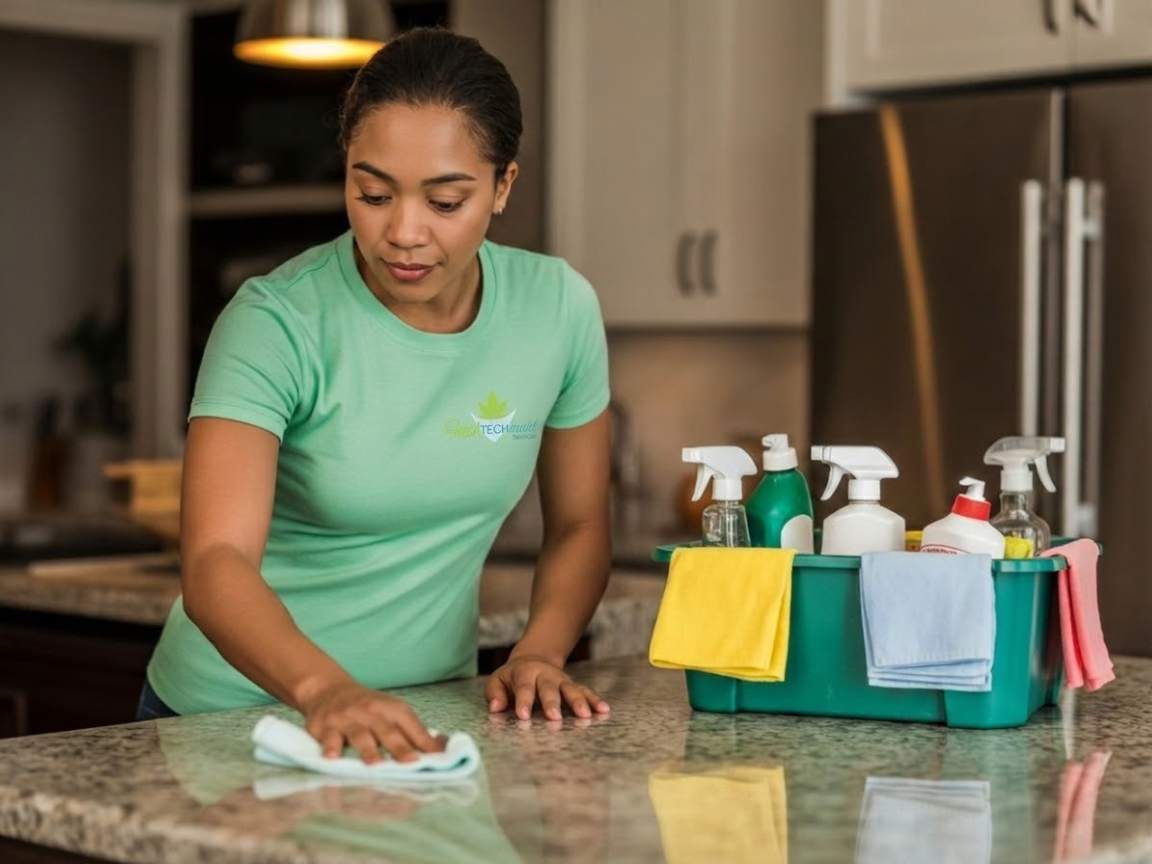
Short Answer: The Fresh Tech Maid methodology follows a systematic approach: always clean before disinfecting, work top-to-bottom, and clean floors LAST after debris falls from higher surfaces. Kitchens and bathrooms require 8 steps including spray/soak and wet trip phases; other rooms need 6 steps. Disinfection with HOCl happens only when evidence-based triggers exist, not as routine practice.
Upon Arrival Protocol
Our technicians follow these steps before entering your home:
- Disinfect indoor shoes (HOCl spray)
- Put on PPE (personal protective equipment)
For Kitchen & Bathroom (8 Steps)
Step 1: Customize apron/bucket (beside sink or tub)
Step 2: Remove garbage and rugs
Step 3: Spray and soak hard areas
- Kitchen: sink, stove, counters
- Bathroom: toilets, shower, sinks
- Chemical-free method: Steam OR DI water (NOT chemical sprays)
Step 4: High-Low Dusting (top to bottom—HEPA vacuum or microfiber)
Step 5: Dry trip (dry microfiber cloths)
Step 6: Wet trip (DI water + microfiber OR steam vapor—removes soil without residue)
Step 7: Disinfect high-touch areas (AFTER cleaning, ONLY when needed—HOCl spray/leave)
Step 8: Dispose PPE properly
For Other Rooms (6 Steps)
Step 1: Customize apron/bucket (outside room)
Step 2: Remove garbage and rugs
Step 3: High-Low Dusting (HEPA vacuum or microfiber)
Step 4: Dry trip (dry microfiber)
Step 5: Disinfect high-touch areas (ONLY when needed—HOCl)
Step 6: Dispose PPE
After All Rooms Done on Floor
FLOORS CLEANED LAST (vacuum with True HEPA, mop with DI water OR steam)
For Chicago entryways specifically: Steam to break salt bonds, DI water rinse
Dispose PPE after completing floor
Key Principle: CLEAN (remove soil) → DISINFECT (only when needed) → FLOORS LAST
For the complete kitchen protocol with step-by-step guidance, see: Kitchen Deep Clean: My Step-by-Step Complete Process for a Spotless Kitchen.
The Toolkit: What You Need Before Starting
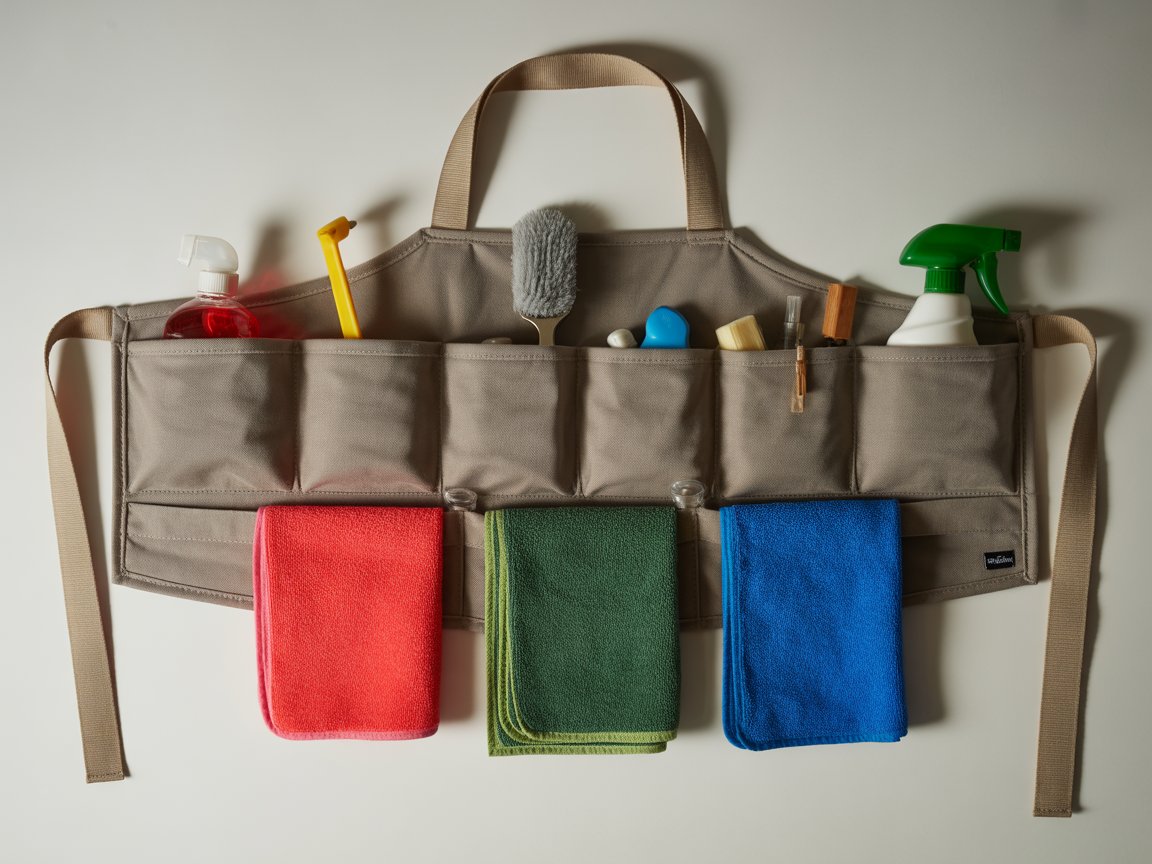
Short Answer: A complete chemical-free cleaning kit costs under $300 and includes a DI water system, color-coded microfiber cloths, True HEPA vacuum, high-quality entry mats, cleaning apron, and agitation tools. Optional upgrades ($150-500 each) include a steam cleaner for 86.7% allergen removal, HOCl generator for safe disinfection, HEPA air purifier, dehumidifier for basement moisture control, and air quality monitor to verify results.
Essential Core Kits
Upgrade Investments (Optional)
Air-Purifying Plants
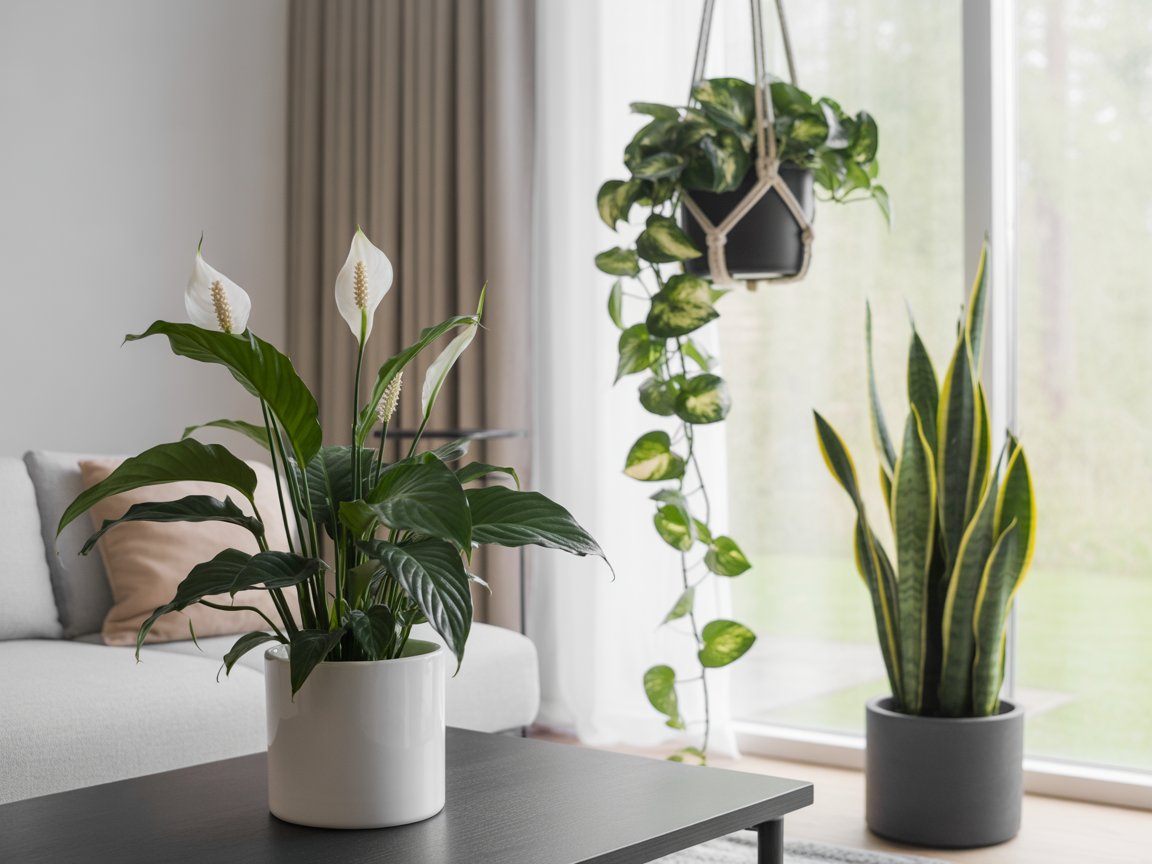
Natural air filtration provides an excellent complement to your chemical-free toolkit.
Peace lilies and English ivy: Remove VOCs, benzene, and formaldehyde
Spider plants and pothos: Easy care, remove carbon monoxide
Snake plants: Release oxygen at night—ideal for bedrooms
Ferns: High humidity tolerance—perfect for bathrooms
Where to Buy: Local Chicago nurseries (Gethsemane Garden Center, Ted's Greenhouse, City Escape Garden Center)
Note: Research pet safety before purchasing—some plants are toxic to cats and dogs.
For more alternatives to chemical products, see: Chemical-Free Alternatives to Common Household Products: The Differences and the Impact.
Room-by-Room Chemical-Free Protocols
Short Answer: Each room requires specific protocols based on contamination sources and family safety priorities. Entryways stop 70% of dirt at the door and require dry removal before wet cleaning to protect hardwood. Kitchens need evidence-based disinfection only after raw meat contact. Bedrooms demand mattress steaming for dust mite elimination. Bathrooms require steam for mold without feeding regrowth through chemical residue.
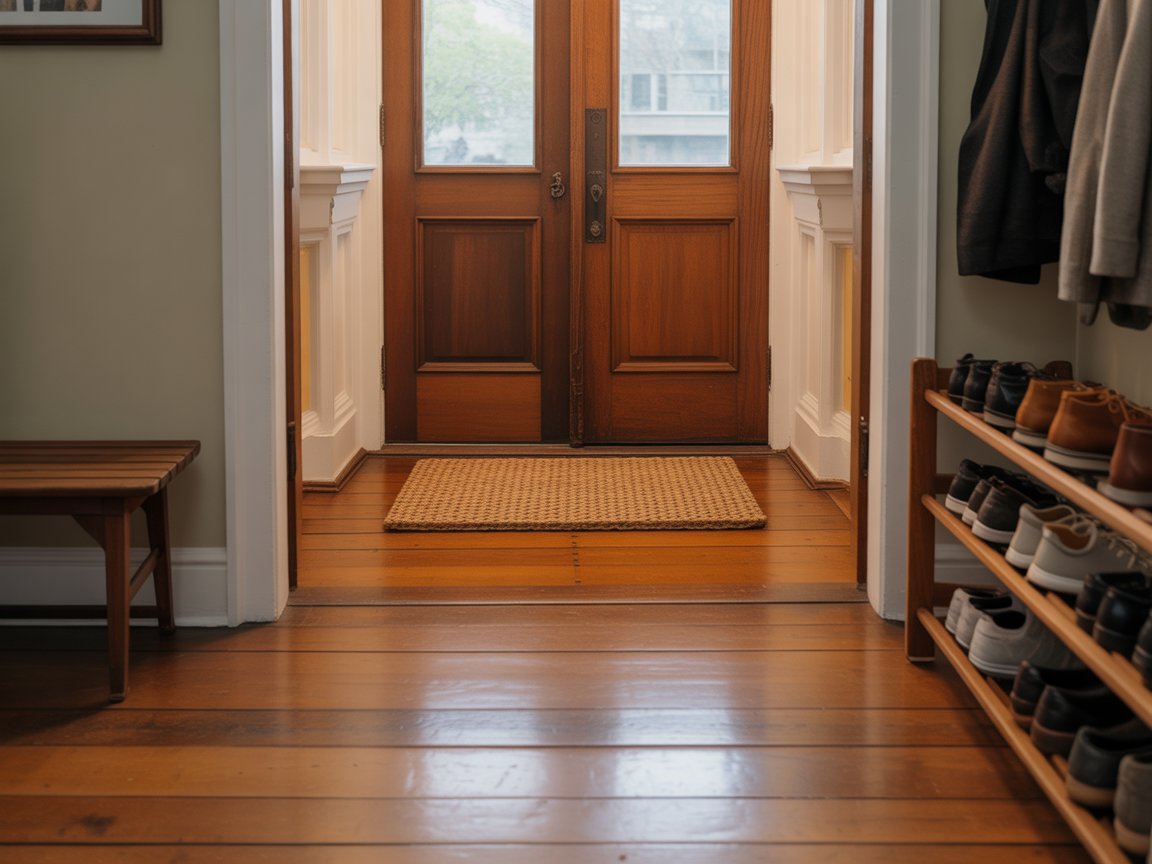
Entryway—Chicago's #1 ROI Zone (Stops 70% of Dirt at Door)
The entryway delivers the highest return on cleaning investment because it stops 70% of dirt before it spreads throughout your home.
The Salt Neutralization Protocol
Prep: Remove shoes to outdoor area, shake mats outside
CRITICAL—Dry removal FIRST: HEPA vacuum
- NEVER wet salt first—it dissolves into brine that soaks into wood grain, causing permanent damage
Steam clean: Heat breaks alkaline salt bonds without chemicals
DI water rinse: Removes all residue, prevents calcium spots
Immediate towel dry: Prevents moisture damage
Special Instructions for Families with Babies/Toddlers:
- This is your CRITICAL ZONE.
- 70% of dirt stops at the door—this is where lead dust and road salt enter your home.
- HEPA vacuum BEFORE mopping (never wet first—traps lead dust babies will contact).
- Steam breaks salt bonds without chemicals (safe for crawling babies).
- DI water final rinse leaves zero chemical residue for baby hands and knees.
- NEVER use chemical cleaners in the entryway—babies crawl here within minutes of someone entering.
- Remove shoes immediately—keeps 80% of contaminants out of baby's crawling zones.
Special Instructions for Pet Owners:
- Pets track through daily, picking up lead dust and salt on paws.
- HEPA vacuum BEFORE mopping (captures lead particles cats and dogs track in).
- Steam breaks salt bonds without phenolic chemicals (SAFE for both cats and dogs).
- NEVER use phenolic salt melt products near the entryway—DEADLY for cats who walk through.
DIY: Mat cleaning, light salt removal, weekly vacuuming
Call Pro: Heavy salt crust embedded in hardwood, vestibule grout damaged, shared vestibule coordination
Living Room—Where Work-From-Home Families Breathe 8+ Hours Daily
Follow FTM 6-Step Protocol for Other Rooms
- Apron/bucket
- Remove garbage/rugs
- High-Low Dusting (HEPA vacuum upholstery, behind/under furniture, radiators, window sills)
- Dry trip
- Disinfect touch points (ONLY when needed)
- Dispose PPE
Deep Clean Add-Ons
- Steam upholstery (86.7% allergen reduction, kills dust mites)
- Carpet: HEPA vacuum 2-3 passes, professional steam extraction (NOT chemical solvents)
- DI water on all hard surfaces
- Run HEPA air purifier during and after cleaning
For Families with Babies/Toddlers
- Focus on floor-level surfaces where babies spend 8+ hours daily.
- Steam all fabric surfaces babies contact: play mats, blankets, upholstered furniture.
- HEPA vacuum under furniture weekly—dust accumulates where babies reach.
For Pet Owners
- Steam pet beds and favorite resting spots weekly.
- HEPA vacuum upholstery where pets sleep—dander accumulates in fabric.
- Consider pet-safe air purifier running continuously.
DIY: Weekly HEPA vacuuming, surface wipes
Call Pro: Professional carpet steam extraction, heavily soiled upholstery, radiator internal cleaning
Kitchen—The Over-Disinfection Problem Zone
Follow FTM 8-Step Protocol
- Apron/bucket beside sink
- Remove garbage/rugs
- Spray/soak (steam OR DI water—NOT chemicals)
- High-Low Dusting (HEPA or microfiber)
- Dry trip
- Wet trip (DI water + microfiber OR steam)
- Disinfect (AFTER cleaning, evidence-based triggers ONLY—HOCl spray/leave)
- Dispose PPE
Hard Water Deposits (Faucets/Sinks)
- Steam dissolves calcium deposits (heat plus water).
- DI water final rinse prevents new spots from forming.
- Baking soda paste provides gentle abrasive action (safe for stainless and porcelain; NOT for marble or granite).
When to Disinfect vs. Just Clean
- Healthy week: DI water + microfiber daily
- Raw meat prep: Hot water + soap, THEN HOCl on prep surface only
- Illness in household: HOCl on touch points only (NOT whole-kitchen fogging)
For Families with Babies/Toddlers
- High chair trays need DI water cleaning after every meal—no chemical residue.
- Floor under high chair requires daily cleaning—babies touch everything.
- Never use chemical sprays near baby food prep areas.
For Pet Owners
- Clean pet food and water bowls with DI water daily.
- Floor around feeding station needs daily attention—spills attract pests.
- Never use phenolic cleaners near pet food areas.
DIY: Daily counter wipe, sink cleaning, floor mopping
Call Pro: Years of grease buildup, hard water scaling on appliance internals, grout restoration
Bathroom—Mold Paradise in Chicago's Humid Climate
Follow FTM 8-Step Protocol
- Apron/bucket beside tub
- Remove garbage/rugs
- Spray/soak (steam—kills mold without chemicals)
- High-Low Dusting
- Dry trip
- Wet trip (DI water OR steam)
- Disinfect (evidence-based triggers: vomit/diarrhea, illness, immunocompromised—HOCl spray/leave)
- Dispose PPE
Mold on Grout
- Steam kills mold without feeding it (no carbon source for regrowth).
- If mold returns repeatedly, you have a water intrusion issue—call a professional for diagnosis.
Exhaust Fan
- HEPA vacuum fan blades and vent regularly.
- CRITICAL for Chicago: Removes humidity that prevents mold growth.
DIY: Daily wipes, weekly deep clean
Call Pro: Mold keeps returning (diagnosis needed), severe scaling, grout restoration, caulk replacement
Bedroom—100,000+ Dust Mites Per Mattress
Follow FTM 6-Step Protocol Plus Mattress Protocol
- Strip ALL bedding, wash in hot water (130°F+ kills dust mites)
- High-Low Dusting (HEPA vacuum under bed—major dust trap—closet, furniture)
- CRITICAL—Steam BOTH sides of mattress:
- 86.7% allergen reduction
- Kills 100,000+ dust mites instantly
- Allow to dry completely (2-4 hours, use fan)
- Use allergen-impermeable mattress cover after
- Dry trip
- Disinfect (ONLY when needed)
- Dispose PPE
Pillow Care
- Wash weekly in hot water.
- Steam if not washable.
- Replace every 1-2 years.
For Families with Babies/Toddlers
- Crib mattress steaming is critical—babies spend 12+ hours daily in cribs.
- Wash all crib bedding in hot water weekly.
- HEPA vacuum entire nursery including inside closet weekly.
For Pet Owners
- If pets sleep on the bed, steam weekly instead of monthly.
- Use allergen-impermeable covers on all bedding.
- Wash pet beds in hot water weekly.
DIY: Weekly bedding wash, HEPA vacuuming, quarterly mattress steaming
Call Pro: Mattress 8-10+ years old (replacement), severe dust mite infestation, allergen symptoms persist
Measuring Success: How to Prove Chemical-Free Works
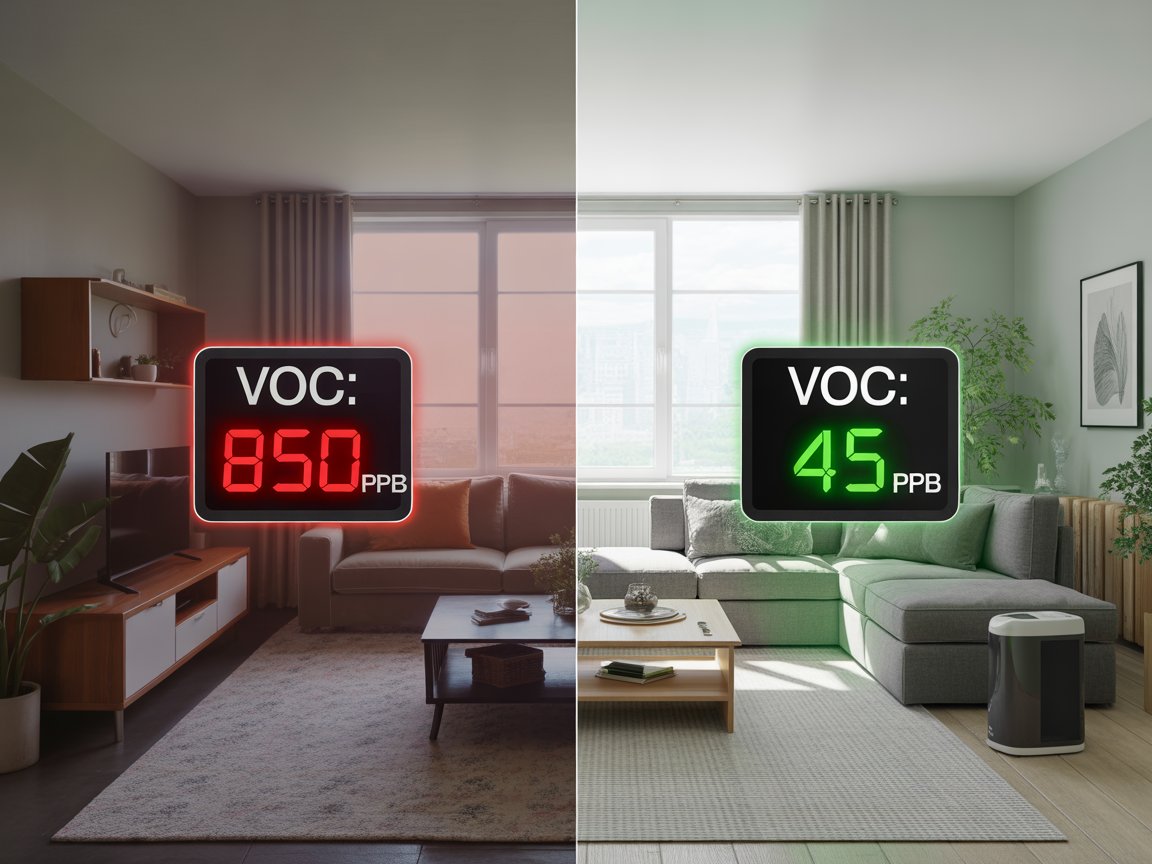
Short Answer: Skip the unreliable "white towel test" and measure air quality instead. Track CO2 (ventilation), PM2.5/PM10 (particles), VOCs (chemical off-gassing), and humidity (mold/dust mite risk). Test before switching to chemical-free for baseline, during chemical cleaning to see 100x VOC spikes, and after switching to document improvement. ATP testing provides professional-grade verification—Fresh Tech Maid results consistently show <80 RLU readings.
NOT the White Towel Test (Unreliable)
- The white towel test fails as a cleaning verification method.
- It shows wooden floor stains (not dirt).
- It picks up mineral deposits from hard water.
- Surface texture affects results.
- It takes 3-4 passes to show "clean" even on perfectly cleaned surfaces.
USE Air Quality Monitors Instead
Variables to Track
- CO2 (carbon dioxide): Ventilation indicator
- PM2.5 & PM10: Fine and coarse particles
- VOCs (volatile organic compounds): Chemical off-gassing measurement
- Humidity: Mold and dust mite risk indicator
- Temperature: Affects all other readings
Top Monitors for Chemical-Free Verification
How to Use Air Quality Monitoring
Test BEFORE switching to chemical-free: Establish baseline VOC and particle levels.
Test DURING chemical cleaning: Watch VOCs spike to 100x normal levels (EPA data confirms this).
Test AFTER switching to chemical-free: Document VOC drops and particle capture by HEPA.
Track trends over time:
- 1 week: Respiratory improvement
- 1 month: Allergen reduction
- 6 months: Cognitive improvement in kids
ATP Testing (Professional Standard)
ATP (adenosine triphosphate) testing measures the energy molecule present in all living cells.
It indicates microbial contamination and organic residue.
Hygiena Scale:
- 0-10 = Excellent (hospital-grade)
- 11-80 = Pass (residential)
- 81-300 = Caution
- 300+ = Fail
Fresh Tech Maid results: Consistently <80 RLU, often <30 RLU.
Chemical cleaning results: Often HIGHER ATP (residue becomes carbon source for bacteria).
Long-Term Health Indicators
Within 1 Week
- Reduced respiratory irritation, congestion, sneezing
- Fewer itchy/watery eyes, headaches
- Better sleep quality
Within 1 Month
- Decreased allergy medication use
- Fewer asthma attacks, improved lung function
- Pet health improves (reduced paw licking in cats, better coat quality)
Within 6 Months
- Kids' cognitive improvement (better focus, grades, behavior)
- Surfaces stay cleaner longer (no re-soiling cycle)
- Fewer sick days, reduced medical costs
Within 1-3 Years
- Avoided Bergen Study lung damage (cleaning = smoking 20 cigs/day)
- Reduced cancer risk (zero carcinogen exposure)
- Chicago-specific benefits: Reduced lead exposure (HEPA captures particles), reduced asthma attacks (zero VOC triggers), healthier pets (no phenol exposure)
When to Call Chicago's Chemical-Free Experts
Short Answer: Call professionals when DIY can't handle heavy salt crust embedded in hardwood, years of chemical buildup requiring restoration, recurring mold indicating water intrusion, lead dust concerns near Chicago's 400,000 pipes, or move-in/out deep cleans. Health emergencies like severe allergies, asthma attacks triggered by home environment, or immunocompromised family members require professional chemical-free cleaning with ATP testing verification.
DIY Can't Handle
- Heavy salt crust embedded in hardwood grain requires professional steam extraction.
- Years of chemical buildup need restoration-level cleaning, not surface treatment.
- Mold that keeps returning indicates water intrusion—you need diagnosis, not more cleaning.
- Lead dust concerns near Chicago's 400,000 pipes require professional HEPA extraction.
- Move-in/move-out, post-construction, and pre-listing deep cleans exceed DIY equipment capabilities.
Health Emergencies
- Severe allergies requiring professional allergen removal benefit from industrial-grade equipment.
- Asthma attacks triggered by home environment need comprehensive air quality intervention.
- Immunocompromised family members require hospital-grade cleaning with verification.
- Chicago's 16% childhood asthma rate makes these situations more common than national averages.
Why Fresh Tech Maid
- Industrial-grade equipment: Superior to DIY capability
- ATP testing reports: Proof of <80 RLU cleanliness
- Chicago expertise: Lead pipes, hard water, salt damage, historic homes
- FTM 6-8 Step Professional Methodology: Systematic, proven approach
- Chemical-free guarantee: Zero toxic residue, verified results
For pet owners specifically, our protocols address the unique challenges of Chicago apartments: Best Apartment Cleaning Services in Chicago for Pet Owners.
Learn why chemical-free matters for your family: Why Choose Chemical-Free House Cleaning Services in Chicago.
Schedule your Chicago deep cleaning service or Chicago maid service today.
When Should You Use Chemicals in Chemical-Free Cleaning
Short Answer: Chemical-free cleaning isn't an ideology—it's a practical approach. When evidence-based triggers exist, we use Hypochlorous Acid (HOCl), the same molecule your white blood cells produce. HOCl is 80-100x more effective than bleach, kills 99.9% of pathogens, and breaks down to nothing but salt and water. We use it selectively when situations demand it.
I want to be clear about something.
Chemical-free cleaning doesn't mean "no chemicals at all costs."
That would be ideology, not practical problem-solving.
Our approach: eliminate unnecessary chemical exposure while using targeted disinfection when the situation requires it.
When HOCl disinfection is necessary:
- Vomit, diarrhea, or blood cleanup
- Raw meat juice contact
- Confirmed infectious disease in household
- Immunocompromised family member
When HOCl is NOT necessary:
- Daily surface cleaning (DI water handles this)
- Routine floor mopping (steam works better)
- Regular bathroom maintenance (steam kills mold without feeding regrowth)
The rule is simple: clean daily with physics-based methods, disinfect rarely with HOCl only when evidence-based triggers exist.
Conclusion: The Choice is Clear
Chemical Cleaning:
- Poisons kids (Bergen Study: lung damage equal to 20 cigarettes/day)
- Contains carcinogens in many common products
- Worsens Chicago's 16% childhood asthma crisis
- Makes floors dirtier faster (re-soiling cycle)
- Kills cats, harms dogs (phenol toxicity, chronic exposure)
- Spreads lead dust (can't remove, just redistributes)
- Destroys environment (6 billion pounds waste annually)
Chemical-Free Cleaning (DI Water, Steam, HEPA, HOCl ONLY):
- Removes 86.7% of allergens (steam)
- Captures 99.97% of particles including lead dust (HEPA)
- Leaves zero residue (DI water)
- Scientifically proven (<80 RLU ATP testing)
- Protects developing lungs (kids and pets safe immediately)
- Measurable results (air quality monitors show VOC reduction)
- Preserves Chicago's historic homes (no chemical damage)
For the complete science behind eliminating harm from your home, read How to Eliminating Harm from Your Family Environment: The Ultimate Guide to Chemical-Free Cleaning.
You Can Choose DIY Route:
- Purchase essential toolkit (under $300)
- Start with entryways (highest ROI—stops 70% of dirt)
- Use ONLY: DI water, steam, HEPA, HOCl
- Test with air quality monitor (prove results)
- Follow FTM 6-8 step methodology
- See results in 1 week
Or Pick Professional Route
Call Fresh Tech Maid: (847) 392-0888
- Schedule initial deep clean (removes years of buildup)
- Get ATP testing reports (scientific proof)
- Consider maintenance plans
- Breathe easier knowing your family is protected
The science is proven.
The methods work.
Protect your family from Chicago's perfect storm of lead pipes, asthma crisis, road salt, hard water, and chemical poisoning.
Choose chemical-free.
Choose health.
Choose Fresh Tech Maid—Chicago's #1 chemical-free cleaning service since 2014.
Book Online Now | Call Now at: 847-392-0888
Frequently Asked Questions
What is the difference between green cleaning and chemical-free cleaning?
Green cleaning uses plant-based or eco-friendly chemicals that still leave residue. True chemical-free cleaning uses only physics-based methods: DI water, steam vapor, HEPA filtration, and HOCl disinfection. Chemical-free leaves zero toxic residue because it relies on heat, water purity, and mechanical filtration rather than chemical reactions. For Chicago families, this distinction matters because green product residue still traps lead dust, reacts with hard water, and provides carbon sources for mold.
How much does chemical-free cleaning cost compared to traditional cleaning?
Initial setup for DIY chemical-free cleaning costs under $300 for essential equipment. Professional chemical-free cleaning from Fresh Tech Maid costs comparable to premium traditional services but delivers superior long-term value through eliminated re-soiling cycles, reduced allergy medication costs, and prevented health damage. The Bergen Study showed traditional cleaning causes lung damage equal to smoking 20 cigarettes daily—that's a health cost no price comparison captures.
Is chemical-free cleaning safe for pets, especially cats?
Yes. Chemical-free cleaning is the ONLY safe option for cats. Cats lack the glucuronidation enzyme that processes phenols found in most floor cleaners (pine, tea tree, eucalyptus, citrus). DI water, steam, and HEPA filtration contain zero phenols. HOCl breaks down to salt and water. Your cat can walk on freshly cleaned floors immediately without risk of liver toxicity from paw absorption and licking.
Is green cleaning the same as chemical-free cleaning?
No. Green cleaning uses plant-based or eco-friendly chemicals with reduced toxicity, but these products still contain surfactants that leave residue on surfaces. Chemical-free cleaning uses only physics-based methods—DI water, steam vapor, HEPA filtration, and HOCl—that leave zero residue. For Chicago families, this distinction matters because green product residue still reacts with our 130-150 ppm hard water to form soap scum, traps lead dust from 400,000+ service lines, and provides carbon sources for mold growth in humid basements.
Are natural cleaners like vinegar and baking soda chemical-free?
No. Vinegar is acetic acid and baking soda is sodium bicarbonate—both are chemicals. While safer than conventional cleaners, they still leave residue that can react with Chicago's hard water minerals and attract new dirt through the re-soiling cycle. True chemical-free cleaning uses only DI water (zero minerals, zero residue), steam vapor (heat-based cleaning), HEPA filtration (mechanical particle capture), and HOCl (breaks down to salt and water). These physics-based methods leave nothing behind after cleaning.
Does chemical-free cleaning work as well as traditional cleaning?
Chemical-free cleaning outperforms traditional methods. Steam cleaning achieves 86.7% allergen reduction according to Clinical & Experimental Allergy research. HEPA filtration captures 99.97% of particles as small as 0.3 microns. DI water combined with microfiber achieves 99% bacteria reduction versus 33% with cotton cloths. Fresh Tech Maid's ATP testing consistently shows readings below 80 RLU (residential passing standard), while chemical cleaning often produces higher ATP readings because residue becomes a carbon source for bacteria.
How do you measure if chemical-free cleaning actually works?
Skip the unreliable "white towel test" and use air quality monitors instead. Track VOC levels (chemical off-gassing), PM2.5 (fine particles), and humidity (mold risk) before and after switching to chemical-free methods. You'll see VOCs drop dramatically within days. For professional verification, ATP testing measures microbial contamination—readings below 80 RLU pass residential standards, below 10 RLU is hospital-grade. Most families notice reduced respiratory irritation within one week and decreased allergy medication use within one month.
What is HOCl and why do chemical-free cleaners use it?
Hypochlorous Acid (HOCl) is the same molecule your white blood cells produce to fight infection. It's 80-100x more effective than bleach, kills 99.9% of pathogens, and breaks down to nothing but salt and water—zero toxicity. Chemical-free cleaning uses HOCl as a targeted disinfectant only when evidence-based triggers exist: vomit or blood cleanup, raw meat juice contact, confirmed illness in household, or immunocompromised family members. The rule: clean daily with DI water and steam, disinfect rarely with HOCl only when needed.
How do I know chemical-free cleaning actually works?
Use an air quality monitor to track VOC levels, PM2.5, and humidity before and after switching to chemical-free methods. You'll see VOCs drop dramatically within days. For professional verification, Fresh Tech Maid provides ATP testing reports showing readings consistently below 80 RLU (residential passing standard). Long-term indicators include reduced allergy symptoms within one week, decreased medication use within one month, and improved cognitive function in children within six months.
Why does Chicago need chemical-free cleaning more than other cities?
Chicago's combination of 400,000+ lead service lines (more than double any other U.S. city), 16% childhood asthma rate (versus 12% nationally), 300,000 tons of annual road salt, and 130-150 ppm hard water creates unique challenges. Chemical cleaners trap lead dust, react with hard water to form soap scum, can't neutralize salt's alkaline compounds, and leave residue that feeds mold in our humid basements. Chemical-free methods address all these Chicago-specific problems.
How often should I steam clean my mattress?
Steam clean mattresses quarterly for healthy households, monthly if anyone has dust mite allergies or asthma. Each mattress harbors 100,000+ dust mites, and 80% of asthmatic children are sensitive to dust mite allergens. Steam cleaning achieves 86.7% allergen reduction and kills dust mites instantly. Always allow 2-4 hours for complete drying and use allergen-impermeable covers afterward.
Can I use vinegar and baking soda instead of DI water?
Vinegar and baking soda are safer than traditional cleaners but are NOT chemical-free. Vinegar is acetic acid; baking soda is sodium bicarbonate. Both leave residue that can attract new dirt (re-soiling cycle), react with Chicago's hard water minerals, and provide carbon sources for bacteria. DI water leaves zero residue because it contains zero minerals—nothing remains after evaporation.
What should I do if my cat has been exposed to phenolic floor cleaners?
Contact your veterinarian immediately. Signs of phenol toxicity in cats include vomiting, diarrhea, drooling, tremors, weakness, and difficulty breathing. Remove your cat from the cleaned area. Going forward, switch to chemical-free cleaning (DI water, steam only) to prevent future exposure. Even low-level repeated phenol exposure accumulates to serious liver toxicity in cats.
FREE DOWNLOAD: The Complete Guide to Chemical-Free Cleaning for Your Chicago Home
Get Your Chemical-free Cleaning Guide!