
The January 3rd Feeling

Have you ever put the last ornament away… and still felt like your home was shouting at you?
That’s the January 3rd feeling.
You’re done hosting.
Done spending.
Done smiling through it.
And now you’re standing in a living room that looks “fine” from far away… but up close it’s clutter, crumbs, gifts with nowhere to live, and a fridge full of mystery containers.
Here’s what I do now.
In January, I reset my home in 10 simple steps—so I’m not driven by panic, I’m guided by a plan.
You can do it in one weekend if you live small and move fast.
Or you can spread it across all of January if your life is already full.
Either way, the goal is the same: a home that helps you breathe again.
A few data points I keep in mind in January
And one quote I think about every year:
“When spending is driven by emotions rather than a plan, it can get out of hand.” (AICPA, 2025)
Cleaning works the same way.
When it’s driven by panic instead of a plan, it turns into burnout.
My Story: The Year My House Felt Like a To‑Do List

I’ve been running Fresh Tech Maid for 17 years.
I’ve seen every version of holiday chaos Chicago can produce.
Gold Coast condos with three parties in a week.
Lincoln Park family homes with cookie frosting in the grout.
Loop apartments with a work laptop on the kitchen table 24/7.
But the hardest lesson I learned wasn’t about cleaning.
It was about recovery.
One January, I tried to “start fresh” by doing everything in one Saturday.
I made a list that looked impressive. And I ended the day irritated, sore, and still staring at piles I didn’t touch.
That was the first time I admitted this out loud:
My home didn’t need a perfect reset.
I needed a repeatable reset.
Something that works for real people with real lives.
"My home didn't need a perfect reset. I needed a repeatable reset." — Author: Wells Ye
So I built the 10 steps you’re about to read.
Why January Stress Hits Hard in Chicago

January stress is sneaky because it’s not “one thing.”
It’s five or six small stressors stacked on top of each other:
- Lingering holiday mess (wrapping paper bits, guest towels, extra chairs)
- Decoration clutter (bins everywhere, half-put-away lights)
- Expired food in the fridge (hello, science project leftovers)
- Guest room chaos (random blankets, suitcases, gift bags)
- Financial hangover (holiday debt, surprise bills, “why did I buy that?”)
- Pressure to start fresh while you’re still tired
And in Chicago, winter adds a layer.
More indoor time.
More closed windows.
More “why does the house feel stuffy?”
The U.S. EPA notes we spend about 90% of our time indoors on average, and some indoor pollutant concentrations can be 2–5 times higher than outdoors. (U.S. EPA, 2025)
So if your home is dusty, cluttered, and overdue for deep cleaning… January can feel heavier than it should.
The hidden consequences of carrying holiday stress into the new year
I see these patterns again and again:
- Physical health: January is still flu season, and flu activity often peaks Dec–Feb. (CDC, 2025)
- Sleep quality: clutter and unfinished tasks keep your brain “on” at night
- Focus and productivity: visual mess turns into mental noise
- Decision fatigue: too many micro-choices (“Where does this go?”)
- Career impact: working from home in a messy space can blur boundaries
- Family relationships: short tempers show up faster when the home feels chaotic
- Failed fresh starts: you burn all your energy on cleaning… then quit everything else
So I don’t treat January like a cleaning marathon.
I treat it like a system reset.
My 10-Step January Reset in One Glance
Here’s the whole routine, plain and simple:
- Reflection
- Vision
- Decluttering
- Organization
- Cleaning
- 10 Minutes Daily Habits
- Maintenance Rhythm
- Healthy Home (air + products)
- Self-Care Sanctuary
- You Don’t Have to Do This Alone
Now let me walk you through exactly how I do each one.
Step 1: Reflection: Learn from 2025, Inspire Your 2026

We often rush to "fix" things before we understand what is broken. I believe we must pause first. We need to look at 2025 to understand how to build a better 2026.
WHY: The Energy Audit
You cannot manage time if you do not manage energy. A home should recharge you. If it drains you, we need to know why.
HOW: The Two-Column List Method
I sit down with a coffee and a notebook. I draw a line down the middle of the page.
- Column A: Energy Drainers. What tasks in 2025 made me tired just thinking about them? Was it scrubbing the shower? Organizing the mail?
- Column B: Joy Bringers. When did my home feel best? Was it hosting a dinner? Was it a quiet Sunday morning in a clean living room?
RESULT: Clarity
You will see patterns.
You might realize that scrubbing floors costs you three hours of frustration but only saves you a small amount of money.
You might see that clutter on the kitchen island causes daily arguments. This list becomes your roadmap.
"Life can only be understood backwards; but it must be lived forwards." — Søren Kierkegaard
Specific Tips for You:
- Chicago Parents with babies: Look at what disrupted your sleep or feeding routine. If looking for bottle parts caused stress, note that. Your goal is survival and ease.
- Chicago Empty nesters: Identify which rooms you actually used. You might find you are cleaning rooms that nobody enters. That is wasted energy.
- Chicago Young professionals: Check your "work from home" friction. Did you spend 2025 working from the couch? Note the back pain or lack of focus as a drainer.
- Chicago Seniors: Be honest about safety. Did you trip over a rug? Did you struggle to reach a high shelf? Note these risks now.
Step 2: Vision: Design How You Want Your Home to FEEL in 2026
We often focus on how a home looks. I want you to focus on how it feels. This changes everything.
WHY: The "Three-Word Anchor"
Feelings drive behavior. If you want a peaceful home, you must design for peace. If you want a productive home, you design for focus.
HOW: The Sensory Blueprint
Pick three words that you want to feel when you walk through your door in 2026. Calm. Energized. Safe.
Now, test your home against these words.
- Morning Experience: Does your morning routine support "Calm"? Or is it a frantic search for keys?
- Evening Experience: Does your bedroom support "Rest"? If there is a pile of laundry on the chair, your brain sees "work," not "sleep."
- Working From Home: I recommend a physical boundary. Even closing a laptop into a drawer signals your brain that the workday is done.
RESULT: A North Star
When you clean or organize later, you will not just be moving stuff. You will be building "Calm" or "Safety." It gives purpose to the work.
Specific Tips for You:
- Parents with babies: Your vision word might simply be "Safe." If you can set your baby down anywhere without panic, you have won.
- Empty nesters: Focus on "Freedom." Your home should feel like a space for your hobbies, not a storage unit for your adult kids' stuff.
- Young professionals: Use "Focus" and "Disconnect." You need a clear line between your grind and your downtime.
- Seniors: Prioritize "Accessible." You want a home where everything you need is within easy reach.
Step 3: Decluttering: Create Mental Clarity and Breathing Room

Clutter is just delayed decisions. It is noise. We need to turn down the volume.
“Clutter is just delayed decisions. It is noise. We need to turn down the volume..” — Author: Wells Ye
WHY: Decision Fatigue
Every item in your home demands attention. "Clean me." "Move me." "Fix me." This drains your brain. Less stuff means less stress.
HOW: The 4-Box Method
I take four boxes into a room. I label them: Keep, Donate, Trash, Relocate.
- Keep: Only items that serve my 2026 vision.
- Donate: Good items that simply do not fit my life anymore.
- Trash: Broken items, expired papers, packaging.
- Relocate: Items that belong in a different room.
The "Future Me" Filter
I ask myself: "Am I keeping this for a version of my life that doesn't exist?" Maybe you have ski gear but haven't skied in ten years. Let it go. Ask: "Would I buy this again today?" If the answer is no, it goes.
RESULT: Space to Breathe
You will feel lighter. The room will feel bigger. You stop fighting your stuff.
Specific Tips for You:
- Chicago Parents with babies: Be ruthless with gear. If the baby has outgrown the swing, donate it now. Do not store it "just in case" unless you are certain about the next one.
- Chicago Empty nesters: Tackle the "shrine" rooms. It is okay to box up your child's trophies. You need that space for your life now.
- Chicago Young professionals: Digital clutter counts. Unsubscribe from junk mail and organize your cables. This mental static hurts your focus.
- Chicago Seniors: Clear the floor paths. Clutter on the floor is a fall risk. Be brave about letting go of furniture that crowds the room.
Step 4: Organization: Give Everything a Home
Decluttering removes the excess. Organization manages what is left.
“Have nothing in your houses that you do not know to be useful, or believe to be beautiful.” — William Morris
WHY: Reduce Friction
Life is hard enough. Finding your keys should not be hard. Organization is not about being fancy; it is about flow.
HOW: Landing Zones and "Like with Like"
- Create Landing Zones: Where do you drop your bag when you walk in? That is where the bag should go. Put a hook there. Stop fighting gravity.
- Group "Like with Like": I keep all batteries in one bin. All lightbulbs in one shelf. When you need a battery, you know exactly where to go.
- Contain Before You Organize: Use bins to create boundaries. If the "snack bin" is full, we do not buy more snacks.
- Check out more Holiday Organizing Hacks.
RESULT: Efficiency
You stop searching. You stop losing things. Your home starts to run on autopilot.
Specific Tips for You:
- Parents with babies: Create "changing stations" in every main room. A basket with diapers/wipes in the living room saves you ten trips up the stairs a day.
- Empty nesters: Consolidate. You might have three pairs of scissors in three different rooms. Put them all in one central utility drawer and donate the redundant ones.
- Young professionals: Organize your "Zoom background." Make sure the wall behind your desk is tidy, so you don't have to scramble before a video call.
- Seniors: Move daily items to waist height. Stop climbing step stools for the coffee mugs. Reorganize your kitchen for safety, not just looks.
Step 5: Cleaning: Reset Your Home’s Health and Freshness
Now that the clutter is gone, we must clean. Real cleaning. Not just wiping crumbs.
WHY: Health and Reset
Winter in Chicago means we are stuck inside. Dust, allergens, and germs build up. The U.S. EPA notes indoor pollutants can be 2–5 times higher than typical outdoor concentrations. (U.S. EPA, 2025) A deep clean resets the air quality and hygiene of your home.
HOW: Tackle the "Forgotten Zones" (DIY 2–4 hours per zone, or outsource a “reset” clean)
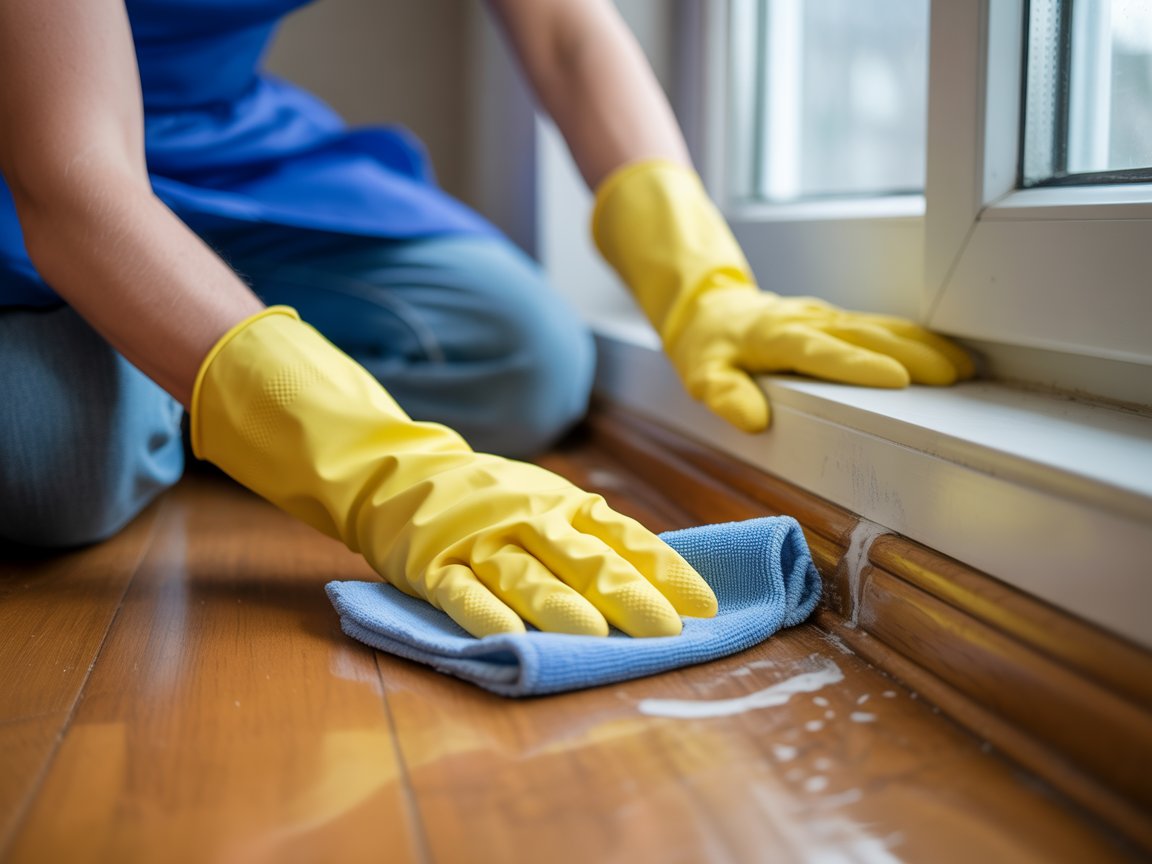
I focus on the areas we ignore all year:
- Baseboards: They collect months of dust.
- Vents / returns
- Behind/under furniture
- Behind the Toilet: A critical zone for hygiene (and buildup spots around faucets).
- Inside the Fridge: Toss the old jars. Wipe the sticky shelves. (Check leftovers; many should be tossed after 3–4 days) (USDA FSIS, 2020)
- Light Fixtures: washing the glass brightens the whole room.
B) High-traffic resets
- Kitchen surfaces + sink
- Bathroom sink/toilet handles
- Floors in entry + kitchen
- Floors
- Bathrooms
- Kitchen
DIY or Outsource?
This is a big job. I ask myself:
- Does this cost more time than I can afford?
- Does it drain me mentally or physically?
- Would paying for help improve my life this month?
Ask yourself: "Does this drain me?" If scrubbing a bathtub makes you miserable, this is the time to consider deep cleaning services near me. It is an investment in your sanity.
“Ask yoursel: does this drain me?.” — Author: Wells Ye
If you’re wondering about House Cleaning Cost Chicago, it varies a lot by size and scope. One widely cited Chicago cost snapshot reports averages around $180–$290 per visit, with deeper scopes higher.
RESULT: A "New Home" Feel
Your home smells different. It feels lighter. You are not just covering up dirt; you have removed it. That “fresh home” smell without covering it up with harsh fragrance.
Specific Tips for You:
- Chicago Parents with babies: Focus on floors. Your baby lives down there. A deep clean of carpets and rugs is non-negotiable for their health. Outsource deep cleaning if it means you get weekends back with your kids.
- Chicago Empty nesters: Focus on air-flow areas (vents, dust traps) for comfort. Your living room area is another comfort zone that deserves attention. You've earned it. Reward yourself with the comfort of your own home.
- Chicago Young professionals: If you work from home, deep clean your work zone first. Clean your tech. Deep clean your keyboard and mouse. They carry more germs than a toilet seat and you touch them all day.
- Chicago Seniors: Dust impacts breathing. If you have asthma or low energy, hiring help for high dusting (fans/vents) is a health necessity, not a luxury.
Step 6: Daily Habits: 10-Minute Daily Habits Reset That Prevents Chaos
You did the big reset. How do you keep it? You need micro-habits.
"Small habits stop the slide into chaos." — Author: Wells Ye
WHY: The Broken Window Theory
One dirty dish leads to a sink full of dishes. Small habits stop the slide into chaos.
HOW: The "Closing Shift"
I treat my home like a coffee shop. Before they close, they wipe the counters and prep for tomorrow. I do the same.
- The 2-Minute Sweep: I walk through the living room. I put the cushions back. I fold the blanket.
- The Morning Setup: I prep the coffee maker. I check the calendar.
- Evening Run of Floor Vacuum Robot: before going to bed, let it run! Your next morning will be so much more refreshed from a cleaner floor! I do it and love it.
RESULT: No Morning Panic
You wake up to a clean kitchen and a clean floor. You start the day ahead, not behind.
Specific Tips for You:
- Parents with babies: Reset during the last nap of the day. Do not wait until bedtime when you are exhausted. Do the "closing shift" at 4 PM if you have to.
- Empty nesters: Enjoy the ritual. Your reset can be slow. Put on jazz, pour a glass of wine, and tidy up. It is self-care, not a chore.
- Young professionals: The "Digital Sunset." Put your laptop away and tidy your desk before you sit on the couch. End the work day physically.
- Seniors: focus on "Trip Hazards." Before bed, make sure the path to the bathroom is clear of shoes or dog toys.
Step 7: Maintenance Rhythm: A Schedule I Actually Keep
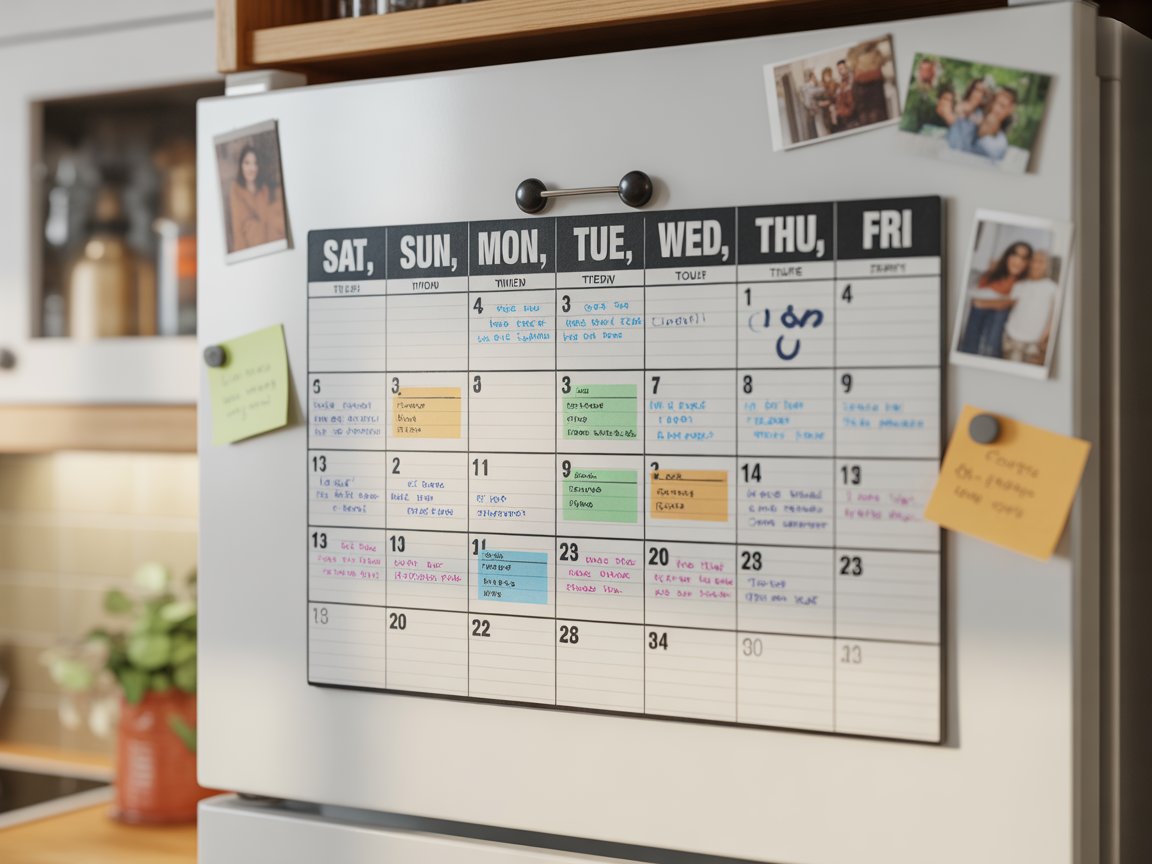
Cleaning is not a one-time event. It is a cycle. We need a rhythm, not a rigid military schedule.
"Discipline is the bridge between goals and accomplishment." — Jim Rohn
WHY: Consistency Creates Calm
When you know the bathroom gets cleaned every Friday, you stop worrying about it on Tuesday.
HOW: The Realistic Weekly Plan
Be honest. How much time do you actually have?
- Weekly Non-Negotiables: What must happen? Maybe it is just vacuuming and bathrooms.
- The "Good Enough" Standard: Your home does not need to be a museum. It needs to be sanitary and tidy.
- Outsourcing Strategy: Look at your energy audit. If you hate dusting, maybe you hire a maid service Chicago for bi-weekly visits. You handle the daily tidy; they handle the heavy scrubbing. This hybrid approach is very popular for recurring maid service Chicago clients.
RESULT: Freedom
You stop feeling guilty about what you haven't done. You have a plan.
Specific Tips for You:
- Chicago Parents with babies: Set your Safety and Health Standards. "Healthy Mom and Healthy Baby" is the goal. If you outsource anything, outsource the kitchen, bathrooms, and floors.
- Chicago Empty nesters: Switch to a bi-weekly professional service. You have earned the right to stop scrubbing toilets. Spend that time on what you truly love.
- Chicago Young professionals: Batch your cleaning. Do a "Power Hour" on Saturday morning. Get it all done fast so you can enjoy your weekend brunch.
- Chicago Seniors: Listen to your body. If a task hurts, stop. Break cleaning into 15-minute chunks. Never push through pain.
Step 8: Healthy Home: Protect Your Air and Wellbeing

A clean home must be a safe home. However, cleaning chemicals are invisible and often deliver a false sense of cleanliness.
You have taken care of the house. Now, the house must take care of you. We need to talk about what we spray in our air.
WHY: Indoor Air Quality
The EPA says indoor air can be more polluted than outdoor air. Chemical cleaners contribute to this. You breathe this all day.
HOW: Switch to Chemical-Free
I urge you to look at your products. Are there skulls and crossbones on the bottle? Are you inviting unnecessary chemicals into your sanctuary?
At Fresh Tech Maid, we use DI Water (Deionized Water) and HOCl (Hypochlorous Acid).
- DI Water: It acts like a dirt magnet without leaving chemical residue.
- HOCl: It disinfects effectively but is safe enough to be used in eye care products and in vegetable washing.
- Green vs. Marketing: Do not just trust the word "Green." Read the ingredients. Look for "Chemical Free" and "VOC” Free.
RESULT: Safety
You stop breathing fumes. Your pets and kids crawl on floors that are truly safe. This is the heart of green cleaning services Chicago.
"A clean home must be a safe home. However, cleaning chemicals are invisible and often deliver a false sense of cleanliness!" — Author: Wells Ye
Specific Tips for You:
- Parents with babies: Babies put everything in their mouths. Chemical residue on floors is a major risk. Use steam or DI water only.
- Empty nesters: As we age, we become more sensitive to VOCs. If you get headaches after cleaning, it's likely your products. Switch to fragrance-free.
- Young professionals: Be careful with essential oils if you have pets. Some "natural" scents are toxic to cats and dogs.
- Seniors: Your skin thins as you age. Harsh chemicals can cause burns or rashes easily. Wear gloves or use gentle, chemical free cleaners.
Step 9: Self-Care Sanctuary: One Space That’s Just for YOU

You have taken care of the house. Now, the house must take care of you.
"You have taken care of the house. Now, the house must take care of you." — Wells Ye
WHY: The Recharge Zone
We all need a place to decompress. If your whole home belongs to the "family" or "work," you have nowhere to rest.
HOW: Design One Corner
It does not need to be a whole room. It can be a chair.
- Choose the Spot: A corner of the bedroom? A specific chair by a window?
- Sensory Comfort: Add a soft throw blanket. Good lighting (warm, not harsh).
- The Rule: When I am in this chair, I do not work. I do not pay bills. I read. I breathe. I drink tea. I enjoy life!
RESULT: Restoration
You have a physical anchor for your mental health.
Specific Tips for You:
- Chicago Parents with babies: Your sanctuary might be the bathtub. Buy a bath tray. When the door is locked, that is your spa.
- ChicagoEmpty nesters: Convert a spare room into a hobby room. Reading, sewing, painting—claim that space for your passion, not for guests.
- Chicago Young professionals: Make a "Tech-Free" corner. No phone, no laptop. Just a book or music. Your brain needs the break from screens.
- Chicago Seniors: Good lighting is key. Ensure your sanctuary has a bright reading lamp so you don't strain your eyes.
Step 10: You Don’t Have to Do This Alone
This is the most important step. We often think we must be heroes. We think asking for help is a weakness. It is not. It is a strategy.
"If you want to go fast, go alone. If you want to go far, go together." — African Proverb
WHY: The Value of Time
Time is the one resource you cannot buy back. If you spend your Saturday scrubbing toilets, that is time away from your kids, your career, or your rest.
HOW: Honest Self-Check
If you answered “yes” to 2 or more, support is worth considering.
- Full DIY: You commit to the schedule. You protect the time.
- Hybrid: You do the daily stuff. You hire house cleaning Chicago pros for the deep cleans or monthly resets.
- Full Support: You hand it over. You get a weekly service. You reclaim your life.
RESULT: No Guilt
There is no wrong answer. Only what works for you.
However, if you decide to outsource, a word of caution: Do not just search for “who’s cheapest.” In this industry, cutting costs often means cutting safety. You are inviting strangers—and their chemicals—into your sanctuary.
To protect your home, you need to verify two things equally: The Products and The People.
You Should ask:
- "What disinfectants do you use?" (Ensure they use hospital-grade yet non-toxic options, rather than harsh bleach or ammonia that degrades indoor air quality).
- "Are your products certified safe for pets, babies, and asthma sufferers?" (Real cleaning should reset your home's health, not leave toxic fumes behind).
- "Are your cleaners W-2 employees or contractors?" (Employees are trained and vetted; contractors often lack oversight).
- "Do you carry full liability insurance and workers' comp?" (Without this, an injury in your home becomes your financial liability).
You deserve a partner who cleans for health, not just appearance. If you want to see how we combine safe disinfection with reliable care to cut your stress in half, check out our Chicago Holiday House Cleaning Program.
Specific Tips for You:
- Parents with babies: Asking for help is not failing. It is "village" building. If a friend asks "how can I help?", tell them: "Hold the baby while I shower" or "Load the dishwasher."
- Empty nesters: You have worked hard for decades. Spending money on a maid service is not lazy; it is enjoying the fruits of your labor.
- Young professionals: Calculate your hourly rate. If you make $50/hour, spending 4 hours cleaning costs you $200. A cleaner might be cheaper than your time.
- Seniors: This is about safety. Falls often happen during cleaning (climbing, wet floors). Professional help protects your independence by keeping you safe.
What This Looks Like in Real Life
Story 1: The DIY Success
I know a young graphic designer, Megan. She felt overwhelmed in her small apartment. She used Step 3 (Decluttering) and Step 6 (Daily Habits). She spent one weekend purging her closet. Then, she committed to the "Closing Shift." She told me, "Wells, just waking up to a clear desk changed my whole career." She did not spend money; she spent intention.
Story 2: The "I Needed Help" Realization
Then there is Sara. She has two kids and a big job. She tried to do it all. She was exhausted. She finally called us for a deep house cleaning Chicago before hosting guests. When she saw her sparkling kitchen, she cried. She realized she had been punishing herself. She switched to a bi-weekly service. She told me, "I bought my weekends back".
Two different paths. Same destination: a home that finally feels like their sanctuary.
Timeline: Can You Do This All in January?
Yes.
But the better question is: should you do it all at once?
Here’s how I map it.
Scenario A: The “One Weekend Reset” (best for many young professionals)
- Saturday: Steps 1–4 (reflection, vision, declutter, organize)
- Sunday: Step 5 (deep clean key zones) + Step 6 setup
- Weekdays: 10-minute reset + pick one small Step 8 task
Scenario B: The “4-Week Family Reset” (best for parents with children)
- Week 1: Step 1 + Step 2 (45 minutes total)
- Week 2: Step 3 (declutter hotspots)
- Week 3: Step 4 (landing zones + labels)
- Week 4: Step 5 (deep clean) + Step 7 (schedule)
All month: Step 6 nightly reset
Scenario C: The “Two-Weekend Sanctuary Reset” (great for empty nesters)
- Weekend 1: Step 1–4 (bigger home, slower pace)
- Weekend 2: Step 5 + Step 8 + Step 9 (comfort upgrades)
My rule: build the system first.
Then you can maintain it.
Your January Reset Action Plan: 5 Things to Do This Week

If you do nothing else, do these:
- Choose your three-word anchor for 2026.
- Declutter one stress hotspot using the 4-box method.
- Build a landing zone for keys/mail/bags. (Build a Landing Zones and try "Like with Like” method)
- Do a 10-minute closing shift for three days in a row.
- Decide: DIY, hybrid, or support for deep cleaning.
Small steps.
Real momentum.
What You’ll Gain: The Reward That Makes This Worth It
Here’s what people tell me they get back when they complete the reset:
- Time: fewer lost-item hunts, fewer emergency cleans
- Sleep: less “unfinished” stress at night
- Focus: cleaner work-from-home boundaries
- Peace: less visual noise, less decision fatigue
- Connection: more patience with the people you live with
- Confidence: you stop dreading “surprise guests”
Peace is not small.
It’s quality of life.
Frequently Asked Questions
1) How much does house cleaning cost in Chicago?
How much does house cleaning cost in Chicago depends on home size, number of bathrooms, and whether it’s standard or deep cleaning.
A Chicago pricing snapshot commonly cited is an average range around $160–$260 per visit, with deep cleaning and move-out cleaning higher.
2) Deep cleaning vs regular cleaning—what’s the difference?
deep cleaning vs regular cleaning what's the difference is scope and detail.
Regular cleaning maintains. Deep cleaning resets buildup (baseboards, edges, grime zones).
3) How do I find a trusted maid service that’s insured and bonded?
trusted maid service Chicago insured and bonded starts with asking direct questions: insurance, background checks, training, and written scope.
Don’t guess. Get it in writing.
4) Is there a good “one time” option if I’m overwhelmed?
One time house cleaning Chicago near me can be a great reset if you’re behind and want to start a maintenance rhythm after.
Think of it as the baseline you maintain, not the finish line.
5) Can I get a weekly or biweekly plan instead of random cleanings?
recurring maid service Chicago weekly or biweekly is usually easier to sustain than “panic bookings.”
Choose the frequency that survives busy seasons.
6) Are eco-friendly products actually effective?
house cleaning Chicago that uses eco-friendly products can be effective, but I look for evidence (ingredients, labels, and performance), not marketing.
EPA’s Safer Choice label is one helpful standard. (U.S. EPA, 2025)
7) Why does my home feel stuffy in winter even when it’s “clean”?
Indoor air can carry dust, dander, VOCs, and residue, and pollutant levels can be higher indoors than outdoors. (U.S. EPA, 2025)
8) What should I do first if I’m too tired to start?
Start with Step 6: a 10-minute nightly reset for three days.
Then do Step 3 on one hotspot.
Energy follows action.
Your Home Sanctuary Starts With One Choice

Remember that January 3rd feeling?
It doesn’t have to be your story this year.
You’ve seen the problem.
You’ve seen the system.
Now you choose the path: DIY, hybrid, or full support.
And when your home stops draining you, you get something better than a clean kitchen.
You get your life back for an amazing 2026!
Free Checklist! Print it. Use it. Share it.
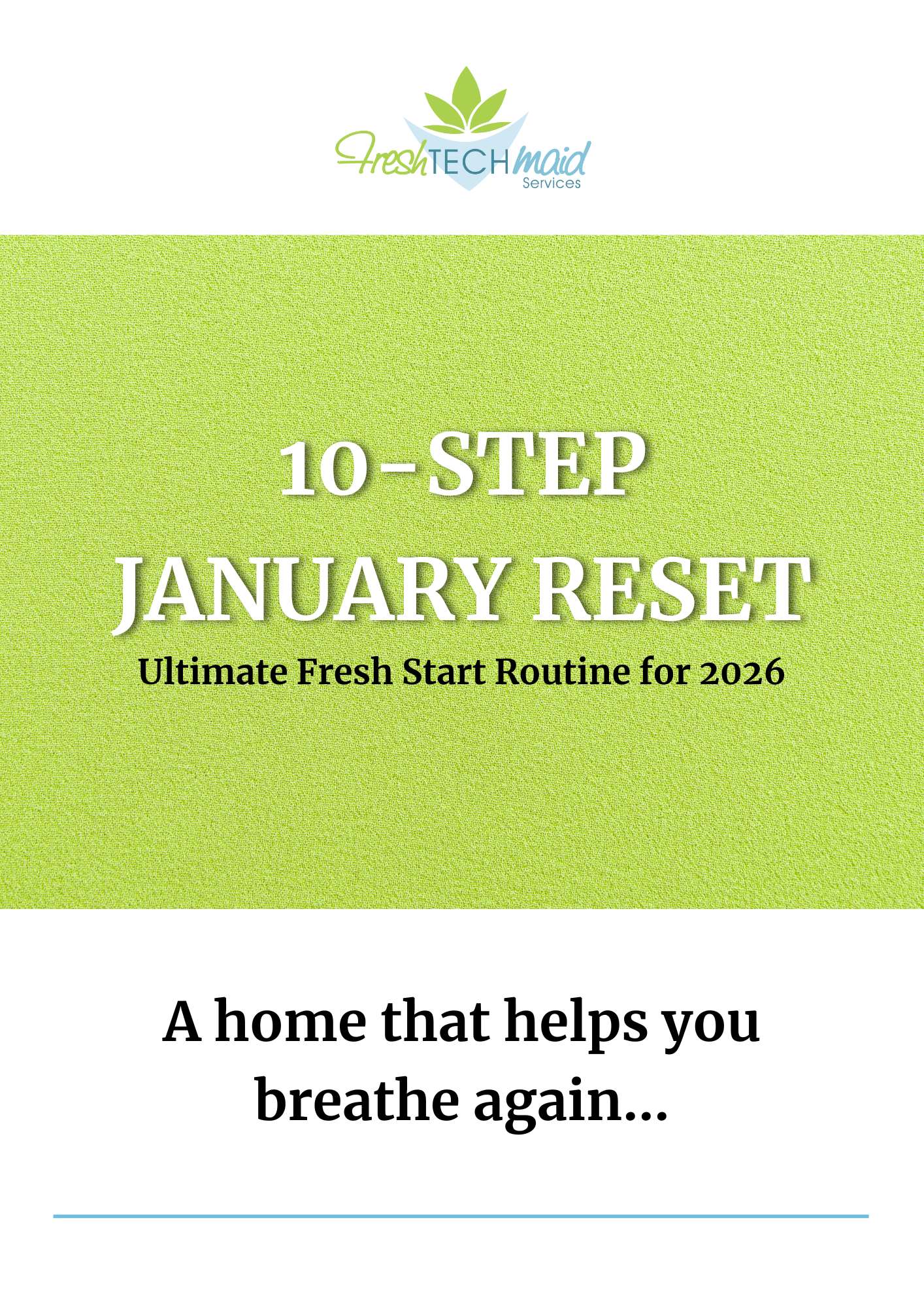
10-Step January Reset: Ultimate Fresh Start Routine For 2026
Inside this checklist:
- The 10 steps for January reset
- A 4-week calendar
- The 10-minute nightly checklist
- And more...
Get Your 10-Step January Reset Checklist