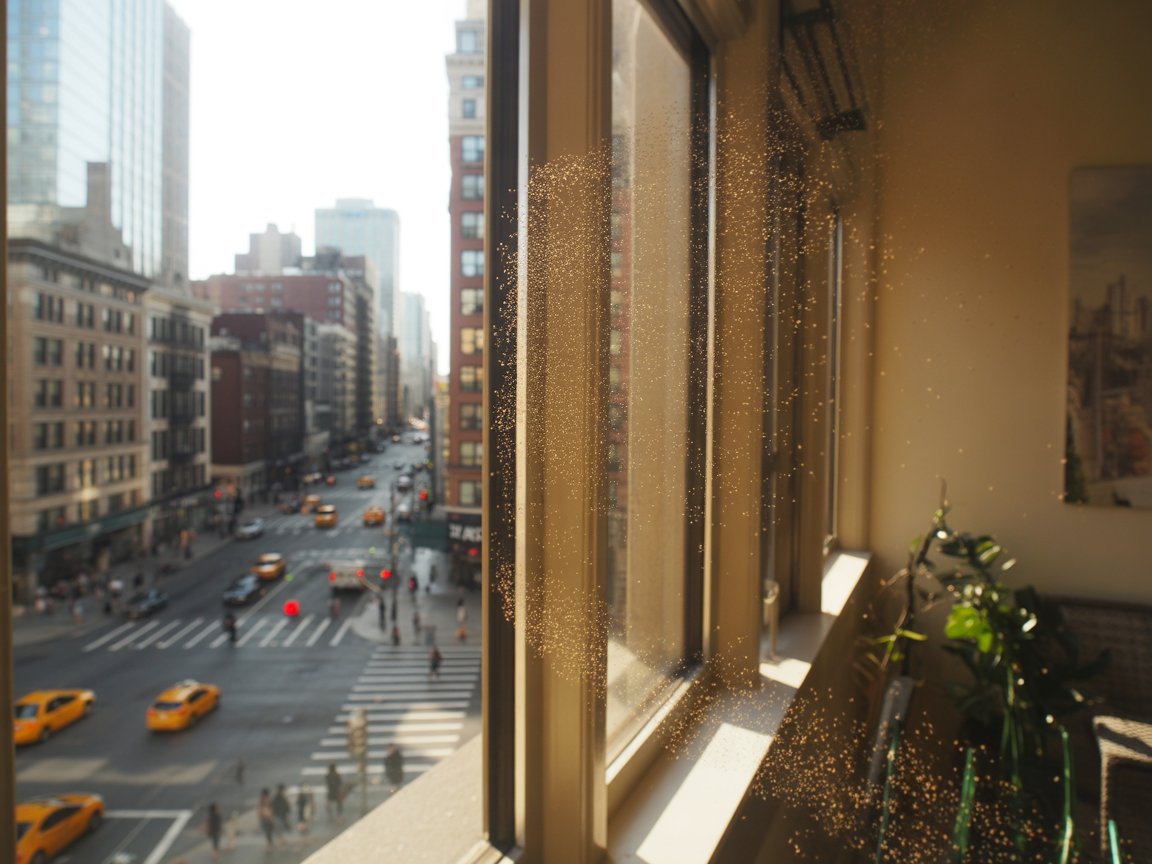
Spring 2026 Is Bringing a Health Crisis to Chicago Homes

Spring 2026 is bringing a health crisis to Chicago homes.
80% of allergy and asthma sufferers are sensitive to dust mites hiding in their beds and carpets. Chicago families are discovering that traditional cleaning barely scratches the surface.
16% of Chicago families have a child with asthma—higher than the national average of 12%. The stakes have never been higher.
This guide reveals how to remove 80% of indoor allergens before Chicago's intense pollen season hits. Using chemical-free methods that actually work.
The Truth About "Fresh Scent"
I remember walking into a client's home in Lincoln Park a few years ago.
She was a young mother, exhausted, holding a toddler who was constantly wheezing.
She told me, "Wells, I clean every day. I smell the bleach, I see the shine, but he just gets sicker."
That moment changed everything for me.
I realized that the "clean smell" she relied on was actually a chemical soup triggering her son's asthma.
It wasn't about cleaning harder. It was about cleaning safer.
That was the day I decided Fresh Tech Maids would declare war on the "chemical reservoir" in Chicago homes. We switched to a physics-based, real Green Cleaning approach that removes allergens without adding toxins.
“If your home smells like ‘fresh scent,’ I assume something is still floating in the air.” — Author: Wells Ye
Why Are Chicago Families Losing the Battle Against Indoor Allergens?

The Short Answer: Chicago families lose the allergen battle because allergens build up all winter in fabrics and HVAC systems, then spring pollen adds a second wave. Many homes “clean” with scented chemicals that leave sticky residue and irritate lungs. The win comes from removing allergens physically—heat, filtration, and pure-water wiping.
Why Empty Nesters:
For many empty nesters I talk to, the spirit is willing, but the back is weak.
I see so many homes containing decades of accumulated allergens in mattresses and carpets.
A typical used mattress harbors 100,000 to 10 million dust mites (Sleep and Sinus Centers, 2026).
You might feel fine now. But prolonged exposure can trigger new sensitivities later in life.
Aging lungs are more vulnerable to the strong fragrances in chemical cleaners.
Why Parents With Children:
Parents with children are fighting a battle against time.
Work, school runs, and extracurriculars leave no time for deep cleaning.
This is critical: 80% of children and young adults with asthma are sensitive to dust mites (NIEHS/Gaiam).
Your kids spend more time on the floors where allergen concentrations are highest.
I know 87% of you worry about your children's exposure to harsh cleaning chemicals. You should—those chemicals can trigger the exact allergies you're trying to prevent.
Why Seniors:
For seniors, aging lungs are more vulnerable than most people realize.
Lung elastic recoil decreases. Chest walls stiffen. Protective coughing reflexes weaken (PMC / NIH).
Traditional cleaning products irritate the respiratory tract—coughing, wheezing, chest tightness after exposure.
Seniors spending more time indoors means more cumulative exposure to indoor allergens.
Why Young Professionals:
Young professionals in high-rises or vintage walk-ups, you're often living with ghosts of tenants past.
Pet dander from a previous tenant's dog can remain in a home for 4 to 7 months after the pet is gone (FilterBuy, 2025).
This is why move-out cleaning matters—and why move-in deep cleaning should be your first priority in any new Chicago apartment.
You come back to an allergy-triggering home after a long day at work. Those symptoms ruin your sleep and productivity.
Why University Students:
Even university students in shared housing aren't safe.
Dorm mattresses are rarely deep cleaned between students.
45% of U.S. homes have bedding with dust mite levels exceeding allergic sensitization thresholds (NIEHS).
“We have to stop fighting biology with chemistry and start using physics.” — Author: Wells Ye
What Are the Hidden Allergens Making You Sick in Your Own Home?
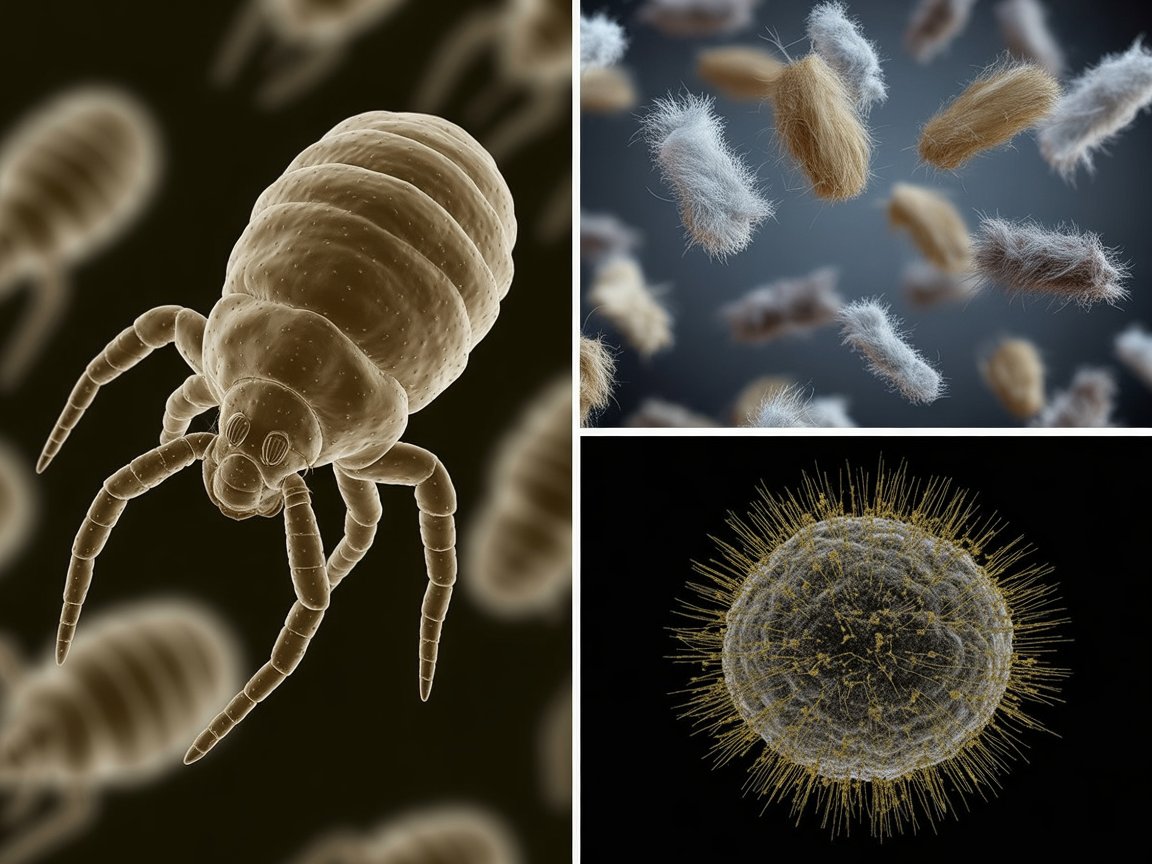
The Short Answer: Most Chicago homes contain four hidden allergens: dust mites, pet dander, indoor-trapped pollen, and cleaning chemical residue. These allergens quietly build up indoors throughout winter. By spring, indoor allergen levels are already high, often before outdoor pollen season even begins.
The Winter Buildup Factor
From November through March, Chicago homes remain sealed against the cold.
Limited ventilation and constant HVAC circulation allow allergens to concentrate indoors.
Dust mites multiply in mattresses and carpets.
Pet dander settles into upholstery and fabrics.
Outdoor pollutants tracked inside have nowhere to go.
Calcium chloride road salt brought in on shoes absorbs moisture. It keeps carpets damp, sustaining dust mites and mold through winter.
By spring, this buildup is already in place.
Hidden Allergen #1: Dust Mites
Dust mites are invisible, but exposure is constant.
They thrive in mattresses, pillows, carpets, and upholstered furniture.
The real trigger isn't the mite—it's their waste.
Dust mite waste contains Der p 1, a protein that damages lung tissue and increases sensitivity to other allergens.
Winter conditions allow these allergens to concentrate, especially in bedrooms where exposure is nightly.
“Dust mite allergens are the most common trigger for year-round allergies and asthma.” — Asthma and Allergy Foundation of America (AAFA)
Hidden Allergen #2: Pet Dander
Pet dander is one of the most persistent indoor allergens.
These microscopic skin flakes carry allergenic proteins like Fel d 1 (cats) and Can f 1 (dogs).
Their jagged shape allows them to cling to walls, ceilings, furniture, and HVAC systems—long after a pet is gone.
Heating systems resuspend settled dander during winter, keeping it in the breathing zone.
If your home includes pets, allergens aren't coming only from pollen. Pet dander, saliva proteins, and fur can also affect indoor air quality. Our pet-safe cleaning guide explains how to reduce these allergens without exposing your pets to unnecessary chemicals.
Hidden Allergen #3: Pollen That’s Already Indoors
Pollen doesn't wait for open windows.
It enters homes year-round on shoes, clothing, pets, and daily activity.
It settles into entryways, carpets, and fabrics.
When spring arrives, that pollen is already indoors—ready to be redistributed.
Hidden Allergen #4: Cleaning Chemical Residue
Many homes unknowingly introduce a fourth allergen while cleaning.
Traditional cleaning products often leave behind invisible residue.
That residue binds dust, pollen, and dander to surfaces. It accelerates re-soiling and prolongs exposure.
Fragrances further irritate airways while masking poor indoor air quality.
The health impact of cleaning chemicals—and how to remove them safely—is covered in the next section.
What Is the Hidden Toll of Cleaning Chemicals on Your Family's Health?

The Short Answer: Modern homes have become "chemical reservoirs." The average person uses 40 pounds of cleaning chemicals annually, polluting indoor air 2 to 5 times more than outdoor air. Chemicals like bleach and Quats are linked to increased asthma risks. Fragrances often mask high pollution levels, creating a "toxic signal" masquerading as cleanliness.
We have created a trap in our own homes.
The average American uses approximately 40 pounds of cleaning chemicals per person every year.
The irony is painful: the activities we undertake to protect our health—cleaning and disinfecting—are frequently the primary drivers of indoor toxicity.
The Respiratory Damage Is Documented
A 2023 study detected 530 unique VOCs across 30 common cleaning products. 193 were classified as hazardous (EWG/Chemosphere).
Professional cleaners face 50% increased risk of developing asthma and 43% increased risk of COPD (2020 Meta-analysis, Occupational and Environmental Medicine).
Women who cleaned regularly at home experienced accelerated lung function decline—equivalent to smoking 10-20 cigarettes per day over the study period (ATSJ).
Children in homes with high cleaning product use had 37% higher odds of asthma diagnosis by age 3 (Canadian CHILD Cohort Study).
The “Fresh Scent” Is a Toxic Signal
We have been conditioned to think that "lemon" or "pine" smells mean clean.
But that "fresh scent" is often a toxic signal.
When fragrance terpenes react with indoor ozone, they produce formaldehyde—a known human carcinogen—and ultrafine particles that penetrate deep into the lungs.
A single "fragrance" label can hide up to 3,000-4,000 undisclosed chemicals.
The Most Problematic Chemicals
Who Is Most Vulnerable?
Children breathe 50% more air per pound of body weight than adults. They spend 80-90% of time indoors. Hand-to-mouth behavior increases chemical ingestion.
Seniors have thinned epithelium, existing respiratory conditions, and reduced detoxification capacity.
Asthmatics face 49% increased risk of symptoms with weekly cleaning spray use.
Pets are often forgotten. Dogs lick cleaned surfaces. Cats constantly self-groom. Birds have ultra-efficient respiratory systems making them extraordinarily sensitive.
“The smell of a healthy home is no smell at all.” — American Lung Association
Why Will Chicago Have One of the Worst Allergy Seasons in 2026?

The Short Answer: Chicago faces a "Pollen Vortex" in 2026. A La Niña winter has increased soil moisture, fueling rapid plant growth. "Green-Up Compression" will cause tree seasons to overlap, doubling bio-aerosols. Urban heat islands and road salt dust further compound respiratory stress, making Chicago a consistently challenging city for asthma sufferers.
The 2026 “Pollen Vortex” Forecast
We are looking at a "Pollen Vortex" forecast for 2026.
The La Niña winter created increased soil moisture—fuel for rapid vegetative growth.
There is a 75% chance of transition to ENSO-neutral conditions by late spring (CPC).
We are about to experience "Green-Up Compression," where early-season trees overlap with mid-season species.
The result? Unprecedented pollen concentrations in the air at the same time.
Climate-Driven Phenological Shifts
Pollen seasons now start 20 days earlier than 30 years ago (AAFA 2025).
They last 10 days longer than historical averages.
The traditional break between winter viral season and spring allergy season has vanished.
Elevated CO2 levels act like fertilizer, making pollen grains more potent and allergenic.
Chicago-Specific Factors
16% of Chicago families have a child with asthma vs. 12% national average (LC & CDPH).
The urban "heat island" effect keeps pollen active longer.
Higher ozone levels compound respiratory stress.
Older housing stock correlates with higher allergen levels.
The Winter Salt Legacy
Chicago applies 300,000+ tons of road salt per winter.
This salt is tracked indoors, where it dries into fine dust that irritates airways.
Calcium chloride is hygroscopic—it keeps carpets damp, sustaining mites and mold.
Road dust contains Tire Wear Particles, brake dust (heavy metals), and soot.
Indoor resuspension from walking and sitting puts these particles in your breathing zone.
The Respiratory Synergy Problem
Spring 2026 follows respiratory virus season.
Allergic inflammation compromises the epithelial barrier, making airways more susceptible to viral attachment.
Residual damage from winter infections leaves airways hyper-reactive to spring allergens.
"Urban air pollution interacts with pollen to increase allergic reactions." — World Health Organization
What Makes Traditional Cleaning Actually Make Allergies Worse?
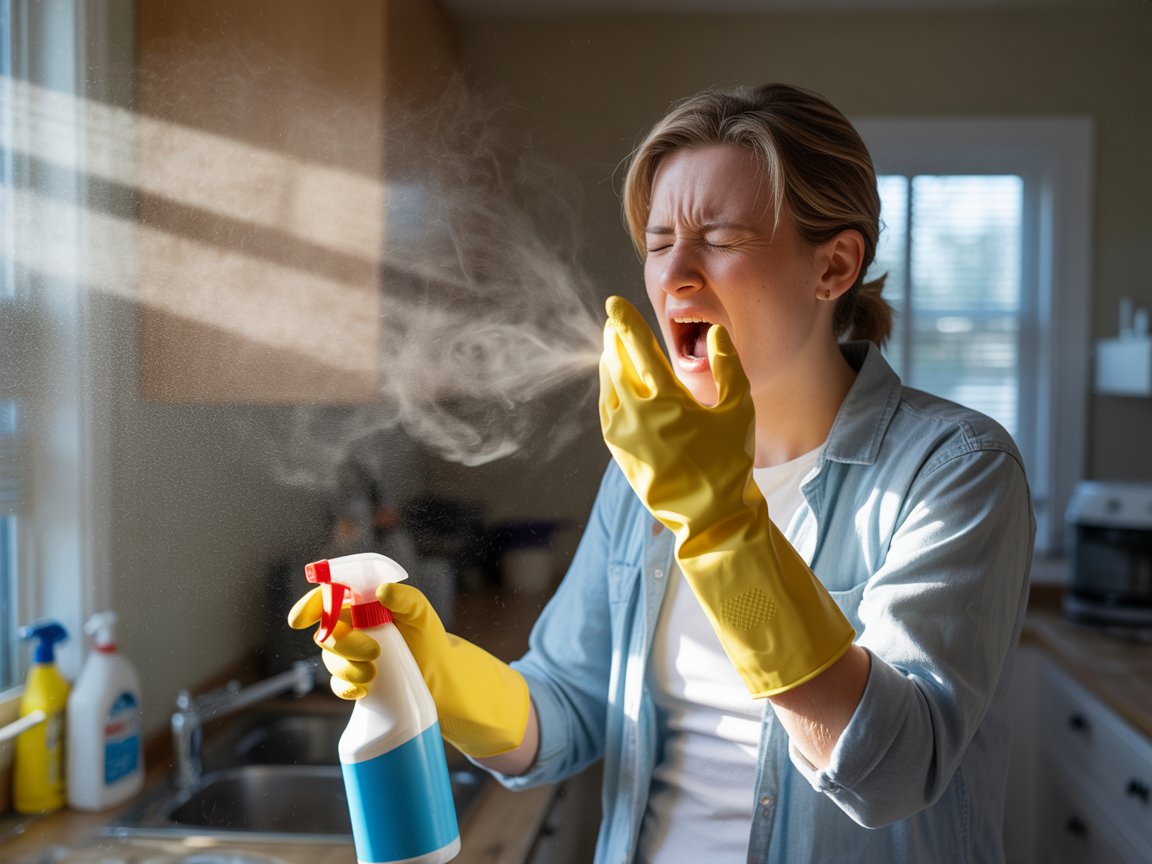
The Short Answer: Traditional cleaning relies on surfactants (soaps) that leave a sticky residue. This residue acts like a magnet, attracting and binding new dust, pollen, and grime—a process called "Rapid Re-soiling." This film can also serve as food for bacteria, worsening indoor air quality over time instead of improving it.
The Re-Soiling Mechanism and Detergent Failure
Here is the dirty secret of the cleaning industry: soap is designed to be sticky.
Traditional cleaning relies on surfactants to grab dirt. The problem? A microscopic film of surfactant residue remains on your carpets and floors.
As this residue dries, it remains chemically active. That sticky floor attracts new dust, pollen, and grime instantly.
I've seen it hundreds of times. A client cleans their floors on Monday. By Wednesday, they look dirty again. They think they didn't clean well enough. They clean harder. More soap. More residue. More rapid re-soiling.
It's a cycle that never ends—until you stop using soap.
Detergent residues can also serve as a carbon source for bacterial growth. You are essentially laying down a buffet for microbes.
The Consequences of Improper Cleaning
I see the same symptoms in home after home.
Respiratory irritation and worsened allergies. Chronic sneezing, runny nose, congestion. Itchy, watery eyes.
Skin rashes and eczema flare-ups. Asthma attacks and wheezing.
Poor sleep quality from nighttime allergy symptoms. Reduced productivity and cognitive function.
Surface damage over time—discoloration, hazing on hardwood floors.
And the worst part? Entering pollen season with already compromised indoor air.
“You wouldn’t wash your hair and not rinse the shampoo out. Why do we do it to our floors?” — Author: Wells Ye
Where Do Allergens Hide in Each Room—And How I Remove 80% of Them Without Harsh Chemicals?

The Short Answer: Allergens concentrate in specific zones: mattresses in bedrooms (mites), upholstery in living rooms (dander), and entryways (pollen/salt). I remove 80% of them using physics, not chemistry—an eco-friendly, real green cleaning approach: dry steam to destroy, HEPA filtration to capture, DI water to extract, and HOCl to neutralize. Below, I walk you through the general methodology first, then show you how I apply it room by room.
My Approach: Physics Over Chemistry
This isn't about using more products. It's about using the right tools in the right order.
I remove allergens by physically destroying, capturing, and extracting them—not by masking them with scent. Here's the sequence I follow in every room:
Dry steam (212–280°F). High-temperature, low-moisture steam denatures allergen proteins on contact. It kills dust mites instantly and breaks down pollen and pet dander embedded in fabrics—without soaking surfaces or leaving residue.
"Heat and steam will kill viruses… think of it as being melted by high temperatures." — Paula Cannon, PhD, USC Keck School of Medicine
HEPA filtration. Once loosened, allergens must be captured. True HEPA filtration removes 99.97% of particles down to 0.3 microns, preventing redistribution into the air.
Deionized (DI) water. DI water lifts remaining particles and evaporates without residue, leaving surfaces less likely to attract new dust or pollen.
Hypochlorous acid (HOCl). HOCl neutralizes biological allergens like mold spores and bacteria without VOCs, fragrances, or airway irritation. It's the same compound your immune system uses.
Used together, in this sequence, these methods remove allergens instead of masking them.
No fragrance. No residue. No re-soiling cycle.
Now let me show you how I apply this approach in each room.
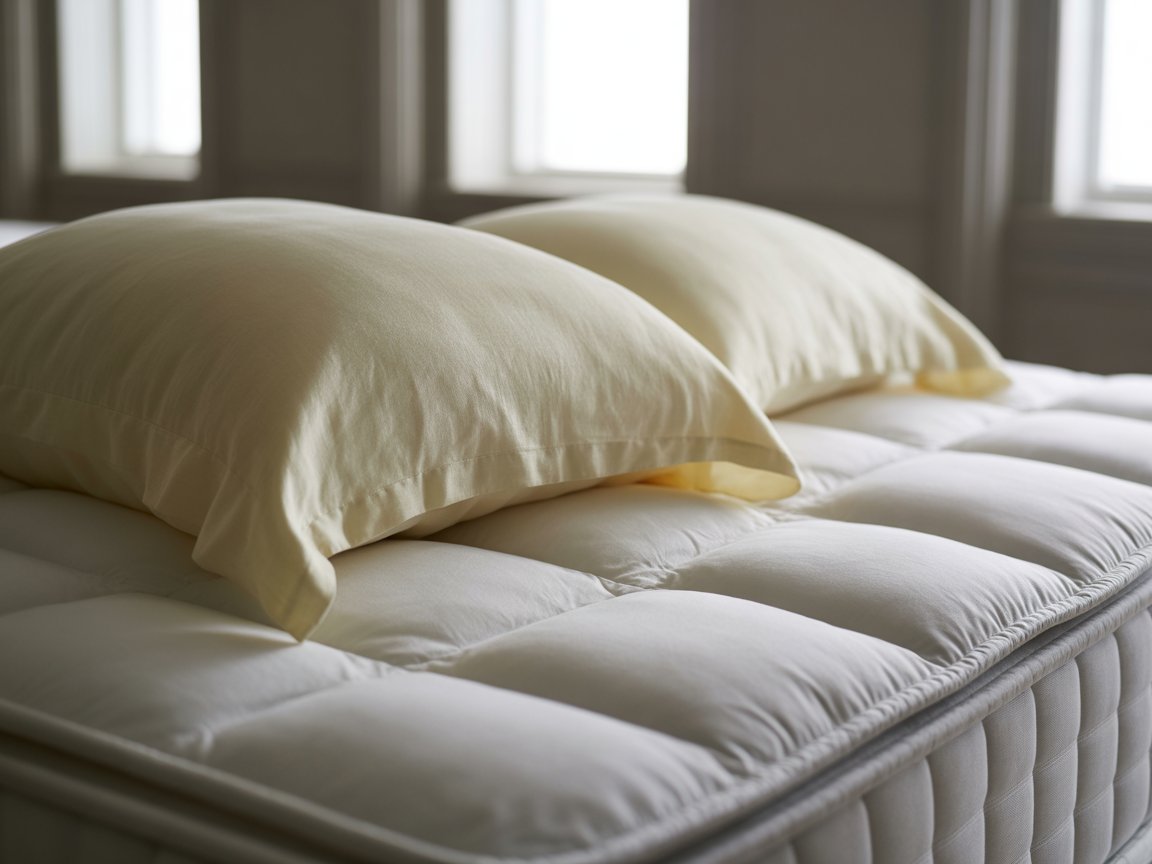
Bedroom: Priority #1
You spend one-third of your life here. The mattress is "Ground Zero" for dust mites.
Where Allergens Hide:
- Mattress (highest concentration of dust mites)
- Pillows (weight increases over time from mite accumulation)
- Bedding (sheets, blankets, comforters)
- Carpet/Rugs (if carpeted bedroom)
- Curtains/Drapes
- Upholstered headboard
- Under-bed area (dust accumulation zone)
- Stuffed animals/plush toys
How to Remove 80% of Allergens:
- Prep: Strip all bedding; move furniture to access all floor areas
- Step 1: HEPA vacuum mattress thoroughly—all surfaces, seams, crevices
- Step 2: Steam clean mattress surface (212°F+ kills dust mites instantly)
- Step 3: Allow 4-6 hours to dry completely
- Step 4: Install allergen-proof encasements (AAFA-certified) on mattress and pillows
- Step 5: Wash all bedding in hot water (130°F+)
- Step 6: HEPA vacuum carpets/rugs; steam clean if possible
- Step 7: Wash or steam curtains
- Step 8: Place HEPA air purifier in bedroom; run 24/7 during pollen season
Why It Matters: Johns Hopkins study showed 90% reduction in mite populations within one month with encasements alone.
Living Room: The Dander Trap
Upholstery and carpets trap pet dander, which is sticky and stubborn.
Where Allergens Hide:
- Upholstered furniture (sofas, chairs—pet dander hotspot)
- Throw blankets and decorative pillows
- Carpets and area rugs
- Curtains and drapes
- Vertical surfaces (walls, ceilings—pet dander sticks here)
- Electronics and shelving (dust collectors)
- Pet beds and pet areas
How to Remove 80% of Allergens:
- Prep: Remove throw pillows, blankets; clear surfaces
- Step 1: HEPA vacuum all upholstered furniture—cushions, under cushions, crevices
- Step 2: Steam clean upholstery (test hidden area first for colorfastness)
- Step 3: HEPA vacuum carpets and area rugs thoroughly
- Step 4: Steam clean carpets or hire professional steam cleaning
- Step 5: Wash or steam curtains/drapes
- Step 6: Damp-wipe vertical surfaces with DI water (attracts dust without residue)
- Step 7: Wash pet beds in hot water (130°F+); steam clean pet areas
Why It Matters: Pet dander is extremely sticky—it requires physical removal, not chemical masking.
Entryway: The Pollen and Salt Gateway
This is where 80% of pollen and road salt enters your home.
Where Allergens Hide:
- Entry mats (inside and outside)
- Shoe storage area - Coat closet/hooks
- Floor surfaces (pollen, road salt, tire particles tracked in)
- Walls and baseboards near door
How to Remove 80% of Allergens:
- Prep: Remove all shoes to outdoor area; shake out mats outside
- Step 1: HEPA vacuum entry mats thoroughly (both sides)
- Step 2: Wash mats in hot water if machine-washable; replace if worn
- Step 3: HEPA vacuum floor surfaces—focus on corners and baseboards
- Step 4: Mop hard floors with DI water only (no soap residue to attract new dirt)
- Step 5: Wipe walls and baseboards with damp microfiber
- Step 6: Establish shoe-free policy—contain outdoor shoes at entry
Why It Matters: Pollen tracks in on shoes, clothing, and pets; stopping it here prevents whole-house contamination.
Kitchen & Bathroom: The Mold & Bacteria Zones
Moisture here feeds mold and mites.
Kitchen:
Where Allergens Hide:
- Range hood and exhaust fan
- Under and behind appliances (refrigerator, stove)
- Countertops
- Cabinet exteriors
- Floor surfaces
- Pet feeding areas
How to Remove 80% of Allergens:
- Prep: Clear countertops; pull out refrigerator and stove if possible
- Step 1: HEPA vacuum under/behind appliances
- Step 2: Steam clean range hood, exhaust fan cover
- Step 3: Wipe countertops with DI water (no chemical residue on food prep surfaces)
- Step 4: Sanitize with HOCl—FDA-approved for food contact, no rinse needed
- Step 5: HEPA vacuum floor; mop with DI water
- Step 6: Clean pet feeding area—wash bowls in hot water; wipe floor underneath
Bathroom:
Where Allergens Hide:
- Exhaust fan cover (critical for mold prevention)
- Tile and grout (mold-prone)
- Under sinks (check for leaks—mold prevention)
- Shower curtain/door
- Towels and bath mats
How to Remove 80% of Allergens:
- Prep: Remove bath mats, shower curtain, towels
- Step 1: Remove and soak exhaust fan cover in hot water; wipe dry
- Step 2: Steam clean tile, grout, and fixtures (steam is fungicidal—kills mold spores)
- Step 3: Check under sinks for leaks; repair any moisture issues
- Step 4: Wash or replace shower curtain
- Step 5: Wash towels and bath mats in hot water (130°F+)
- Step 6: Ensure proper ventilation—run fan during/after showers
Why They Matters: Kitchen is where food is prepared—no chemical residue should contact food. Mold spores are a major allergen; bathroom moisture creates ideal growing conditions.
HVAC SYSTEM — The Allergen Distributor
Where Allergens Hide:
- Air filters (trap allergens but also distribute them when clogged)
- Vent covers (dust accumulation)
- Ductwork (years of accumulated dust, dander, pollen)
How to Remove 80% of Allergens:
- Step 1: Replace filters with MERV 11-13 rated filters
- Step 2: Remove vent covers; soak in hot water; wipe dry before reinstalling
- Step 3: Consider professional duct cleaning every 3-5 years
- Step 4: Run system fan continuously during pollen season to filter air
Why It Matters: Your HVAC is either your best defense or your worst enemy—it either filters allergens or distributes them throughout your home.
Chicago Special: The Vintage Bungalow — Radiator Reservoir
Cast-iron radiators act as vacuums for dust.
Where Allergens Hide:
- Cast-iron radiators (built 1910-1940) accumulate decades of debris in complex fins
- Convection process turns radiators into vacuum for dust, pet hair, allergens
- Thermal Aerosolization”: when heat turns on, accumulated dust blows into breathing zone
How to Remove 80% of Allergens:
- Step 1: Dry brushing with long-reach radiator brushes + HEPA vacuum assistance
- Step 2: Steam injection to blast dust from deepest crevices
- Step 3: Place protection beneath radiator for toxic runoff (decades-old dust, potential lead paint)
Why It Matters: Every time the heat kicks on, you’re breathing decades of accumulated allergens.
Chicago Special: Lakefront High-Rise — The Stack Effect
The "Stack Effect" pulls street grime up elevator shafts—making apartment cleaning in Chicago high-rises uniquely challenging.
Where Allergens Hide:
- “Stack Effect”: temperature differential creates strong upward air currents in building
- Air infiltrates at lower levels (lobby, garage) and rises through elevator shafts
- Carries street-level pollutants—diesel soot, road salt dust—directly into upper-floor units
- Even 40th floor residents find “city grime” on window sills
- Modern high-rises are tightly sealed, trapping internally generated pollutants
How to Remove 80% of Allergens:
- Step 1: Aggressive entryway cleaning to stop salt tracking from common areas
- Step 2: High-frequency dusting of HVAC intakes and exhaust vents with damp microfiber
- Step 3: Identify and treat condensation areas (often around windows) to prevent mold
- Step 4: Run HEPA air purifier continuously
Why It Matters: High-rise living doesn’t protect you from street-level pollutants—they ride the elevator with you.
“Don’t just move dust around; capture it. If your vacuum doesn’t have a HEPA filter, you’re just a dust spreader.” — Author: Wells Ye
What Should You Do Right Now to Prepare for Spring Allergy Season?
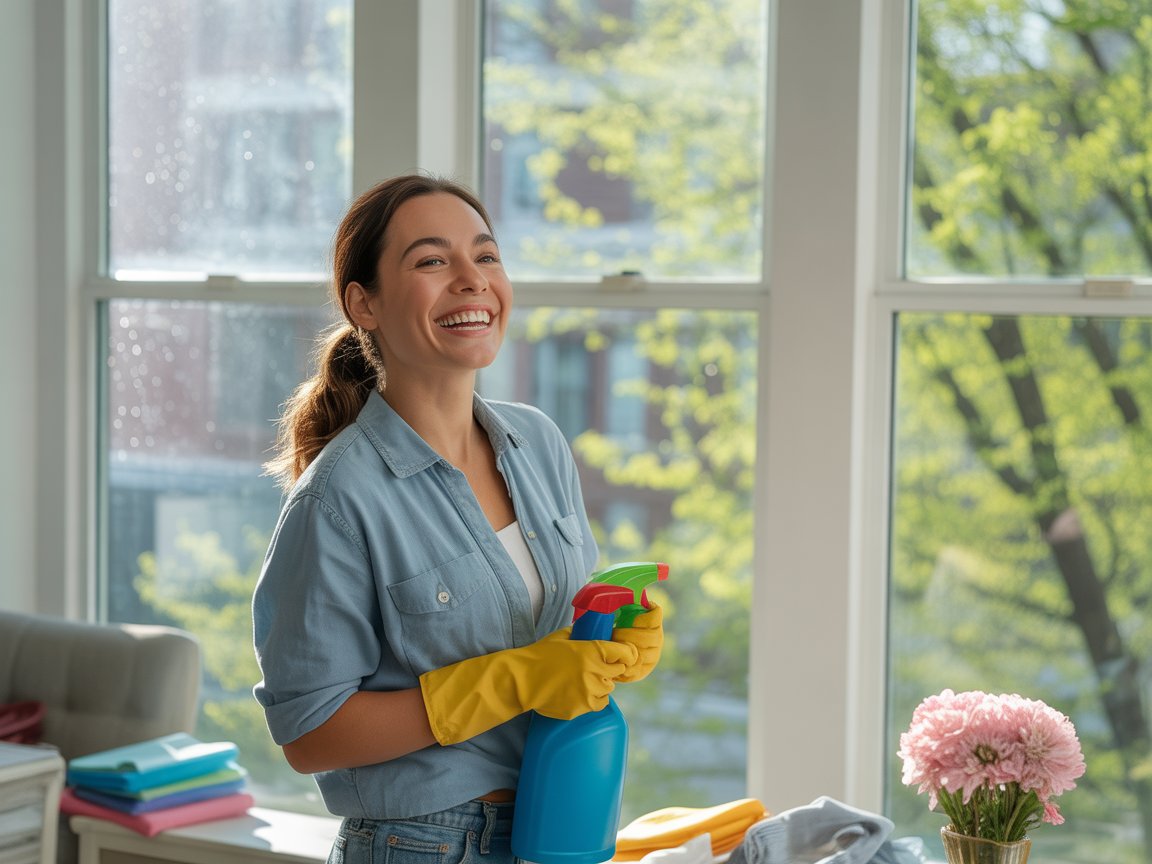
The Short Answer: Timing is critical. Chicago tree pollen begins late February/early March, and pollen seasons now start 20 days earlier than historical averages. Complete deep cleaning by mid-March. The goal is to eliminate winter allergen buildup BEFORE outdoor pollen compounds the problem.
WEEK 1: The Bedroom Reset
- Purchase allergen-proof encasements (AAFA-certified) for mattress, box spring, pillows
- Strip all bedding and wash in hot water (130°F+)
- Items that can’t be washed: dryer on high heat for 30+ minutes
- HEPA vacuum mattress thoroughly—all surfaces, seams, crevices
- Steam clean mattress (if equipment available)
- Install encasements
- Place HEPA air purifier in bedroom
WEEK 2: The HEPA Upgrade
- If vacuum doesn’t have true HEPA filter, upgrade now
- Replace HVAC filters with MERV 11-13 rated filters
- Consider portable HEPA air purifier for living areas
- Test smoke detectors while you’re at it
WEEK 3: The Whole-House Deep Clean
- This is where I recommend professional help if possible.
- Professional steam cleaning for carpets, upholstery, and mattresses.
- Radiator cleaning for bungalows.
- Vent and duct cleaning for high-rises.
- Entryway deep clean to remove winter salt accumulation.
- Wash curtains, throw rugs, and stuffed animals.
ONGOING DEFENSE SYSTEM
- Keep windows closed during high pollen days. Check the daily forecast.
- Run HEPA air purifiers continuously in bedrooms.
- Establish a shoe-free policy at entry doors.
- Shower before bed during peak pollen season. This washes pollen from hair and skin.
- Wipe pets with a damp cloth after outdoor time.
- HEPA vacuum high-traffic areas twice weekly.
- Wash bedding weekly in hot water.
- Change HVAC filters monthly during peak pollen season.
MEASURE YOUR PROGRESS
For families serious about allergen reduction, I recommend an indoor air quality monitor.
Devices like the Air Things View Plus track particulates, humidity, and VOCs in real time.
You can see the impact of your cleaning efforts—and know immediately when levels spike.
It's the difference between guessing and knowing.
“Beat the bloom. If you wait until you sneeze, it’s too late.” — Author: Wells Ye
Budget Guide for 80% Allergen Removal
Professional Service Option
- Quarterly deep cleaning by an employee-based maid service
- Fresh Tech Maids allergen removal protocol
- Estimated Cost: $200-400 per visit
Best For: Families with asthma/severe allergies, limited time, luxury homes with extensive square footage, or 7-10 YES answers on assessment quiz (Your Allergen Removal Readiness Assessment)
How Do You Know If You Need Professional Help or Can Do It Yourself?
The Short Answer: Take the Allergen Removal Readiness Assessment. Your score determines whether DIY, hybrid, or professional service is your best path. If anyone in your home has diagnosed asthma or severe allergies, professional help is strongly recommended regardless of other answers—the stakes are too high for trial and error.
Results:
- 0-3 Yes: DIY is sufficient. Buy a good HEPA vacuum.
- 4-6 Yes: Hybrid. Do the weekly maintenance yourself, but hire pros for carpets/upholstery.
- 7-10 Yes: Professional Allergen Removal Service is strongly recommended. The stakes are too high for trial and error.
Why Professional Equipment Matters: Consumer steam mops max out at 200°F and lose heat quickly. Commercial steamers hit 212°F-280°F consistently, which is necessary to kill mites. Also, employee-based services like Fresh Tech Maids ensure workers are trained in DI water physics and steam safety—protecting you from liability gaps common with "gig" workers.
The Employee-Based Service Advantage (Illinois Law)
This is something most homeowners don't think about until something goes wrong.
The Illinois Employee Classification Act (820 ILCS 185) and the Domestic Workers' Bill of Rights (2026 Update, effective January 1, 2026) protect homeowners who hire employee-based cleaning companies.
If you hire independent contractors or "gig workers," you face real liability risks.
If a contractor is injured in your home, you can be sued.
If you direct the work, you may be classified as their employer.
There's no insurance coverage for theft or damage.
Employee-based companies carry workers' compensation insurance, general liability insurance, and bonding for theft/damage protection.
They provide standardized training on steam temperatures, HOCl dwell times, and DI water physics.
Paid sick leave prevents sick workers from entering your home.
"I built my company on employees, not contractors, because safety is not a gig."— Author: Wells Ye
Real Life Stories from Chicago

The DIY Success
Who: A young professional couple in Lincoln Park.
Journey: They were tired of waking up congested every morning in their 1920s apartment. After reading about steam cleaning, they invested in a quality HEPA vacuum and handheld steamer. They started with the bedroom—encasements on the mattress, weekly hot water washes, and steam cleaning the carpet.
Result: Within two weeks, morning congestion decreased noticeably. Their weekend cleaning routine now takes 45 minutes instead of 3 hours, and they’ve eliminated six different cleaning products from under their sink.
Message: “We thought we needed to clean more. Turns out we needed to clean smarter.”
The “I Needed Help” Realization
Who: An empty nester in Oak Park with a Chicago bungalow built in 1927.
Journey: She tried to deep clean herself but couldn’t physically manage the cast-iron radiators or reach behind decades of furniture. Her daughter has asthma and visits every Sunday for dinner.
Result: She hired a professional maid service (Fresh Tech Maids) for a quarterly deep clean focused on allergen removal. Between visits, she maintains her own HEPA vacuum and DI water wiping. Her daughter no longer needs her inhaler during Sunday dinners.
Message: “I finally stopped feeling guilty about not doing it all myself. My lungs—and my daughter’s—are worth the investment.”
“The goal is a home that supports your life—not a home that exhausts you.” — Author: Wells Ye
Your 2026 Spring Allergen Removal Action Plan

The Problem
Traditional cleaning methods move allergens around instead of removing them. Chemical products leave residue that attracts more dust. Chicago’s intense pollen season compounds the problem.
You’ve Seen the Solution
Steam cleaning, HEPA filtration, DI water, and allergen encasements can remove 80% of indoor allergens without adding any chemicals to your home.
Now It’s Time to Choose Your Path
5 Things to Do This Week:
- Assess your home’s allergen readiness (use the quiz above)
- Order allergen-proof mattress and pillow encasements (AAFA-certified)
- Check your vacuum—does it have true HEPA filtration?
- Mark mid-March on your calendar as deep cleaning deadline
- Decide: DIY, professional help, or hybrid approach for your family
If you want help with heavy zones, Fresh Tech Maids is Chicago's top-rated employee-based cleaning service—offers deep cleaning resets with a steam-first, chemical-free approach.
“An allergen-free home isn’t about perfection. It’s about progress—80% reduction that you can actually maintain.” — Author: Wells Ye
An allergen-free home. Chemical-free air. Relief from sneezing, congestion, and sleepless nights.
Your healthiest, allergen-free spring starts now...
Frequently Asked Questions (FAQ)
Why is spring the best time to deep clean for allergies?
Spring is critical because you need to remove the “Winter Buildup” of dust mites and dander before the outdoor pollen season begins. Chicago homes are sealed tight November-March, allowing allergens to accumulate for five months. Deep cleaning before pollen season (ideally by mid-March) removes the winter buildup before outdoor pollen adds to the burden. Pollen seasons now start 20 days earlier than 30 years ago (AAFA 2025).
What are the best ways to remove allergens from my home?
The best methods are chemical-free: dry steam vapor at 212°F-280°F kills dust mites and denatures allergen proteins. HEPA filtration captures 99.97% of particles 0.3 microns and larger (EPA). Deionized water cleans without leaving any residue. Hypochlorous acid (HOCl) provides hospital-grade disinfection that’s safe for humans and pets. Together, these methods achieve 80%+ allergen reduction.
How do I get rid of dust mites in my mattress?
You must use heat. Start by HEPA vacuuming the entire mattress surface, including seams and crevices. Then steam clean at 212°F or higher—the thermal death point for dust mites is 130°F. Allow 4-6 hours for drying. Install AAFA-certified allergen-proof encasements. A Johns Hopkins study found 90% reduction in mite populations within one month of encasement use.
How long does pet dander stay in a house?
Pet dander is sticky and can remain in a home for 4-7 months after the pet is removed (FilterBuy, 2025). It adheres to walls, furniture, clothing, and HVAC systems. In fact, 90% of homes test positive for pet allergens even without pets (Filtrete). Physical removal through HEPA vacuuming and steam cleaning is the only effective approach.
How often should I clean to reduce allergens?
During allergy season, HEPA vacuum high-traffic areas twice weekly. Wash bedding weekly in hot water at 130°F or higher. Change HVAC filters monthly during peak pollen season. Professional deep cleaning of carpets, upholstery, and mattresses is recommended quarterly for homes with asthma or allergy sufferers.
Is chemical-free cleaning safe for homes with babies and pets?
Chemical-free cleaning is not just safe—it’s safer than traditional cleaning. Children breathe 50% more air per pound of body weight than adults and spend 80-90% of their time indoors. A Canadian study found that children in homes with high cleaning product use had 37% higher odds of asthma by age 3. Steam, HEPA filtration, DI water, and HOCl leave zero harmful residue.
What is the best HEPA vacuum for allergen removal?
Look for vacuums with true HEPA filtration (not “HEPA-like” or “HEPA-style”). True HEPA captures 99.97% of particles 0.3 microns and larger. Look for a “Sealed System” True HEPA vacuum. Brands like Dyson, Shark, and Miele are widely available at Amazon, Best Buy, and Costco.
How much does professional allergen removal cost in Chicago?
Professional allergen removal deep cleaning typically costs $200-$400 per visit in Chicago. This includes steam cleaning of carpets, upholstery, and mattresses with commercial-grade equipment operating at temperatures consumer devices can’t reach. For families with asthma or severe allergies, quarterly professional service is recommended.
Can deep cleaning help with Chicago allergies?
Yes. A peer-reviewed study published in Clinical & Experimental Allergy found that steam cleaning achieved an 86.7% reduction in dust mite allergen concentrations. Combined with HEPA filtration, allergen encasements, and DI water cleaning, it’s possible to remove 80% of indoor allergens. This is especially important in Chicago, where 16% of families have a child with asthma (CDPH).
Do air purifiers really help with allergies?
HEPA air purifiers reduce airborne pet dander by 75-89% (PMC study). They capture pollen, dust mite allergens, and other particles. For best results, choose a unit with a Clean Air Delivery Rate (CADR) appropriate for your room size and run it 24/7 in bedrooms during pollen season.
What percentage of allergens can be removed from a home?
With proper methods—steam cleaning, HEPA filtration, allergen encasements, and DI water—you can achieve an 80% reduction in indoor allergen levels. A Johns Hopkins study showed 90% mite reduction with encasements alone, and steam cleaning delivers 86.7% reduction in dust mite allergens.
Does steam cleaning really kill dust mites?
Yes. The thermal death point for dust mites is 130°F (54°C). Steam cleaners operate at 212°F-280°F—far exceeding this threshold. Steam kills dust mites and their eggs instantly, denatures allergenic proteins, and is fungicidal against mold spores. Unlike chemicals, steam leaves zero residue.
What is DI water and why is it better for cleaning?
Deionized (DI) water has been stripped of all mineral ions. In this ultra-pure state, it becomes an aggressive solvent that actively pulls dirt, salts, and chemical residues from surfaces. It cleans without soap, evaporates completely, and leaves zero residue. This breaks the re-soiling cycle—surfaces cleaned with DI water stay cleaner longer.
When should I complete spring cleaning before pollen season?
Aim to complete your deep cleaning by mid-March. Chicago tree pollen begins in late February and early March, and pollen seasons now start 20 days earlier than historical averages (AAFA 2025). The goal is to eliminate winter allergen buildup before outdoor pollen compounds the problem.
Your Complete Chicago Spring Allergy Cleaning Guide
Your Free Guide With Checklist!

Your Complete Chicago Spring Allergy Cleaning Guide: With Checklist
What's Inside This Free Guide:
- Hidden Allergens Lurking in Your Home
- Room-by-Room Removal Checklists
- The 4 Pillars of Chemical-Free Cleaning
- 4-Week Spring Action Timeline
- Essential Tools Chart
Print it. Check it off. Breathe easier.
Get Your Spring Allergy Cleaning Guide!