
Spring 2026 is bringing a cleaning revolution to Chicago homes

Direct Answer: Steam cleaning is the #1 spring cleaning trend I’m seeing in Chicago for 2026 because it tackles allergens, greasy buildup, and chemical residue—and adds practical steam sanitizing. It uses heat and water vapor to loosen grime so you can wipe it away faster—without turning your home into a cloud of fragrance and fumes.
Key 2025 Statistics:
Spring in Chicago is a double hit.
First, we clean up winter—salt, soot, and tracked-in grit.
Then allergy season ramps up and people start paying attention to the air inside their homes.
National Cleaning Week is March 22–28, 2026 (ACI, 2026, Cleaning Institute)
That week lands right when many households finally open the windows and start the “deep reset.”
“If you clean a surface but the air feels worse, the job isn’t done.” — Wells Ye
The moment I stopped trusting “more spray = more clean”
A client once told me, “The smell makes my kid cough.”
That was the moment I stopped equating strong scent with a clean home.
I tested steam on the hardest spots first—grease edges, grout lines, oven corners.
Steam didn’t just help.
It changed how fast we could remove buildup.
The Spring Cleaning Crisis in Chicago – Why Traditional Methods Are Failing
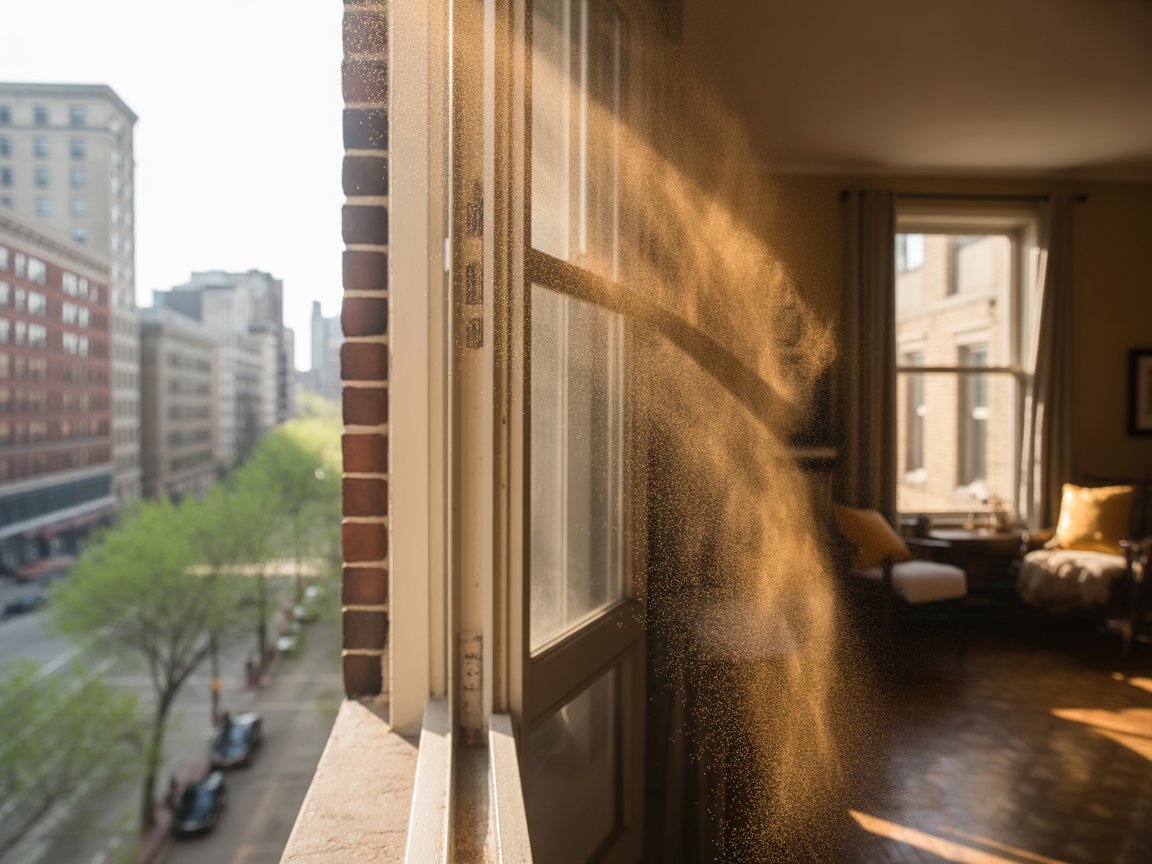
Direct Answer: Traditional spring cleaning fails in Chicago because wiping and fragrancing doesn’t remove what winter and city living leave behind. Fine dust settles fast, small spaces trap fumes, and allergy season can start earlier than expected. Steam works better here because it loosens buildup at the source, then you wipe it away.
Chicago homes aren’t just “dirty.”
They’re layered.
A winter layer.
A city layer.
And then pollen.
The Asthma and Allergy Center of Chicago updates pollen and mold readings during the active season (April through October). (ASAP Illinois)
And local reporting has noted allergy season starting sooner than expected. (Chicago Sun-Times)
In Chicago, that can mean allergy season runs roughly March–October, with tree pollen showing up as early as February and lasting into May. (Chicago Sun-Times)
So if your spring routine is “spray + wipe,” you often get:
- Clean-looking surfaces that still feel sticky or streaky
- Bathrooms that smell “fresh” but still grow buildup in grout
- A home that smells like product, not cleanliness
“The goal isn’t ‘fresh scent.’ It’s clean air.” — Wells Ye
The Hidden Toll of Traditional Cleaning Methods – And Why Steam Is the 2026 Solution
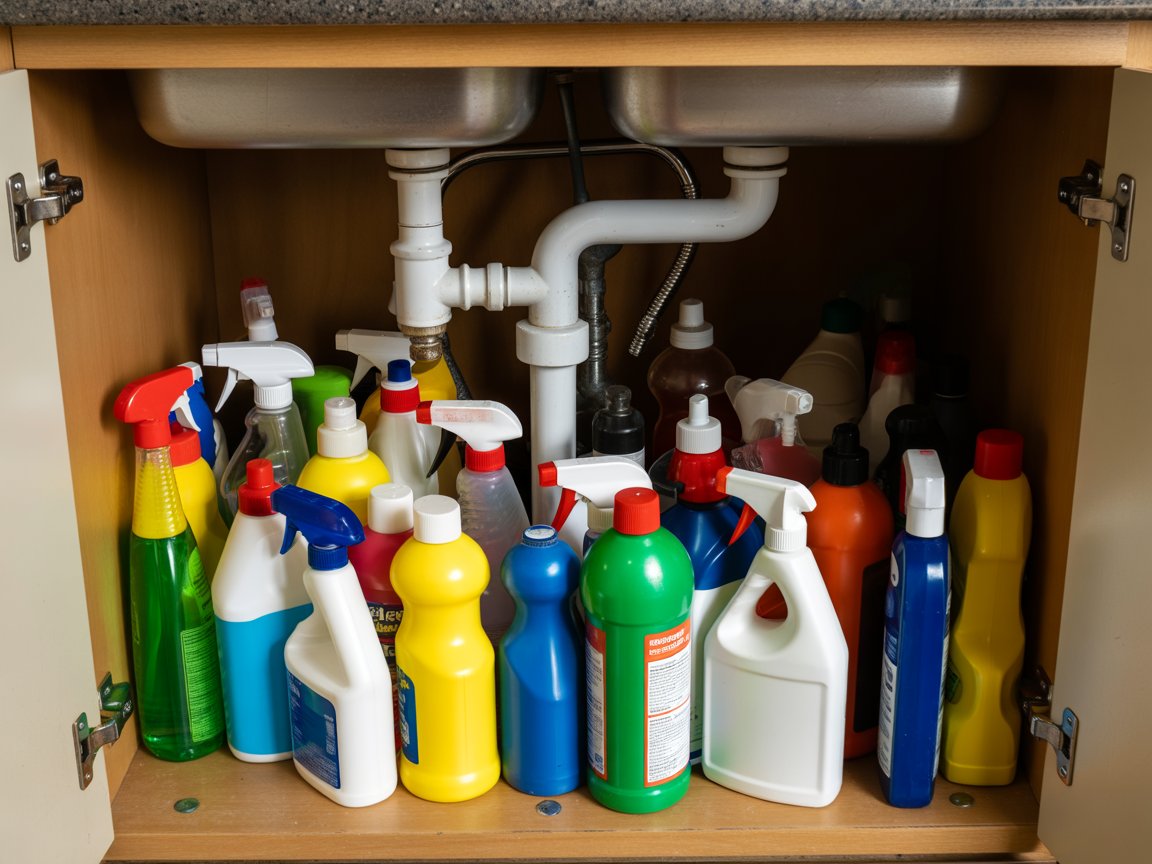
Direct Answer: The hidden toll of traditional cleaning is what stays behind: chemical residue, VOCs, and moisture traps that can irritate breathing and attract more dirt. Steam is a 2026 solution because it uses heat to lift grime and reduce germs with water vapor—so you can clean effectively while using fewer products indoors.
Spring deep cleaning is also an indoor-air decision. Instead of stacking bottles, I like steam because it reduces residue and keeps your routine simple—especially in smaller Chicago spaces where fumes linger.
- The EPA notes indoor air can be 2–5 times more polluted than outdoor air (EPA, 2023). (US EPA)
- The EPA also notes many VOCs are higher indoors—sometimes up to 10 times higher than outdoors (EPA, 2023). (OUP Academic)
- Mixing bleach with ammonia creates toxic fumes (ALA, 2024)
That’s why “more product” can backfire in a closed-up home.
And it’s why I like steam: it lowers the need for extra bottles and leaves less residue behind.
“Never mix ammonia and bleach… this mixture can create toxic fumes.” — American Lung Association, 2024. (American Federation of Teachers)
What Is Steam Cleaning and How It Works
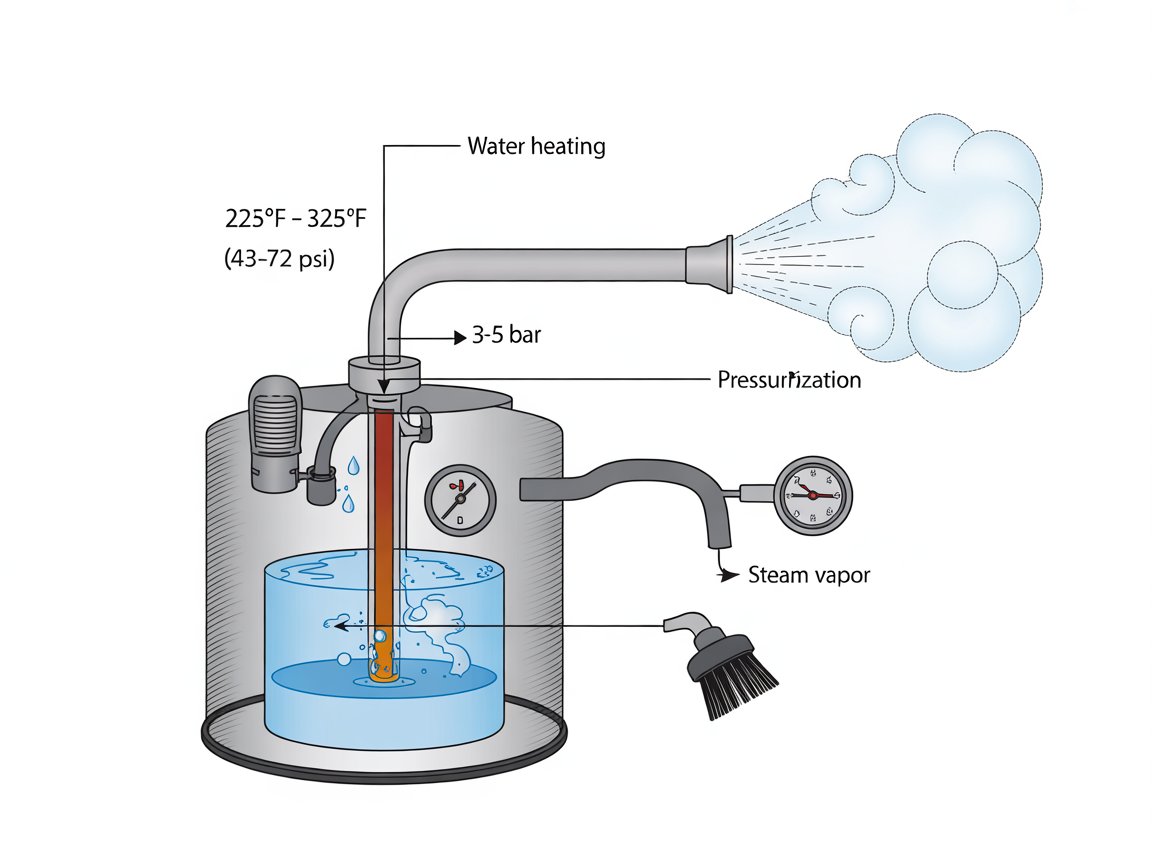
Direct Answer: Steam cleaning uses hot water vapor to deliver heat into dirt, grease, and microbes. Heat loosens buildup so you can wipe it away, and it can inactivate many germs when the surface reaches a high enough temperature for long enough. It’s not magic—you still wipe and dry—but it reduces scrubbing and product use.
How it works (3 steps):
- Heat loosens stuck-on soil (grout, edges, crevices).
- Vapor transfers heat fast, lifting grime from texture and seams.
- Microfiber wipes it away—this “finishes” the clean.
Why it’s effective: Lab and clinical comparisons show steam can rapidly reduce microbes under the right conditions, and can save time and water versus multi-step chemical routines.
“99.9%” note: Those claims depend on the device, surface, and “use-as-directed” test conditions—so results aren’t automatic.
Quick steam table reference (saturated steam):
“Steam sterilization is nontoxic, inexpensive, rapidly microbicidal, sporicidal…” — CDC, 2024.
How I Handled the 5 Biggest Worries About Steam Cleaning
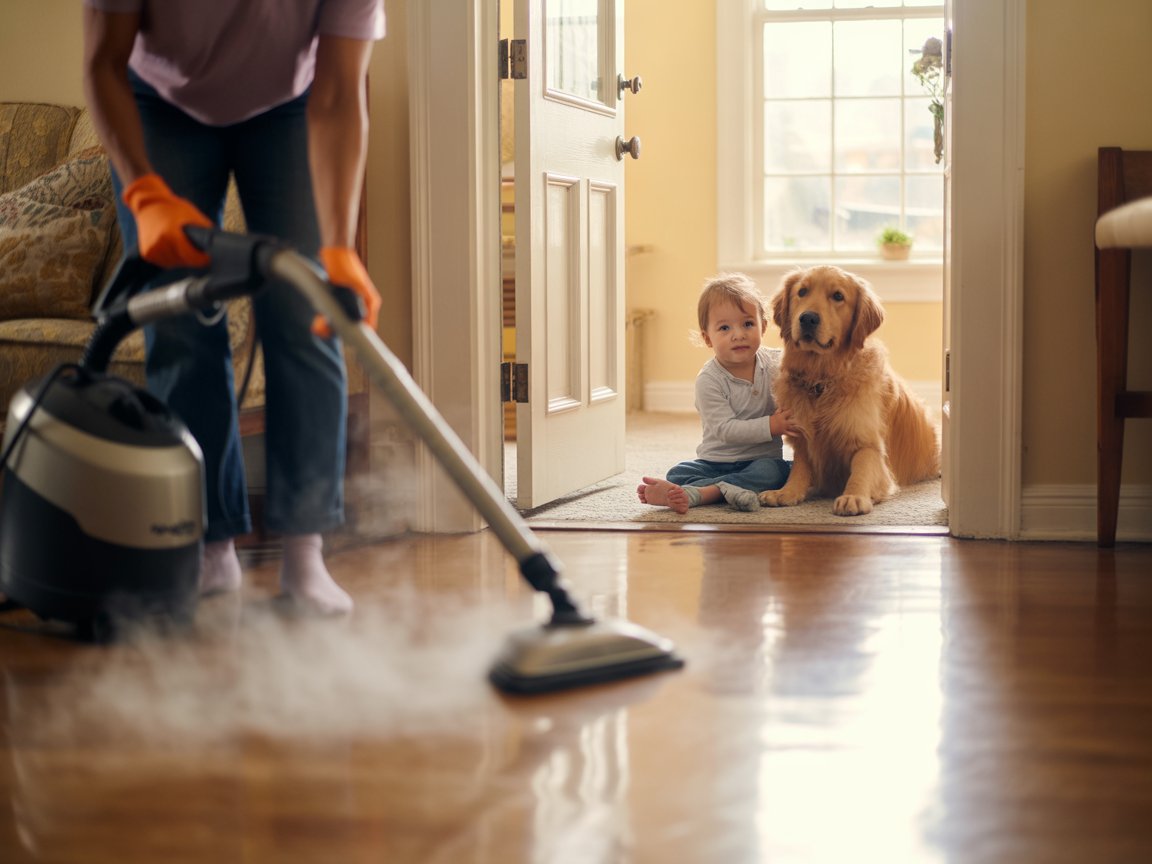
Direct Answer: The five worries I hear most are damage, safety, time, results, and cost. The fixes are simple: steam is great on sealed, heat-safe surfaces, it’s water-based (low residue), it usually cuts a multi-step routine down to steam → wipe, and it can be affordable if you use it as a weekly maintenance tool—not a once-a-year experiment.
Worry #1: Damage — “Will steam ruin my floors or furniture?”
The Truth: Steam is safe for many surfaces—but only the right ones.
Usually steam-safe (test first):
- Ceramic/porcelain tile + grout
- Sealed stone (only if the seal is intact)
- Vinyl/linoleum
- Sealed concrete
- Stainless steel, glass
Avoid or use extreme caution:
- Unsealed wood
- Laminate (heat/moisture can affect seams)
- Unsealed stone (marble/limestone/travertine)
- Delicate fabrics/waxed finishes/fragile paint
My rule: Test a hidden spot first → keep the nozzle moving → short passes → wipe dry.
Worry #2: Safety — “Is steam safe for kids and pets?”
The Truth: Steam is water-based, so you avoid many chemical residues where kids crawl and pets play.
But: steam is hot.
- Keep kids/pets out of the room while steaming
- Let surfaces cool briefly before touch
- Use gloves for detail work
Worry #3: Time — “Does steam cleaning take longer?”
The Truth: Steam is often faster because it cuts steps.
- Traditional: spray → wait → scrub → rinse → dry
- Steam-first: steam → wipe → dry
My tip: Don’t steam everything. Steam your highest-payoff zones (kitchen grease, bathroom grout, high-touch points) first.
Worry #4: Results — “Does steam clean as well as chemicals?”
The Truth: Steam excels at removal—especially grease, grime, grout lines, and buildup in seams—because heat loosens what scrubbing struggles with.
For germs: steam can help reduce them when used correctly, but technique matters (distance, contact time, and wiping). If you need true disinfection, follow product labels and official guidance.
Worry #5: Cost — “Is steam worth it?”
The Truth: It depends on how often you’ll use it.
Typical DIY range:
- Handheld steamer: $30–$150
- Steam mop: $80–$150
- Canister steamer: $150–$300
Pro option: Pricing varies by home size and scope—if you’re overwhelmed, hiring a reset and maintaining weekly with a handheld steamer is often the most realistic (and sustainable) path.
The Steam Cleaning Framework: How Chicago Families Are Embracing the 2026 Trend
Direct Answer: The 2026 steam trend isn’t about fancy gadgets. It’s about a routine: pick your high-payoff rooms (kitchen, bathroom, floors), use steam to remove buildup with fewer chemicals, then maintain with short weekly touch-ups during allergy months. Most Chicago families do best with a hybrid plan: DIY maintenance plus periodic deep resets.
1) Pick DIY, professional, or hybrid
Most homes land in one of three paths:
- DIY: Great for maintenance and smaller spaces.
- Professional: Best for heavy buildup and time crunches.
- Hybrid: DIY weekly + periodic deep resets on heavy zones.
2) Use the readiness assessment (YES/NO)
Answer YES or NO:
Results:
If you said YES to #2–#6, steam is strongly recommended for those zones.
3) Trust one proof point: steam worked in ICUs
In one ICU comparison, steam cleaning resulted in “no bacterial growth” after cleaning and used less time and water than a chemical two-step method (Publisso/DGKH, 2019).
And cleaning affects how people feel.
ACI reports many people say cleaning improves mood, productivity, and stress (ACI, 2020).
“Start where buildup is worst. That’s where motivation is easiest.” — Wells Ye
Steam Cleaning Tools & Supplies for Spring 2026
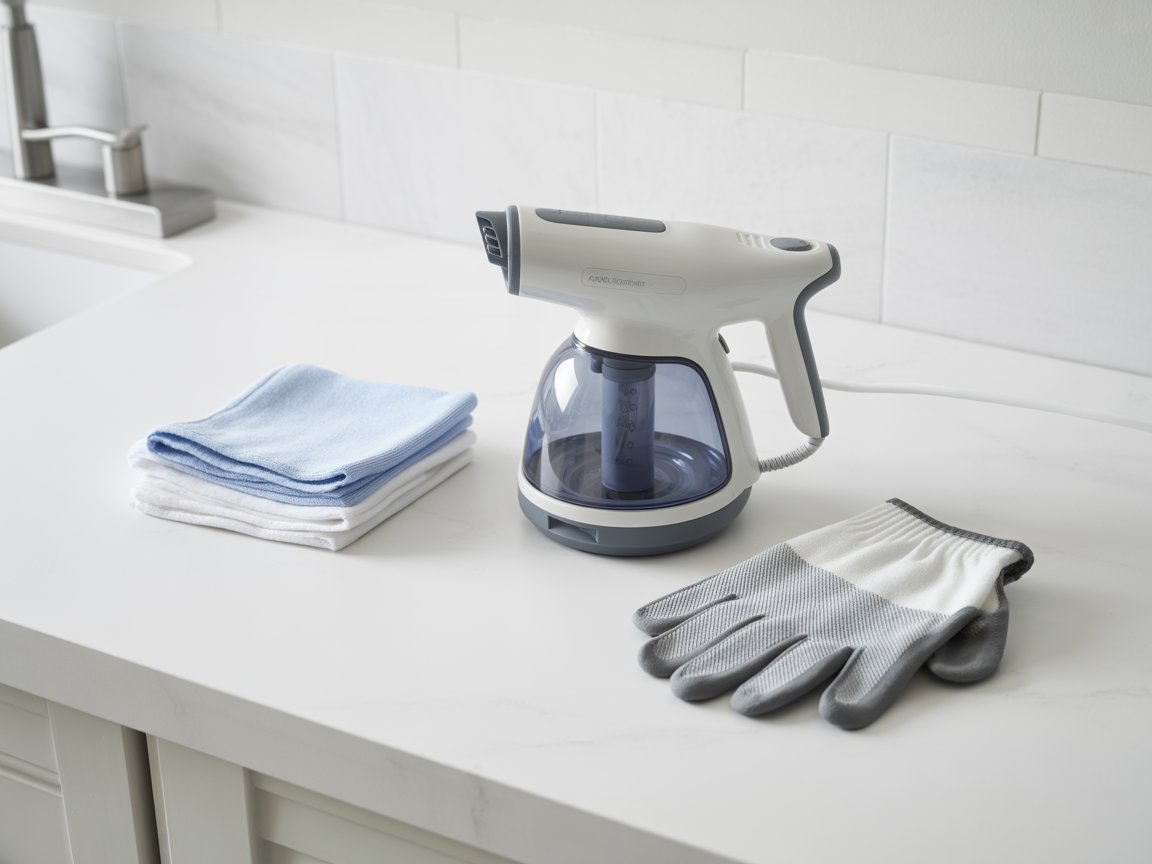
Direct Answer: You don’t need a closet of tools. You need one steamer that matches your home, microfiber cloths to lift what steam loosens, and a simple safety setup. For the cleanest finish and less scale buildup, many manufacturers recommend distilled water. If you want a gentle disinfecting backup, HOCl can fit a steam-first routine.
Tools & supplies table
Caution notes: avoid unsealed hardwood/laminate/delicates; avoid blasting appliance seals; steam small sections and wipe immediately.
If you want a step-by-step kitchen walkthrough, our Kitchen Deep Clean process post is a good companion read. (Fresh Tech Maids)
“The best tool is the one you’ll actually pull out weekly.” — Wells Ye
Room-by-Room Steam Cleaning Guide for Spring 2026
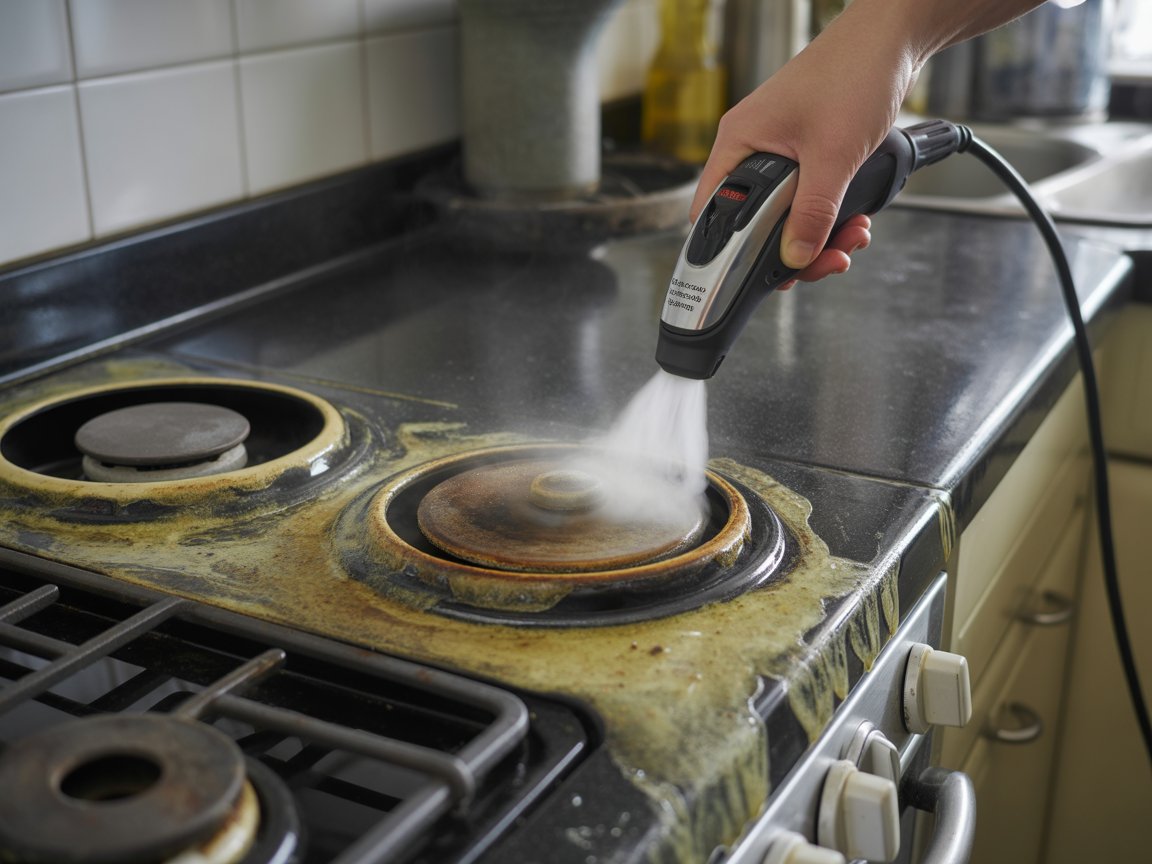
Direct Answer: Go room-by-room using one pattern: prep, steam in short passes, wipe immediately, then let surfaces dry. Start in the kitchen and bathroom because grease and grout hold the most stubborn buildup. Then move to floors and bedrooms to support allergy season. The goal isn’t perfection. It’s a clean reset you can maintain.
KITCHEN (Priority #1 – 64% of Americans start here)
Why Kitchen First: Research shows kitchen sponges harbor 200,000x more bacteria than toilet seats. The kitchen is where polymerized grease—oil that has dried and hardened—accumulates fastest. Steam melts this instantly without harsh degreasers.
Stovetop & Backsplash
- Prep: Remove grates and burner caps. Wipe away loose crumbs and food debris.
- Steps: Hold steamer 1 inch from grease spots. Apply steam in 2-3 second bursts to emulsify (liquefy) the grease. Wipe immediately with microfiber before it cools and re-hardens.
- Safety: Never steam electrical ignition switches directly. Keep steam away from control knobs.
- Tools: Handheld steamer with nylon brush attachment, microfiber cloths.
Oven Interior
- Prep: Remove racks (soak separately in sink). Vacuum loose burnt food from floor of oven. Ensure oven is completely cool.
- Steps: Work in 6-inch sections. Apply continuous steam for 10-15 seconds per spot to soften baked-on carbon. Use a plastic scraper to lift loosened residue. Wipe clean.
- Safety: Never steam a hot oven. Avoid glass cleaner on oven window—steam works better. Don't use metal brushes on glass door.
- Tools: Handheld steamer with brass brush (for enamel walls), plastic scraper, paper towels, microfiber cloths.
Refrigerator Exterior & Handles
- Prep: Empty items from door shelves if steaming interior seals.
- Steps: Steam handles and touchpoints where bacteria concentrate. Use concentrator nozzle around rubber door seals to remove mold and buildup. Wipe immediately.
- Safety: Avoid direct steam on cold glass shelves (thermal shock can crack them). Never steam electronic displays or ice maker components.
- Tools: Handheld steamer with concentrator nozzle, microfiber cloth.
Microwave Interior
- Prep: Remove turntable. Unplug unit for safety.
- Steps: Steam ceiling and walls where food splatters accumulate. Use detail brush for corners. The heat loosens baked-on residue instantly.
- Safety: Keep steam away from electronic control panel vents. Allow to dry before plugging back in.
- Tools: Handheld steamer with detail nozzle.
Sink & Faucet
- Prep: Clear dishes and rinse basin.
- Steps: Direct nozzle into drain opening and blast for 15 seconds to dissolve bio-sludge. Steam around faucet base where it meets the sink—this is where calcium and grime hide. Steam the garbage disposal splash guard.
- Safety: Metal heats quickly—wear protective gloves. Let faucet cool before touching.
- Tools: Handheld steamer with jet nozzle, heat-resistant gloves.
Cabinet Exteriors
- Prep: Test a small hidden spot to ensure finish tolerates heat.
- Steps: Use low-steam setting. Wrap brush attachment in microfiber cloth (the "bonnet method") and wipe gently to remove fingerprints and cooking oil film.
- Safety: Don't linger in one spot—excess moisture can warp wood or damage laminate. Avoid steaming near hinges.
- Tools: Handheld steamer with upholstery tool, microfiber bonnet.
Countertops (Sealed Surfaces)
- Prep: Clear all items and small appliances.
- Steps: Glide steamer slowly across surface. This kills E. coli and Salmonella from food prep—verified by multiple studies. Wipe immediately for streak-free finish.
- Safety: Do NOT steam unsealed granite, marble, or natural stone—heat can damage sealant or cause hazing. Test first on inconspicuous area.
- Tools: Handheld steamer with large rectangular brush, microfiber cloth.
Kitchen Floor (Tile/Sealed Surfaces)
- Prep: Sweep or vacuum thoroughly to remove grit that could scratch.
- Steps: Attach steam mop pad. Move slowly along grout lines to force embedded dirt out of pores. Change pad as soon as it looks gray—dirty pads spread grime.
- Safety: Floor becomes slippery when wet. Allow to dry before walking. Never use steam mop on unsealed hardwood or laminate.
- Tools: Steam mop with microfiber pads (have 3-4 ready for whole kitchen).
BATHROOM
Why Bathroom is Critical: Chicago's humidity creates ideal conditions for mold growth. Steam kills mold at the root—not just bleaching the surface color like chemicals do.
Tile & Grout (Shower/Tub/Walls/Floor)
- Prep: Rinse surfaces with water first to remove loose soap scum. Pre-spray with mild eco-friendly soap to break surface tension if heavily soiled.
- Steps: Trace grout lines slowly (1 inch per second). Watch dirt bubble to the surface as steam penetrates. Wipe immediately with microfiber. For stubborn mold, hold steam on spot for 5-8 seconds.
- Safety: Ensure bathroom is ventilated—open window or run exhaust fan to avoid inhaling loosened mold spores. Avoid crumbling or severely damaged grout.
- Tools: Handheld steamer with nylon grout brush, microfiber cloths, exhaust fan running.
Shower Glass Doors
- Prep: Remove shampoo bottles and accessories.
- Steps: Steam from top to bottom in overlapping strokes. The heat melts the waxy component of soap scum that chemicals struggle with. Follow immediately with squeegee stroke for streak-free finish.
- Safety: Be careful around tempered glass edges. Don't blast cold glass in winter—allow bathroom to warm first.
- Tools: Handheld steamer with window/squeegee attachment.
Toilet Exterior
- Prep: Flush toilet. Lower seat and lid.
- Steps: Focus on the "hidden germ zones"—hinges where seat meets bowl, base bolts, and floor junction. Steam the flush handle (high-touch surface). Blast the exterior rim.
- Safety: Avoid steaming cold ceramic too aggressively in winter (thermal shock risk). Keep children and pets away during cleaning—surfaces are hot.
- Tools: Handheld steamer with jet nozzle, microfiber cloth.
Faucets & Fixtures
- Prep: Dry chrome surfaces first for best results.
- Steps: Use concentrated steam blast to dissolve calcium and lime scale around aerator and handles. Steam around base where fixtures meet countertop. Wipe dry for shine.
- Safety: Metal gets very hot—don't touch with bare hands immediately after steaming.
- Tools: Handheld steamer with detail nozzle, dry microfiber cloth.
LIVING AREAS
Focus: Refreshing fabrics and removing "stale" winter smell without artificial air fresheners.
Upholstery (Sofas, Chairs)
- Prep: Check cleaning code tag (W = water safe, S = solvent only—skip steam). Vacuum thoroughly to remove pet hair and dust.
- Steps: Use rapid passes—don't soak fabric. Steam kills odor-causing bacteria and refreshes foam cushions. Work in sections, allowing each to dry before moving on.
- Safety: Test for colorfastness on back or bottom of furniture first. Avoid steaming delicate fabrics like silk or velvet.
- Tools: Handheld steamer with upholstery tool and microfiber bonnet.
Curtains & Drapes
- Prep: Leave hanging in place—no need to remove.
- Steps: Start at top and steam downward. This relaxes wrinkles while killing dust mites hiding in folds. Keep steamer moving to avoid water spots.
- Safety: Do not steam delicate silks, velvet, or dry-clean-only fabrics. Check care label first.
- Tools: Handheld steamer with fabric attachment.
Hard Floors (Tile, Sealed Hardwood, Sealed Concrete)
- Prep: Remove rugs and furniture from cleaning path. Sweep or vacuum first.
- Steps: For sealed hardwood, use "Low" or "Dry Steam" setting. Keep mop moving constantly—never let it sit. For tile, use "High" steam setting and work slowly along grout lines.
- Safety: Never leave hot steam mop sitting on wood floor—creates white heat ring. Never use on unsealed wood, laminate, or luxury vinyl plank (LVP).
- Tools: Steam mop with appropriate pads for surface type.
Baseboards
- Prep: Vacuum loose dust from top edge and crevices.
- Steps: Run brush attachment along top edge of trim. Steam blasts stubborn dust out of the caulk line where baseboards meet floor and wall.
- Safety: Protect wall paint above trim—steam can damage some paint finishes.
- Tools: Handheld steamer with nylon brush attachment.
BEDROOMS (Critical for Allergy Sufferers)
Why Bedrooms Matter Most for Allergies: You spend 8 hours here breathing. Dust mite waste is the #1 indoor allergen trigger—and it accumulates in mattresses, pillows, and bedding. Steam at 212°F+ thermally deactivates the protein in dust mite waste that causes asthma and allergy symptoms.
Mattresses
- Prep: Strip all bedding. Vacuum mattress surface thoroughly, especially seams and edges where dust mites concentrate.
- Steps: Hold steamer just above surface (don't press into fabric). Move in slow, overlapping rows across entire surface. Flip and repeat on other side if possible.
- Why It Matters: Steam heat penetrates fabric and kills dust mites without leaving chemical residue where you sleep 8 hours a night.
- Safety: Allow mattress to air dry completely (2-3 hours minimum) before making bed—trapped moisture can cause mildew. Point a fan at mattress to speed drying.
- Tools: Handheld steamer with upholstery tool wrapped in microfiber.
Pillows
- Prep: Remove pillowcases and pillow protectors.
- Steps: Steam both sides quickly to sanitize and refresh filling. The heat kills bacteria and odors from sweat accumulation.
- Why It Matters: Pillows can double in weight over 2 years from dust mite accumulation and dead skin cells. Steam extends pillow life.
- Safety: Ensure pillows (especially feather/down) are completely dry before use—moisture causes mildew and rot.
- Tools: Handheld steamer with fabric attachment.
Blinds & Window Treatments
- Prep: Dust lightly with microfiber duster first.
- Steps: Wrap microfiber cloth around flat tool. Clamp over each slat and steam-wipe horizontally. This traps the pollen and dust the cloth captures.
- Why It Matters: Blinds catch pollen that enters when you crack windows for spring air—a hidden allergen reservoir.
- Safety: Be gentle with plastic blinds to avoid warping. Avoid steaming wooden blinds.
- Tools: Handheld steamer with flat surface tool, microfiber cloth.
Baseboards (Bedroom)
- Prep: Vacuum corners where dust bunnies gather.
- Steps: Steam the corners and along the top edge. Air currents constantly move dust from baseboards into the air you breathe while sleeping.
- Why It Matters: Bedroom baseboards are often neglected but contribute significantly to airborne dust.
- Safety: Check for peeling paint before steaming—heat can worsen existing damage.
- Tools: Handheld steamer with detail nozzle.
“I steam in short passes, then wipe right away—steam loosens the grime, and microfiber removes it.” — Wells Ye
Steam Cleaning Strategies Tailored For You
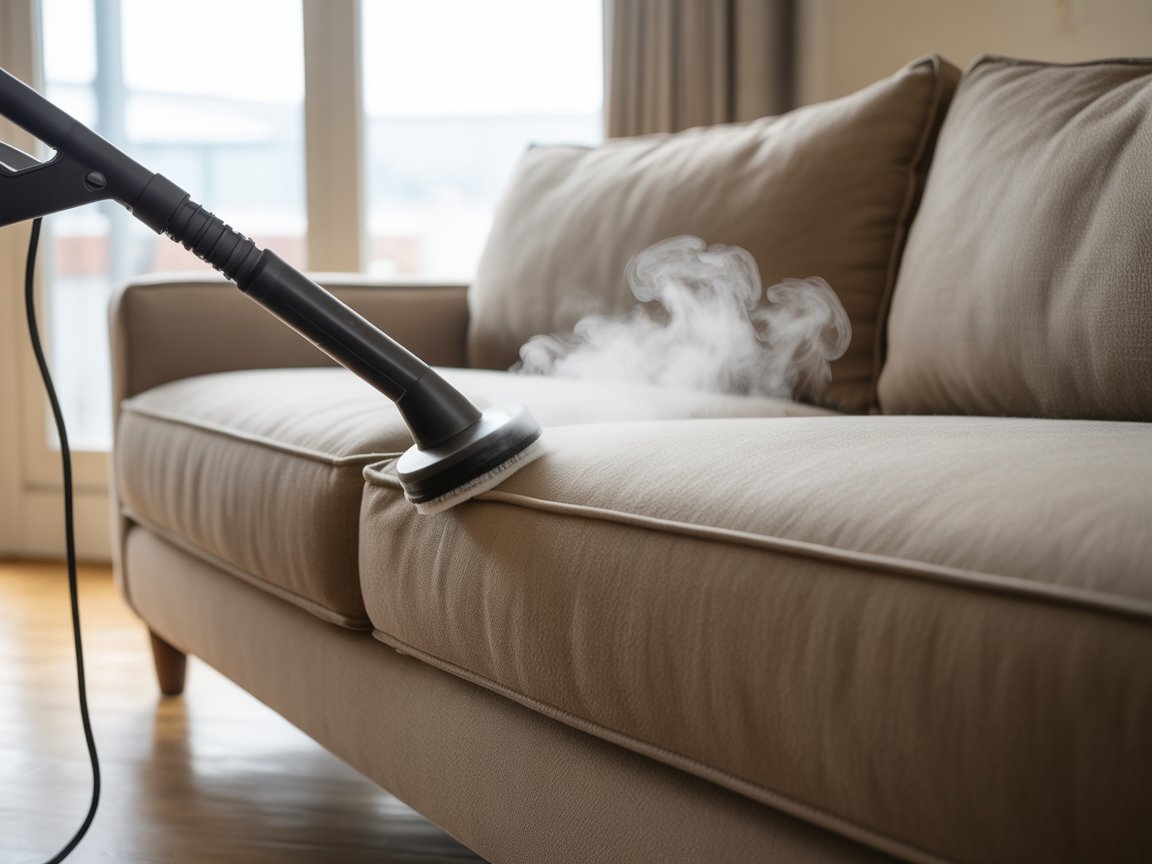
Direct Answer: The same steam method fits different lives—but the schedule changes. Empty nesters need low strain and clear steps. Parents need low residue and kid-safe habits. Young professionals need fast, small-space routines. Students need budget tools that replace multiple products. When the strategy fits, steam cleaning becomes weekly—not yearly.
Empty nesters (and traditionists)
- Use lightweight tools; avoid ladders where possible.
- Focus on main rooms; hire help for high/unsafe tasks.
Parents with kids
- Prioritize floors, high chairs, and high-touch points.
- Less chemical residue where kids and pets play.
Young professionals
- Handheld steamer for apartments; quick 20-minute refresh.
- Great for hosting prep without chemical smell.
University students
- One tool replaces many products; fast high-touch cleaning in shared spaces.
“Steam cleaning gets easy when it fits your life—pick one tool, pick one room, and give yourself 20 minutes a week. That’s how I turn spring cleaning into a weekly win, not a yearly burden.” — Wells Ye
The 2026 Spring Steam Cleaning Timeline for Chicago
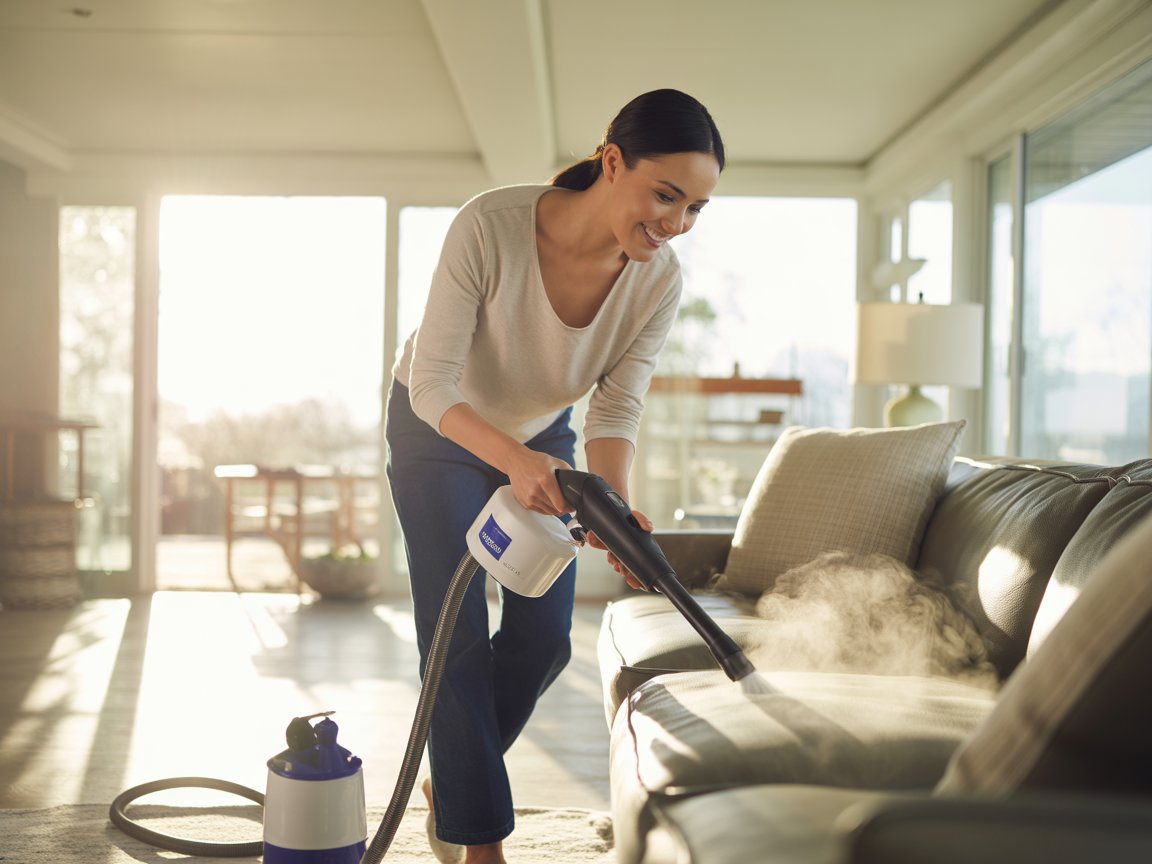
Direct Answer: The cleanest spring results come from timing: prep in early March, deep clean mid‑March, and lock in maintenance during National Cleaning Week (March 22–28, 2026). Then do weekly 20‑minute steam maintenance through April and May, when pollen and dust are a steady issue in Chicago.
- Mar 1–7: Choose tools.
- Mar 8–14: Declutter and prep.
- Mar 15–21: Deep steam clean.
- Mar 22–28: National Cleaning Week—final touches + maintenance setup. (Cleaning Institute)
- Apr–May: Weekly 20‑minute maintenance.
- Quarterly: Pro deep clean or full DIY reset.
Allergy season can start sooner than expected, and pollen/mold tracking runs through much of the warm season. (Chicago Sun-Times)
“Deep clean once. Maintain lightly.” — Wells Ye
Should You Hire a Steam Cleaning Professional?
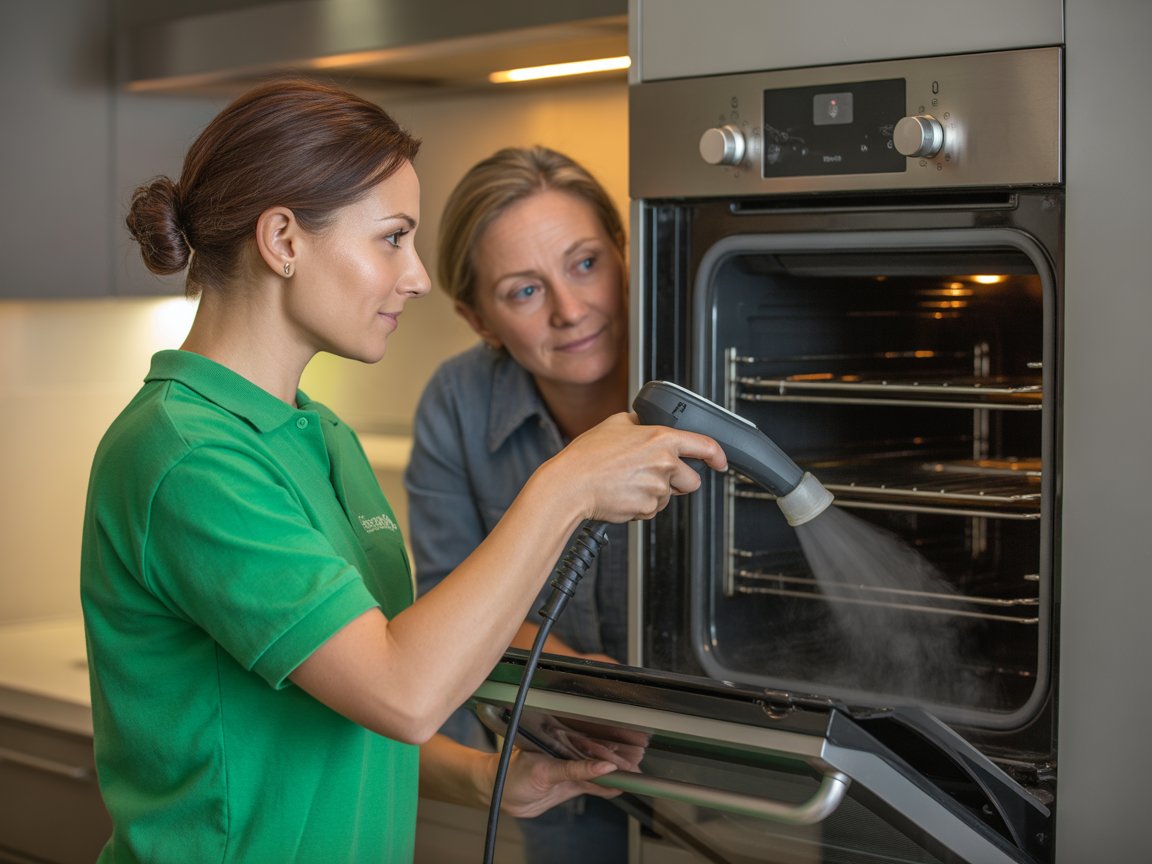
Direct Answer: Hire a professional if you’re short on time, have physical limitations, have serious allergies, or your home hasn’t had a deep reset in 6+ months. If you want control without full workload, choose hybrid: you maintain weekly with a handheld steamer; pros handle ovens, grout, and heavy buildup.
Outsourcing questions: time value, physical limits, heavy cooking, allergies, and budget.
For cost benchmarks, Angi shares Chicago cleaning cost ranges, and HomeAdvisor shares deep-clean ranges (use them as sanity checks).
“Pay for the hard zones. Maintain the easy zones.” — Wells Ye
Real Life Stories from Chicago

Direct Answer: The most common steam-cleaning win I see is simple: kitchens stop feeling greasy and bathrooms stop feeling like an endless grout fight. The second win is realizing spring cleaning doesn’t have to be a one-weekend punishment. People who succeed treat steam as a repeatable routine, not a one-time event.
Composite patterns from Chicago-area clients:
DIY success (Lakeview)
A couple used a handheld steamer for stovetop edges, backsplash grout, and microwave corners.
Their win was speed.
Less scrubbing.
No chemical smell before guests.
“I needed help” (Oak Park)
A family tried DIY steam but got stuck on the oven and grout.
They kept DIY for weekly touch-ups and hired quarterly deep cleaning for heavy zones.
“The goal is a home that supports your life.” — Wells Ye
Your 2026 Spring Steam Cleaning Action Plan

Direct Answer: Pick three priority zones (usually kitchen, bathroom, floors). Choose DIY, professional, or hybrid. Deep clean in March, then maintain weekly in April and May. If you do that, steam cleaning becomes the habit that keeps your home calmer through allergy season—without constant scrubbing or constant product buying.
5 things to do this week
- Take the readiness quiz.
- Choose a steamer that fits your space.
- Pick your top 3 spring 2026 priority areas.
- Mark March 22–28 (National Cleaning Week).
- Decide: DIY, pro help, or hybrid.
If you want help with heavy zones, Fresh Tech Maids does deep cleaning Chicago resets with a steam-first, chemical-free cleaning approach where it makes sense.
And if you’re thinking ahead to the holidays: the same approach works for a holiday cleaning service Chicago reset before guests arrive.
The 2026 Chicago Spring Steam Cleaning Checklist: Your Chemical-Free Guide to Allergy Season Survival Guide
Frequently Asked Questions (FAQ)
Is steam cleaning safe for hardwood floors in Chicago apartments
Only if the hardwood is properly sealed—and even then, use a steamer designed for sealed floors and avoid lingering in one spot. When in doubt, skip steam and use a damp microfiber method.
Best steam cleaner for spring cleaning 2026
Pick by home size: handheld for apartments/spot work, mop for sealed floors, canister for ovens and bathrooms.
Does steam cleaning kill bacteria and viruses
Under the right temperature and contact time, it can inactivate microbes. Controlled lab results show rapid viral inactivation when surfaces reach high temperatures.
How to steam clean grout and tile without chemicals
Pre-rinse, steam grout lines in short passes, brush lightly if needed, then wipe immediately and ventilate. Avoid unsealed stone.
Steam cleaning vs chemical cleaning for allergies
Steam can reduce product residue and help remove buildup during allergy season. Pair it with vacuuming and ventilation for best results in Chicago’s long pollen months.
Professional steam cleaning services Chicago cost
Costs vary by scope, but you can benchmark published Chicago cleaning ranges and deep-clean ranges to compare with your time and needs.
How often should I steam clean my home during allergy season
Most households do best with a March deep clean and weekly 20‑minute maintenance in April–May.
Can steam cleaning replace disinfectants in high-touch areas
Sometimes, but not always. Steam helps remove and reduce microbes, but in higher-risk situations you may still want an appropriate disinfectant used correctly.
What temperature does steam need to be to kill germs?
Most germs die at 160-180°F. Quality steam cleaners produce steam at 200-300°F—well above the threshold needed for effective sanitization. At 248°F, laboratory testing shows 97-100% microorganism elimination within 30 seconds.
Is steam cleaning better than Lysol or Clorox?
For everyday deep cleaning, steam is often more effective because it penetrates surfaces rather than sitting on top. Steam leaves zero chemical residue, making it safer for homes with children, pets, or allergy sufferers. For specific disinfection needs, follow product labels and official guidance.
Can I steam clean my couch?
Yes, if your upholstery has a "W" cleaning code (water-safe). Vacuum first, test a hidden area, use rapid passes to avoid soaking the fabric, and allow to dry completely. Do not steam "S" coded (solvent-only) or delicate fabrics like silk.
How long does it take for surfaces to dry after steam cleaning?
Quality steam cleaners produce "dry steam" with less than 5-6% moisture content. Most surfaces dry within 2-5 minutes. Mattresses and upholstery may need 1-3 hours to fully dry before use.
“Simple answers beat long rules.” — Wells Ye
Free Checklist! Print it. Use it.

The 2026 Chicago Spring Steam Cleaning Checklist: Your Chemical-Free Guide to Allergy Season Survival Guide
What's Inside This Free Checklist:
- 60-Second Readiness Quiz
- Room-by-Room Steam Checklists
- Steam-Safe vs. Avoid Chart
- 2026 Spring Timeline
- 8-Week Maintenance Tracker
- DIY vs. Hybrid vs. Pro Guide
Print it. Check off each task as you go.
Get Your Spring Steam Cleaning Checklist