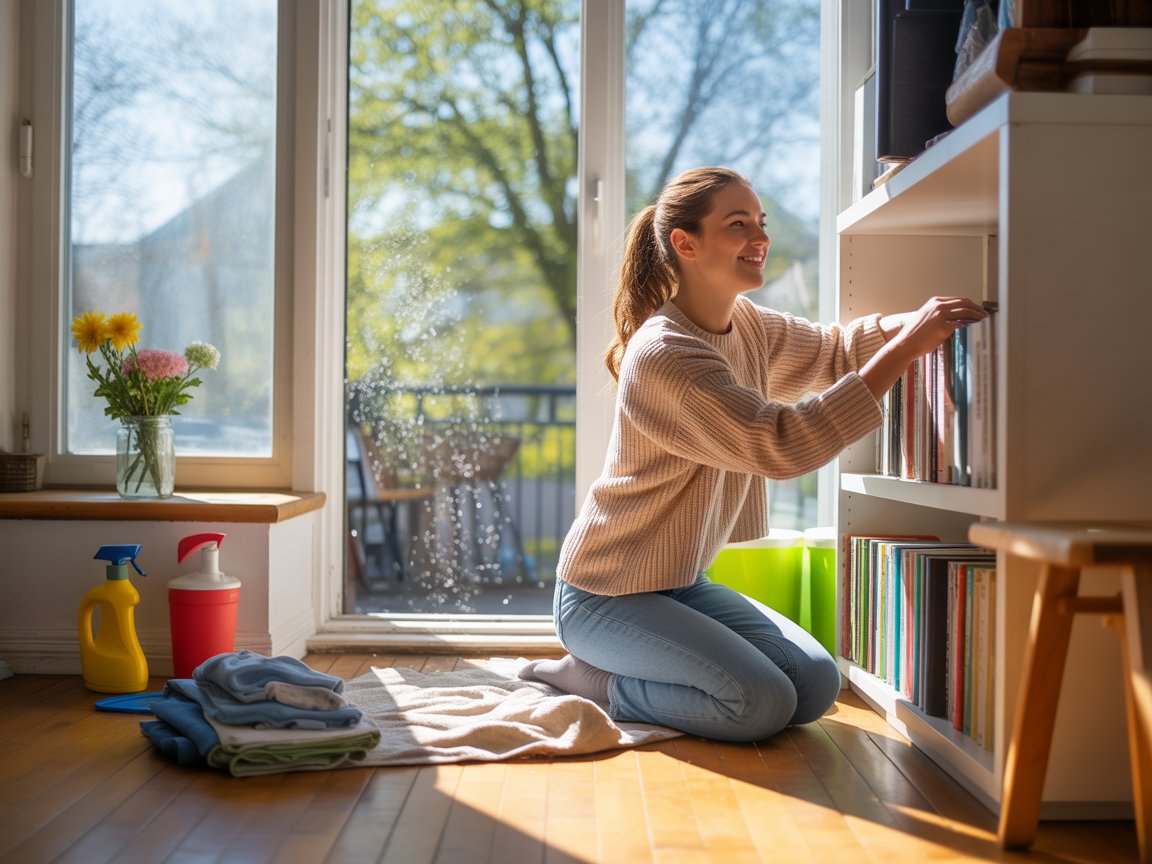
If your home has been sealed shut all winter (because… Chicago), here’s the question that matters:
Are you spring cleaning… or just moving winter around?
Because spring 2026 is exposing a hidden crisis in Chicago homes.
We track months of road salt.
We trap dust and allergens inside.
Then we “clean” with products that can leave fumes behind.
And the stakes are not small.
16% of Chicago families have a child with asthma — higher than the national average of 12% (Lurie Children’s).
At the same time, pollen season now starts about 20 days earlier and lasts 10 days longer than it did 30 years ago.
I’m Wells Ye, founder of Fresh Tech Maids in Chicago. I’ve spent years inside real Chicago homes — bungalows, two-flats, lakefront condos, student apartments — and I’ve seen the same pattern:
Traditional spring cleaning fails when it doesn’t remove the source.
It wipes. It perfumes. It “shines.”
But it doesn’t extract what’s causing the cough, the itchy eyes, the gritty floors, and the “why does it feel dirty again already?” feeling.
This guide is the full playbook I use with our teams: physics-based, chemical-free cleaning that removes allergens instead of spreading them.
Why Is Traditional Spring Cleaning Failing Chicago Families?

Short Answer: Traditional spring cleaning fails in Chicago because winter leaves behind sticky salt residue, trapped indoor dust, and early pollen, and most DIY routines spread particles instead of removing them. Add busy schedules, kids on the floor, and “green” products that still leave fumes, and you get a clean-looking home that still feels irritating and dirty fast (US EPA).
Traditional spring cleaning is failing Chicago families—and the reasons are different for everyone.
Last April, I walked into a two-flat near Irving Park.
The parents had done what most Parents with Children do: they cleaned hard, late at night, in little bursts between school drop-offs and work calls.
The place looked fine at first glance.
But when we moved the entry mat? White salt crust.
When we pulled back the sofa edge? Gray grit.
When we opened the coat closet? That “clean” smell from a scented spray hit the air… and the kid started coughing.
That’s the moment I always see the truth:
Spring cleaning isn’t about the visible dirt. It’s about what you’re breathing and what you’re tracking into your lungs and bed.
“If your spring clean doesn’t remove what you can’t see, Chicago will make it look dirty again in three days.” — Author: Wells Ye
The 3 Reasons Chicago Families Get Stuck
1) We clean in the wrong order. Most people wet-wipe first. That’s backwards.
2) We clean surfaces, not systems. Your home is a system: entryway → floors → soft surfaces → air movement.
3) We use products that irritate the people we’re trying to protect. The EPA warns VOC concentrations can be higher indoors (US EPA).
This Hits Every Household Type Differently
If you're a parent like Sara, juggling marketing deadlines and school pickups, time is the enemy.
Work, extracurriculars, homework—there's simply no window for a six-hour deep clean.
But here's what makes it urgent: 80% of children and young adults with asthma are sensitive to dust mites (NIEHS).
Kids spend their time on floors where allergens concentrate and road salt accumulates. And 87% of parents worry about chemical exposure during cleaning.
These challenges look different for everyone. Betty, if you're a senior living in a Chicago suburb or downtown condo, the problem is physical.
Bungalow basements, two-flat stairs, heavy vacuum cleaners—these become real barriers. Aging lungs are more vulnerable to both allergens and chemical fumes (NIH).
For Jane, you're dealing with decades of buildup in mattresses, carpets, and those cast-iron radiators. Your home needs specialized cleaning that standard methods can't deliver.
Megan, a young professional renting in the city, likely inherited pet dander from previous tenants—and that dander persists for 4–7 months after the pet is gone (FilterBuy, 2025).
Working from home means never escaping your indoor air. Small apartments concentrate chemical fumes.
Your home office corner has become a forgotten dust trap. And that video call backdrop? Surface cleaning only—the dust behind the monitor hasn't moved since November.
For university students near DePaul, Loyola, or UChicago, rental mattresses are rarely cleaned between tenants.
And then there's the Chicago housing factor. Cast-iron radiators, art glass windows, limestone facades—our housing stock demands cleaning knowledge you won't find in a generic online guide.
"I cleaned a Lakeview two-flat last spring where the family had been using a popular 'green' spray for months. When I tested the surface residue, it was still sticky. That stickiness is exactly what traps new allergens." — Author: Wells Ye
What “Failing” Looks Like in Real Chicago Homes
- The house smells “fresh,” but eyes sting.
- Floors feel gritty even after mopping.
- Dust shows up again in 48 hours.
- The entryway stays gray all spring.
- Everyone wakes up congested.
That’s why I don’t teach “spring cleaning.”
I teach spring reset.
If you want the full reset done by trained W‑2 teams using chemical-free protocols, this is exactly what our Spring Cleaning Service is built for.
What Makes Chicago Spring Cleaning Different From Anywhere Else?
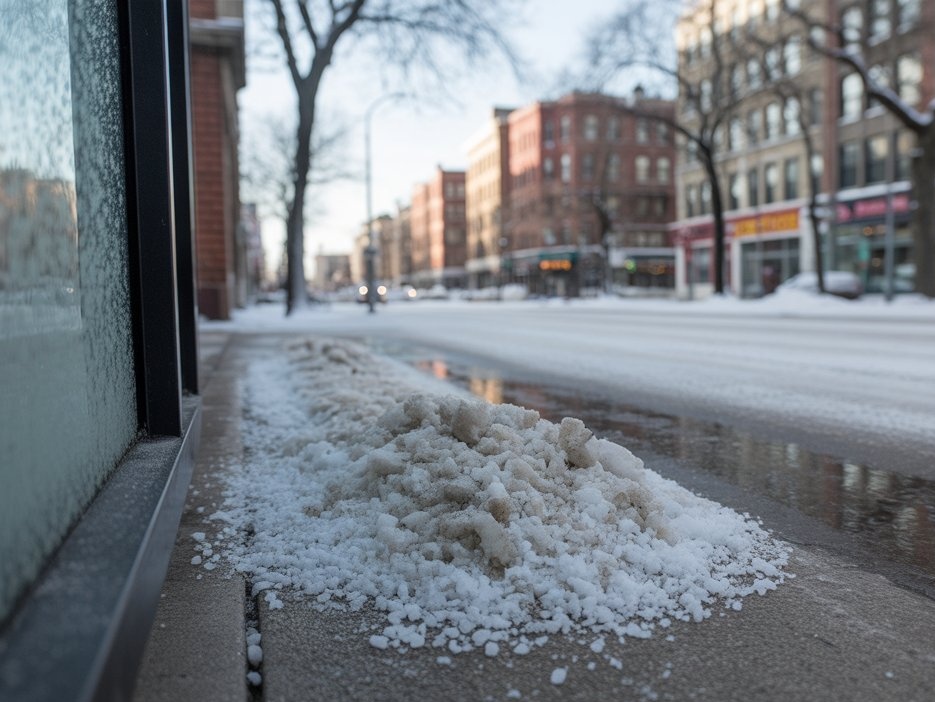
Short Answer: Chicago’s unique combination of 300,000+ tons of road salt, the “Stack Effect” in tall buildings, hard water at 7.6–8.8 grains per gallon, vintage housing stock (80,000 bungalows built 1910–1940), and an 8-month allergy season creates cleaning challenges no other city faces.
I get asked this question constantly. And the answer is: almost everything about cleaning in Chicago is different.
The Winter Residue Crisis
Road Salt Accumulation:
Chicago applies over 300,000 tons of road salt per winter (CMAP).
That salt doesn’t vanish.
Calcium chloride is hygroscopic. It absorbs moisture and keeps carpets damp, sustaining dust mites and mold all winter.
Salt residue creates a white alkaline crust that will destroy hardwood floors if not neutralized.
Standard mopping just spreads salt around.
You need acidic neutralization. A vinegar wash to actually break the chemical bond.
The "Stack Effect" in Chicago Buildings:
Temperature differential between indoors and outdoors creates strong upward air currents.
Cold air infiltrates at lower levels and rises through the structure (Building Science Corporation).
Even 40th-floor residents in Streeterville find “city grime” on window sills.
Hard Water Reality:
Chicago tap water registers at 7.6–8.8 grains per gallon of hardness (CHI311).
Those hard water minerals react with soap to form “curd” — that’s the soap scum on glass shower doors.
I increase vinegar by 20–30% in every DIY recipe and use DI water for final rinses.
"I spent my first five years in Chicago wondering why my cleaning results never matched what I could achieve in other cities. Then I learned about the hard water. Once I switched to DI water for final rinses, everything changed." — Author: Wells Ye
The Housing Stock Challenge

Chicago Bungalows (80,000+ homes): Cast-iron radiators trap decades of dust. Attic “knee walls” are mold zones. Art glass? Ammonia destroys the lead caming.
Greystones and Two-Flats: Limestone facades are chemically sensitive. Shared vestibules collect five months of salt.
High-Rise Condos: Fan Coil Units breed algae. The stack effect brings street pollutants up. Sealed buildings trap pollutants inside.
Garden Units: Constant humidity battle. Below-grade windows collect condensation.
The Neighborhood Pollution Profiles
Not all Chicago dirt is the same.
"Inland Protocol" (West Loop, Avondale, Pilsen, Fuller Park):
Homes within 500 meters of I-90/I-94 or industrial corridors face double the nitrogen dioxide and PM2.5. (Northwestern University study)
“Urban dust” here is heavier and oilier — tire rubber, brake dust, diesel soot.
Vinegar won’t cut it. You need alkaline degreasers and HEPA capture for heavy metals.
"Lakefront Protocol" (Edgewater, Lakeview, Rogers Park, Kenwood):
Higher humidity and biological aerosols.
“Salt spray” from Lake Michigan accelerates metal corrosion.
Mold and algae grow faster.
Focus here is dehumidification and enzymatic cleaners.
"Every neighborhood in Chicago has its own cleaning fingerprint. A protocol that works in Lincoln Park will fail in Pilsen." — Author: Wells Ye
The 2026 Climate Factor
There’s a 75% probability of transition to ENSO-neutral conditions between January and March 2026 (Climate Prediction Center).
The forecast: a “wet” spring with frequent freeze-thaw cycles, extended “mud season” into late April.
The “Pollen Vortex”: La Niña winter created increased soil moisture — fuel for rapid vegetative growth. “Green-Up Compression” happens when early-season trees (Maple, Elm) overlap with mid-season species (Oak, Ash).
Chicago Pollen Calendar:
Total allergy season in Chicago: 8 months, from March through October.
Why Does Traditional Spring Cleaning Fail to Remove Allergens—And What Actually Works in Chicago?

Short Answer: Traditional cleaning uses surfactants (soaps) that leave microscopic sticky residue on surfaces. This residue acts like a magnet, attracting and binding new dust, pollen, and grime. Causing "rapid re-soiling" that makes your home dirtier faster than before you cleaned. Physics-based methods like: steam, HEPA filtration, DI water, and HOCl disinfection—physically remove allergens without leaving any residue behind.
Why Does Traditional Spring Cleaning Make Allergies Worse?
Traditional cleaning relies on soaps and chemicals that promise a fresh, clean home. But science tells a different story.
The Re-Soiling Mechanism:
Here’s the dirty secret of the cleaning industry:
Soap is designed to be sticky.
Surfactants bind to soil — that’s how they work. But consumer-grade cleaners rarely rinse completely.
A microscopic film remains on floors and carpets.
That residue attracts and binds new dust, pollen, and grime.
I’ve seen it hundreds of times. A client cleans their floors on Monday. By Wednesday, they look dirty again. They think they didn’t clean well enough. They clean harder. More soap. More residue. More rapid re-soiling.
It’s a cycle that never ends — until you stop using soap.
The Cleaning Chemical Hazard for Allergies:
Americans use roughly 40 pounds of cleaning chemicals per person annually.
VOCs irritate airways and trigger asthma attacks.
Indoor air can reach 100 times more polluted immediately after cleaning (EPA).
The irony: you clean to feel better, then feel worse from the chemicals.
Consequences of Improper Cleaning:
- Respiratory irritation and worsened allergies.
- Chronic sneezing, congestion, itchy eyes.
- Asthma attacks.
- Poor sleep quality.
- Reduced productivity.
- Surface damage over time.
- Entering pollen season with already-compromised indoor air.
"Fragrance chemicals in cleaning products are among the most common triggers of respiratory symptoms in sensitized individuals." — American Academy of Allergy, Asthma & Immunology (AAAAI)
What Actually Works in Chicago Homes?
So what actually works?
The most effective methods skip chemicals entirely—using heat, filtration, and water purity to physically remove allergens instead of masking them.
Here's the physics-based solution I use in every Chicago home I clean.
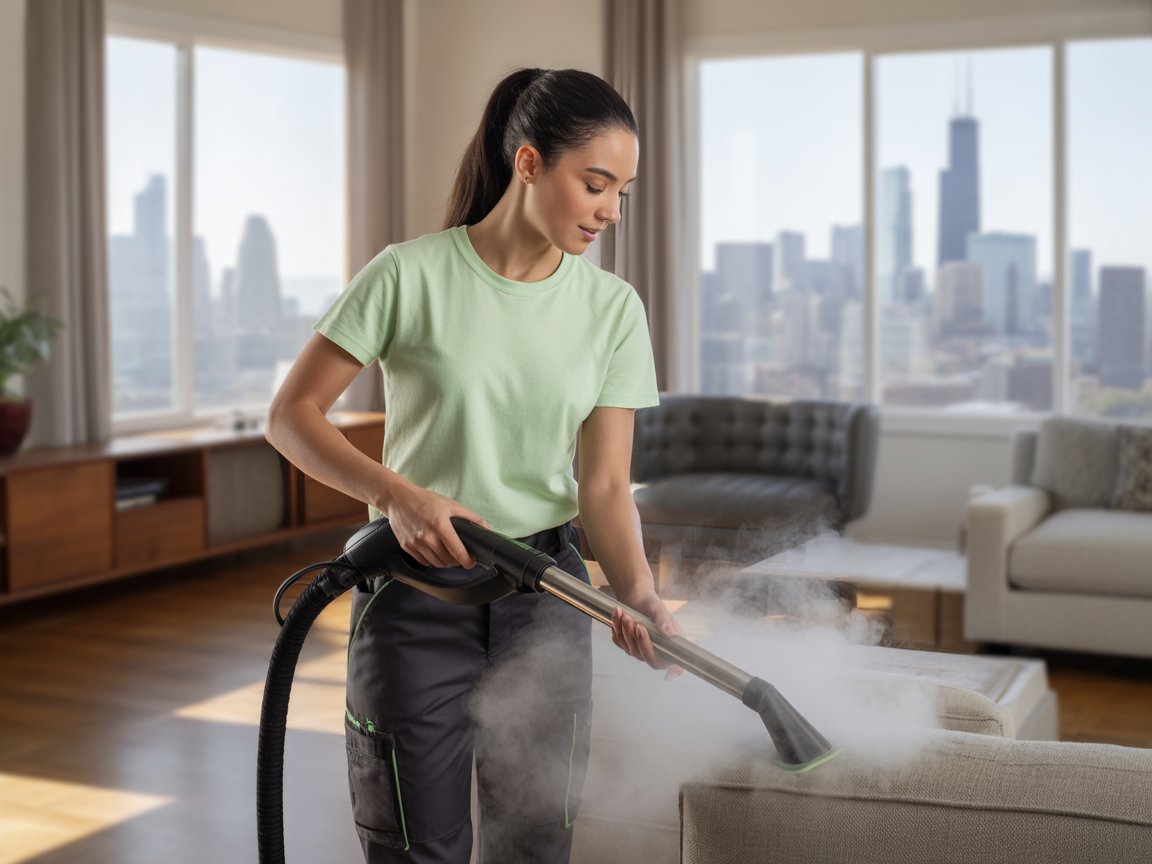
Steam Cleaning — Where to use: mattresses, upholstery, carpets, tile. Steam achieves an 86.7% allergen reduction (PUBMED). It kills dust mites instantly at 212°F+. No chemicals. No residue. No re-soiling. This is the backbone of a real green cleaning.
HEPA Filtration — Where to use: everything. HEPA filters capture 99.97% of particles down to 0.3 microns (EPA). Regular vacuums blow allergens back into the room through the exhaust. A HEPA vacuum is the single most important tool upgrade any Chicago homeowner can make.
Deionized (DI) Water — Where to use: surfaces and floors. DI water cleans without leaving any residue. It breaks the re-soiling cycle completely. And it's essential for Chicago's hard water, which deposits minerals on every surface standard cleaners touch. This is a core technology in our recurring maid service.
Hypochlorous Acid (HOCl) — Disinfection — Where to use: apply only AFTER all cleaning and floors are complete. Spray and leave. HOCl is 80–100 times more effective than bleach at disinfection. Critical: HOCl is a disinfectant, NOT a cleaner. It goes on last, always. Learn more about how we use HOCl.
"Hypochlorous acid represents the gold standard in non-toxic disinfection, effective against a broad spectrum of pathogens at concentrations safe for human contact." — Dr. Yen-Con Hung, University of Georgia, Food Safety researcher
What Does Your Home Need Room-by-Room For Ultimate Spring Cleaning?
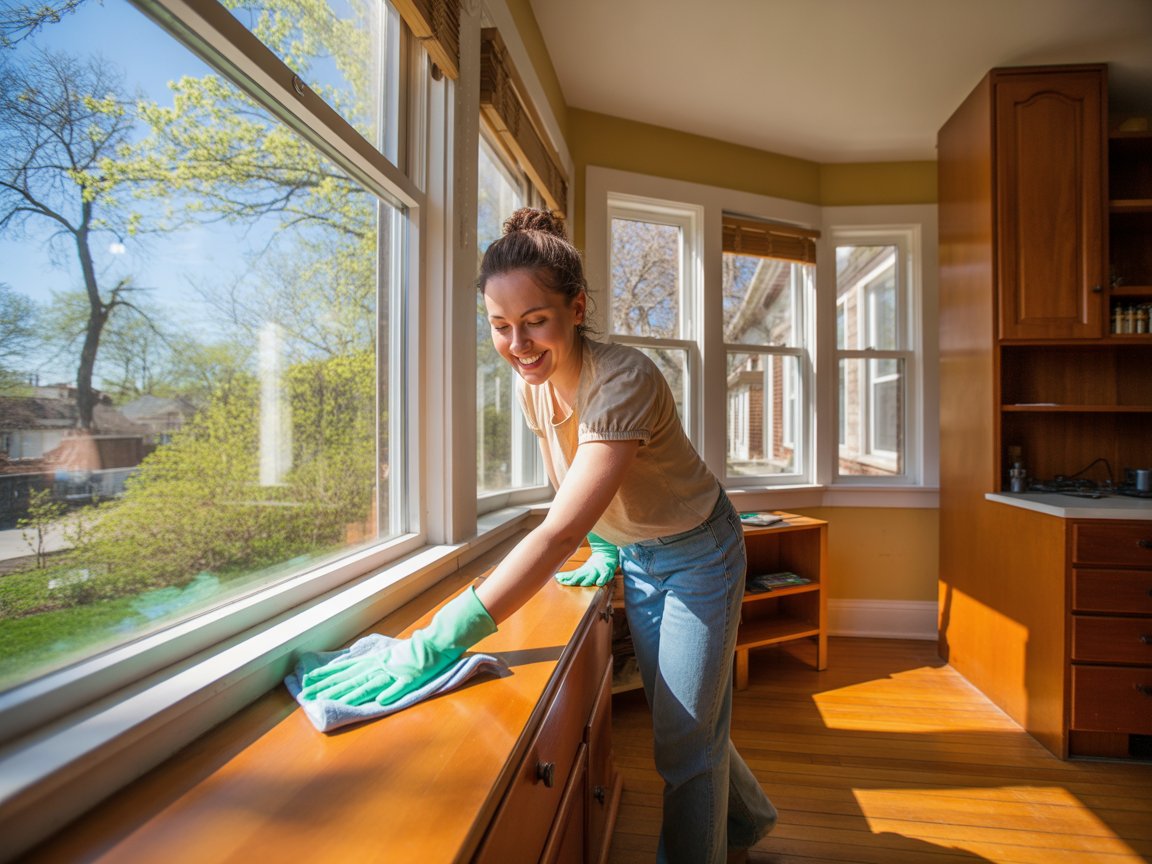
Short Answer: Every room in your Chicago home needs the same four-step protocol—dry removal first, wet-clean second, floors second-to-last, and disinfection last. But every room has different problem zones, different Chicago-specific challenges, and different thresholds for when to call a professional. Here's the complete breakdown.
The Cleaning Protocol (Every Room)
Before I walk you through each room, understand this universal sequence.
I use it in every home, every time:
- Step 1: Dry Removal First — HEPA vacuum and microfiber to capture particulates before wet cleaning (top to bottom).
- Step 2: Wet-Clean Second — Low-residue soap + water, or steam where appropriate (top to bottom).
- Step 3: Floor Cleaning SECOND-TO-LAST — Vacuum then mop floors at the END. Debris falls during all upper cleaning.
- Step 4: Disinfect LAST — HOCl applied ONLY after floors are completely clean. Spray and leave.
This sequence matters.
If you mop first, everything you dust and wipe afterward lands on your "clean" floor.
If you disinfect before cleaning, you're disinfecting on top of dirt.
The order is the method.
Entryway / Mudroom (Chicago's #1 ROI Zone)
Where the Problems Hide:
- Entry mats (inside and outside) saturated with road salt.
- Shoe storage area collecting pollen, tire particles, and street grime.
- Coat closet and hooks.
- Floor surfaces with salt crust destroying hardwood.
- Walls and baseboards near the door—the splash zone.
- Door threshold and tracks.
Chicago Context:
- This is Ground Zero.
- Five months of tracked-in calcium chloride creates an alkaline crust that, if not neutralized, will destroy your floors.
- The "Stack Effect" in two-flats pulls street dust through vestibule cracks.
- Shared vestibules contain salt from multiple families.
How I Deep Clean:
- Prep: Remove all shoes to the outdoor area. Shake out mats outside.
- Step 1: Dry sweep/vacuum first. CRITICAL: never wet salt crystals first. Dissolving them creates brine that soaks into wood grain.
- Step 2: Wipe walls and baseboards with damp microfiber.
- Step 3: HEPA vacuum entry mats thoroughly (both sides). Wash in hot water if machine-washable.
- Step 4: Salt Neutralization Wash on floors—1 cup white vinegar per 1 gallon warm water. The acid dissolves alkaline salt bonds.
- Step 5: Freshwater rinse—go over the floor again with plain water to remove vinegar residue.
- Step 6: Immediate towel dry—prevents moisture damage and removes lingering brine.
- Step 7: Establish shoe-free policy—contain outdoor shoes at entry.
Tools Needed:
DIY Tasks:
- Mat cleaning/replacement
- Light salt removal
- Organizing coat closet
- Door/frame wiping
- Weekly mat vacuuming
Call a Chicago Pro When:
- Heavy salt crust on hardwood,
- Vestibule tile grout damage,
- Salt damage to stone thresholds,
- Shared vestibule deep clean coordination. Book a deep clean in Chicago
Living Room / Family Room
Where the Problems Hide:
- Upholstered furniture (sofas, chairs—pet dander hotspot).
- Throw blankets and decorative pillows.
- Carpets and area rugs.
- Curtains and drapes (major pollen traps).
- Vertical surfaces like walls and ceilings where pet dander sticks.
- Electronics and shelving (dust collectors).
- Pet beds and pet areas.
- Radiators in bungalows and two-flats.
Chicago Context:
- Upholstery collects five months of sealed-home dust and dander.
- Curtains trap pollen that enters through negative pressure in lower-floor units.
- Radiator-heated homes get extra dust circulation every time the heat cycles on.
How I Deep Clean:
- Prep: Remove throw pillows and blankets. Clear surfaces.
- Step 1: Dust from top to bottom. Start with ceiling fan blades (use the pillowcase method to catch dust).
- Step 2: HEPA vacuum all upholstered furniture—cushions, under cushions, crevices.
- Step 3: Steam clean upholstery (test hidden area first for colorfastness).
- Step 4: Wash or steam curtains and drapes.
- Step 5: Damp-wipe vertical surfaces with DI water (attracts dust without residue).
- Step 6: Wipe baseboards thoroughly—Chicago baseboards are dust shelves.
- Step 7: Wash pet beds in hot water (130°F+). Steam clean pet areas.
- Step 8: HEPA vacuum carpets and area rugs thoroughly (FLOOR — SECOND TO LAST).
- Step 9: Steam clean carpets (FLOOR — SECOND TO LAST).
- Step 10: Disinfect high-touch surfaces with HOCl. Spray remote controls, light switches, door handles, and armrests. Leave for 5 minutes without touching, or follow product instructions. (DISINFECT — LAST)
Tools Needed:
DIY Tasks:
- Regular dusting, vacuuming upholstery
- Washing throw pillow covers
- Cleaning remotes and electronics
Call a Chicago Pro When:
- Carpet deep cleaning,
- delicate or antique upholstery,
- heavy pet dander buildup,
- carpet steam extraction.
- If you need to Schedule Spring Cleaning in Chicago
Kitchen
Where the Problems Hide:
- Cabinet tops (grease graveyard—years of aerosolized cooking oil).
- Range hood and exhaust fan filters.
- Under and behind appliances (refrigerator, stove).
- Refrigerator coils (dust chokes compressor efficiency).
- Countertops and backsplash grout.
- Sink and faucet aerator (hard water scale).
- Floor surfaces and grout. Pet feeding areas.
Chicago Context:
- Aerosolized grease settles on cabinet tops in every Chicago kitchen.
- Our hard water (8 grains/gallon) creates scale on fixtures that standard cleaners can't remove.
- Kitchen grease is acidic—it requires alkaline cleaners (the opposite of salt removal).
- That distinction matters.
How I Deep Clean:
- Prep: Clear countertops. Pull out the refrigerator and stove if possible.
- Step 1: Cabinet tops—use a putty knife wrapped in rag to scrape the bulk grease layer. Then scrub with alkaline solution (washing soda or Meliora, made right here in Chicago).
- Step 2: Range hood—remove filters, soak in hot water + degreaser. Steam clean hood interior.
- Step 3: HEPA vacuum under and behind appliances.
- Step 4: Pull refrigerator out—vacuum rear coils.
- Step 5: Clean inside refrigerator—discard expired items, wipe shelves with DI water.
- Step 6: Deep clean oven if needed.
- Step 7: Scrub sink and garbage disposal.
- Step 8: Chicago Faucet Soak: Fill a plastic bag with vinegar, submerge the faucet aerator, secure with a rubber band. Leave 1 hour. Scrub with toothbrush.
- Step 9: Wipe countertops with DI water (no chemical residue on food prep surfaces).
- Step 10: Clean pet feeding area—wash bowls in hot water. Wipe the floor underneath.
- Step 11: HEPA vacuum floor (FLOOR — SECOND TO LAST).
- Step 12: Mop floor with DI water (FLOOR — SECOND TO LAST).
- Step 13: Disinfect food prep surfaces with HOCl (DISINFECT — LAST).
Tools Needed:
DIY Tasks:
- Cabinet organization
- Appliance exterior wiping
- Sink/faucet descaling
- Pantry cleanout
- Regular stovetop cleaning
Call a Chicago Pro When:
- Heavy grease on range hood.
- Oven deep clean (burned-on residue).
- Tile/grout steam cleaning.
- Move-out level deep clean. Get a kitchen deep clean quote
Bathroom
Where the Problems Hide:
- Exhaust fan cover (CRITICAL for mold prevention—most neglected item).
- Tile and grout (mold-prone, especially in Chicago's humid lakefront neighborhoods).
- Under sinks (check for leaks—mold prevention).
- Shower curtain/door and tracks.
- Towels and bath mats.
- Toilet and fixtures.
- Caulk lines (inspect for damage/mold).
Chicago Context:
- Chicago humidity—especially in lakefront areas like Edgewater and Rogers Park—accelerates mold growth.
- Hard water creates scale that resists standard cleaners.
- Exhaust fan cleaning is CRITICAL. A clogged fan reduces airflow, traps moisture, and creates the exact conditions mold needs to thrive.
How I Deep Clean:
- Prep: Remove bath mats, shower curtain, towels.
- Step 1: Exhaust fan (the #1 priority)—remove cover by squeezing metal spring clips. Vacuum dust from motor housing. Wash plastic cover in sink.
- Step 2: Inspect under sinks for leaks. Any moisture issues must be fixed before cleaning.
- Step 3: Steam clean tile, grout, and fixtures. Steam is fungicidal—it kills mold spores without bleach fumes.
- Step 4: Grout deep clean: Apply paste of baking soda + hydrogen peroxide. Let sit for 15 minutes. Scrub with stiff nylon brush. Rinse thoroughly.
- Step 5: Descale shower head—vinegar bag soak for 1 hour.
- Step 6: Scrub tub, shower, sink, toilet.
- Step 7: Clean mirrors with alcohol/vinegar/distilled water solution.
- Step 8: Inspect caulk lines. If damaged or moldy, this is a pro trigger.
- Step 9: Wash or replace shower curtain.
- Step 10: Wash towels and bath mats in hot water (130°F+).
- Step 11: Sweep floor (FLOOR — SECOND TO LAST).
- Step 12: Mop floor (FLOOR — SECOND TO LAST).
- Step 13: Apply HOCl to high-touch surfaces (DISINFECT — LAST).
Tools Needed:
DIY Tasks:
- Regular scrubbing
- Mirror cleaning
- Cabinet organization
- Shower curtain washing
- Exhaust fan cover cleaning
Call a Chicago Pro When:
- Visible mold beyond surface level
- Severe scale/soap scum buildup
- Caulk replacement needed
- Grout re-sealing required. Book bathroom deep clean
Bedroom (Priority #1 — You Spend 1/3 of Your Life Here)

Where the Problems Hide:
- Mattress (highest concentration of dust mites—Ground Zero).
- Pillows (weight increases over time from dust mite accumulation).
- Bedding (sheets, blankets, comforters).
- Carpet/rugs if carpeted.
- Curtains and drapes.
- Upholstered headboard.
- Under-bed area (dust accumulation zone).
- Stuffed animals and plush toys in children's rooms.
Chicago Context:
- This is the allergy epicenter.
- Five months of sealed-home sleeping equals massive dust mite populations in mattresses.
- A typical used mattress harbors 100,000 to 10 million dust mites (Ohio State University/WebMD).
- 84% of U.S. homes have dust mite allergens in at least one bed (NCBI/StatPearls).
How I Deep Clean:
- Prep: Strip all bedding. Move furniture to access all floor areas.
- Step 1: HEPA vacuum mattress thoroughly—all surfaces, seams, crevices.
- Step 2: Steam clean mattress surface (212°F+ kills dust mites instantly).
- Step 3: Allow 4–6 hours to dry completely.
- Step 4: Install allergen-proof encasements (AAFA-certified) on mattress and pillows.
- Step 5: Wash all bedding in hot water (130°F+). This temperature kills dust mites.
- Step 6: Items that can't be washed: dryer on high heat for 30+ minutes.
- Step 7: Wash or steam curtains.
- Step 8: Vacuum under bed and all furniture.
- Step 9: Dust all fixtures, fans, and furniture.
- Step 10: HEPA vacuum carpets/rugs (FLOOR — SECOND TO LAST).
- Step 11: Steam clean carpets (FLOOR — SECOND TO LAST).
- Step 12: Place HEPA air purifier in bedroom. Run 24/7 during pollen season.
- Step 13: Apply HOCl to high-touch surfaces (DISINFECT — LAST).
Why It Matters: A Johns Hopkins University study showed 90% reduction in mite populations within one month with encasements alone (AchooAllergy/JHU).
Tools Needed:
DIY Tasks:
- Bedding washing
- Regular vacuuming
- Closet organization
- Surface dusting
Call a Chicago Pro When:
- Mattress deep cleaning
- Severe dust mite infestation
- Allergy/asthma household. Schedule a bedroom deep clean
"The bedroom is where I start every allergy consultation. If I can reduce the mite population in your mattress by 90% with one professional steam session and a $40 encasement, that alone changes how you feel every morning." — Author: Wells Ye
Closets
Where the Problems Hide:
- Stored winter clothing (unwashed = moth food).
- Shoes (pollen, salt residue).
- Shelves and floors (dust accumulation).
- Fabric storage bins (dust mite haven).
- Seasonal items in boxes.
Chicago Context:
- Chicago's seasonal wardrobe swap is more than organizing—it's pest prevention.
- Winter salt exposure damages boots.
- Moths feed on body oils and skin flakes on fabric, not the fabric itself.
- Clean clothes are safe clothes.
How I Deep Clean:
- Prep: Pull everything out of the closet.
- Step 1: Sort into keep, donate, and trash piles. Focus on items unworn in the past year.
- Step 2: Check for winter salt damage on footwear.
- Step 3: Categorize keepers by type and frequency of use.
- Step 4: Wipe down shelves and rods with damp microfiber.
- Step 5: Wash or dry clean ALL woolens before storage (moth prevention).
- Step 6: Store off-season items in breathable garment bags (not plastic) or sealed bins with cedar blocks.
- Step 7: Organize by zone—current season at eye level, off-season stored away.
- Step 8: HEPA vacuum closet floors (FLOOR — LAST).
Tools Needed:
DIY Tasks:
- Sorting and decluttering
- Organizing current season
- Wiping shelves
- Boot cleaning
Call a Chicago Pro When:
- Moth infestation,
- Mold on stored items
- Professional garment cleaning needed before storage
Home Office

Where the Problems Hide:
- Electronics (monitors, keyboards, printers—dust magnets).
- Paperwork piles.
- Desk surfaces.
- Cable/cord tangles (dust traps).
- Upholstered office chair.
- Window sills.
- Bookshelves.
Chicago Context:
- Winter paperwork buildup combined with urban dust creates grime on electronics.
- Remote workers spend 8+ hours daily breathing their office air quality.
How I Deep Clean:
- Prep: Back up important files. Prepare shredding pile.
- Step 1: Declutter paperwork—shred sensitive documents, digitize important files.
- Step 2: Dust all surfaces from top to bottom.
- Step 3: Clean electronics properly—microfiber cloths, no harsh chemicals on screens.
- Step 4: Clean keyboard—compressed air in well-ventilated area.
- Step 5: Wipe down desk, shelves, and furniture with DI water.
- Step 6: Organize cords and cables.
- Step 7: HEPA vacuum upholstered chair.
- Step 8: HEPA vacuum floors and under desk (FLOOR — SECOND TO LAST).
- Step 9: Disinfect high-touch surfaces (keyboard, mouse, phone, desk handles) with HOCl. Spray and leave for 5 minutes. (DISINFECT — LAST)
Tools Needed:
DIY Tasks:
- Paperwork organization,
- surface wiping,
- cable management,
- keyboard cleaning.
Call a Chicago Pro When:
- Post-construction dust,
- severe clutter requiring organization system design.
Basement / Laundry / Utility
Where the Problems Hide:
- Sump pump and pit (April rain preparation).
- Floor drains (sewer gas prevention).
- Moisture/mold zones (corners, around windows, near foundation).
- Washer gasket (notorious mold spot).
- Dryer lint trap AND vent (fire hazard).
- Storage areas (cardboard = mold food).
- Water heater area.
Chicago Context:
- Chicago bungalow basements are moisture-prone.
- April rains combined with potential sewer backups make sump pump testing critical.
- Garden units face a constant humidity battle.
- If you smell something musty, that's a moisture problem that must be found and fixed before cleaning.
How I Deep Clean:
- Prep: Clear access to sump pump, floor drains, and appliances.
- Step 1: Sump Pump Test (Critical for April rains)—pour 5 gallons of water into pit. Watch float rise. Listen for pump to engage. Ensure water is actually ejected outside.
- Step 2: Check battery backup if applicable.
- Step 3: Inspect for moisture/water damage. Any musty smell indicates a moisture source that must be addressed.
- Step 4: Check for mold (especially corners, around windows, near foundation).
- Step 5: Fill floor drain P-traps—pour water + small amount of mineral oil (slows evaporation) to prevent sewer gas.
- Step 6: Clean washer gasket—pull back rubber seal, wipe with vinegar solution.
- Step 7: Clean dryer lint trap.
- Step 8: Inspect/clean dryer vent (professional cleaning recommended annually).
- Step 9: Wipe shelves with damp microfiber.
- Step 10: Remove cardboard boxes (mold food source). Replace with plastic bins.
- Step 11: HEPA vacuum storage areas.
- Step 12: Vacuum floor (FLOOR — SECOND TO LAST).
- Step 13: Mop floor (FLOOR — SECOND TO LAST).
- Step 14: Run dehumidifier if humidity exceeds 50% RH.
Tools Needed:
DIY Tasks:
- Sump pump testing
- Lint trap cleaning
- Basic organization
- Surface wiping
- P-trap filling
Call a Chicago Pro When:
- Mold beyond a small area
- Dryer vent deep cleaning (fire hazard)
- Water damage remediation
- Recurring moisture issues
Chicago-Specific: Radiators (Bungalows & Two-Flats)
Where the Problems Hide:
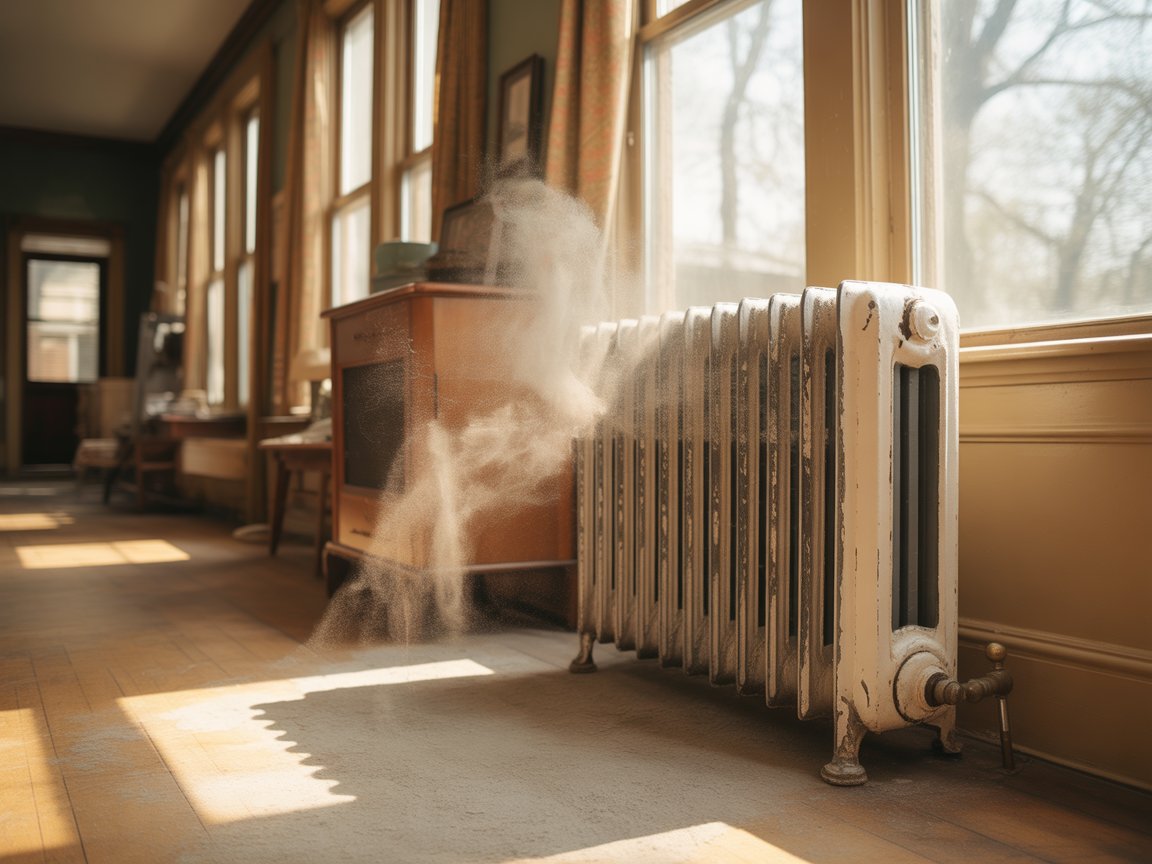
- Cast-iron radiator fins (built 1910–1940)—decades of accumulated dust, pet hair, and dander.
- Behind radiators (dust falls and accumulates).
- Radiator covers (if present).
How I Deep Clean (The "Blow-Out" Technique):
Prep: Turn heat OFF. Let radiator cool completely.
- Step 1: Place a damp sheet or towel behind and beneath the radiator (catches ejected dust).
- Step 2: Use a radiator brush (long, thin brush designed for radiator fins) to dislodge dust from between fins.
- Step 3: Use vacuum in "blow" mode, compressed air canister, or high-pressure air to blast dust from the center of fins outward toward the damp sheet.
- Step 4: Wipe radiator exterior with damp microfiber cloth.
- Step 5: Steam clean radiator if heavily soiled (optional).
- Step 6: HEPA vacuum the area (FLOOR — SECOND TO LAST).
- Step 7: Remove and launder the dust-catching sheet.
Safety: In pre-1978 homes, radiator dust may contain lead paint particles. Use proper containment. If concerned, professional lead-safe cleaning is recommended.
Tools Needed:
HVAC & Duct System (The Allergen Distributor)
Where the Problems Hide:
- Air filters (trap allergens but also distribute them when clogged).
- Vent covers (dust accumulation).
- Supply ducts (dust coats interior walls).
- Return ducts (collects household debris).
- Duct connections and joints (dust accumulates at seams).
- Return air registers (major dust collectors).
- Internal components (blower motor, coils, heat exchanger).
- Dryer vent duct (lint buildup = fire hazard).
- Bathroom exhaust ducts (moisture + dust = potential mold).
Chicago Context:
- Your HVAC is either your best defense or your worst enemy. It either filters allergens or distributes them throughout your home.
- Chicago's long winter means your HVAC ran constantly for five months, recirculating whatever was in your air.
- Chicago's 5-month heating season means constant air circulation through hidden ductwork passageways.
- Dryer vents are especially critical — lint buildup restricts airflow and creates serious fire hazards.
IMPORTANT: Why I Strongly Recommend Professional HVAC & Duct Cleaning: HVAC and Duct systems are complex to operate as they have electrical connections, gas lines, and hidden passageways. Accidentally disconnecting wires can disable your system. Special equipment is required for internal components, and industrial vacuums are needed for whole-home duct cleaning. Certified technicians carry proper insurance. I strongly recommend hiring professionals for HVAC maintenance, dryer vent deep cleaning (fire hazard), and ducts with visible mold or pest evidence.
How to find a provider for your HVAC & Duct System:
HVAC System: Search Google or AI assistants for "HVAC cleaning Chicago," "HVAC maintenance near me," "Furnace cleaning service Chicago," or "Air handler cleaning professionals."
Duct System: Search for "Duct Cleaning Chicago," "Air duct cleaning service near me," "Dryer vent cleaning Chicago," or "HVAC duct sanitizing."
What Homeowners CAN Do Safely:
- Prep: For HVAC internal components, I strongly recommend hiring a professional HVAC company. Disconnecting wires can disable your system, and special equipment is required.
- Step 1: Replace filters with MERV 11–13 rated filters— this is the single highest-ROI action any homeowner can take.
- Step 2: Remove vent covers throughout the house. Soak in hot water. Wipe dry before reinstalling.
- Step 3: HEPA vacuum inside visible ductwork at vent openings (surface level only — do not reach deep into ducts).
- Step 4: Wipe inside the first 6–12 inches of visible ductwork with a damp microfiber cloth.
- Step 5: Clean return air registers thoroughly (these pull in the most dust).
- Step 6: Clean dryer lint trap after every load.
- Step 7: Disconnect dryer vent hose annually and vacuum visible lint from the connection point.
- Step 8: Check exterior dryer vent flap — ensure it opens freely and isn't blocked by debris.
- Step 9: During pollen season, run the system fan on "ON" (not "AUTO") for 2–3 hours after cleaning to filter airborne particles.
Note: EPA does not give a blanket recommendation for duct cleaning — it's condition-based (visible mold, pest evidence, excessive debris).
Tools Needed:
DIY Tasks:
- Filter replacement
- Vent cover cleaning
- Dryer lint trap cleaning
- Annual dryer vent hose disconnect and vacuum
- Surface duct wiping at openings
Call a Chicago Pro When:
- Dryer takes multiple cycles to dry clothes (vent likely clogged)
- Visible dust blowing from vents when HVAC runs
- Musty smell from vents
- Anyone in household has respiratory issues
- More than 5 years since last professional duct cleaning
- Whole-home duct cleaning needed (requires industrial vacuum)
- Visible mold or pest evidence in ducts
What Should You Do Right Now?
Short Answer: Complete your deep cleaning by mid-March, before tree pollen peaks. Chicago tree pollen begins in late February, street sweeping starts April 1 ($60 ticket if your car is in the way), and pollen seasons now start 20 days earlier than historical averages. Use the 4-week strategic calendar below to stay ahead of the season.
Timing Is Critical
- Chicago tree pollen begins late February/early March.
- Pollen seasons start 20 days earlier than historical averages (AAFA 2025).
- Street sweeping begins April 1, 2026—move your car or face a $60 ticket.
- Complete your deep cleaning by mid-March, before tree pollen peaks.
- The goal: eliminate winter buildup BEFORE outdoor pollen adds to the burden.
The 4-Week Strategic Calendar
WEEK 1 (Late March): THE LOGISTICS
- Order supplies (encasements, MERV filters, cleaning products)
- Book professional services, like: carpet cleaners (book fast)
- Test sump pump (critical before April rains)
- Schedule donation pickups (Chicago Furniture Bank, Brown Elephant)
- Change HVAC filter to MERV-11+
WEEK 2 (Early April): THE PURGE
- April 1: Street sweeping begins — move your car
- Focus on closets and decluttering
- Seasonal wardrobe swap
- Drop off hazardous waste at HCCRF (Goose Island).
WEEK 3 (Mid-April): THE HIGH CLEAN
- Dust ceilings, fans, walls (top to bottom)
- Vacuum refrigerator coils
- Steam clean mattresses
- Deep clean bedrooms
- Complete radiator cleaning
- Clean all vent covers
WEEK 4 (Late April): THE WET WORK
- Kitchen deep clean (degrease cabinet tops)
- Bathroom deep clean (grout, exhaust fans)
- Entryway salt removal
- Final floor cleaning — ALL rooms
- HOCl disinfection
Ongoing Defense System
- Keep windows closed during high pollen days
- Run HEPA purifiers 24/7 in bedrooms
- Shoe-free policy at entry
- Shower before bed during peak pollen
- Wipe pets after outdoor time
- HEPA vacuum high-traffic areas twice weekly
- Wash bedding weekly in hot water
- Change HVAC filters monthly (March–May)
"I tell every client the same thing: your spring clean isn't one day. It's a campaign. And the most important week is the first one—when you order supplies and book help. Waiting until April means competing with every other Chicago family for the same appointment slots." — Author: Wells Ye
How Do You Know If You Need Professional Help?
Short Answer: Take the 12-question assessment below. If you score 0–3, DIY is likely sufficient. At 4–7, a hybrid approach works best. At 8–12, professional deep cleaning in Chicago is strongly recommended. If anyone in your home has respiratory issues or wakes up with allergy symptoms, professional help is recommended regardless of your score.
Your Spring Cleaning Readiness Assessment
Results
What's the Real Cost? DIY vs. Hiring Chicago Pros
Short Answer: For a 2-bedroom, 2-bathroom Chicago home, a full DIY spring cleaning costs $140–290 in supplies and 10–16 hours of your time. A professional deep clean runs $300–450. The real question isn't cost—it's whether your equipment can match professional-grade steam extraction and HEPA filtration. For some tasks, DIY is the better choice. For others, the pro wins every time.
Cost Comparison: 2-Bedroom, 2-Bathroom Home
Professional Service Rates in Chicago (2026)
The Employee-Based Service Advantage in Chicago (Illinois Law)
The Illinois Employee Classification Act (820 ILCS 185) and the Domestic Workers' Bill of Rights (2026) protect homeowners in important ways.
If you hire independent contractors, you face liability risks.
If a contractor is injured in your home, YOU can be sued.
Employee-based companies carry workers’ comp, general liability, and bonding. And paid sick leave prevents sick workers from entering your home.
“I built Fresh Tech Maids as employee-based from day one. I’ve seen what happens when an uninsured contractor gets hurt in someone’s home.” — Author: Wells Ye
Chicago-Specific Resources for Spring Cleaning

Short Answer: Chicago offers free hazardous waste disposal at Goose Island, donation pickup from multiple organizations, local refill stations for eco-friendly cleaning products, and a Made-in-Chicago cleaning brand formulated for hard water. Plan around the key 2026 dates below to maximize your spring cleaning efficiency.
Safe Disposal
Household Chemicals & Computer Recycling Facility (Goose Island):
Address: 1150 N. Branch St, Chicago. For E-Waste: RERP
Hours: Tuesdays 7am–12pm, Thursdays 2pm–7pm, 1st Saturday/month 8am–3pm.
Accepts: Paint, solvents, pesticides, electronics, batteries, fluorescent bulbs.
Pro Tip: Tuesday morning is fastest. Expect lines on Saturday.
Donation Resources
- Chicago Furniture Bank:Pickup available. Furnishes homes for families transitioning out of homelessness.
- Brown Elephant:Truck pickup. Proceeds support Howard Brown Health.
- Habitat for Humanity ReStore: Best for cabinets, building materials, and appliances.
Book pickups 2 weeks in advance for all organizations.
Local Green Cleaning Sources
- The Eco Flamingo (Lincoln Square/Edgewater),
- The Refilleri (Humboldt Park),
- Dill Pickle Co-op (Logan Square).
- Meliora Cleaning Products: Made in Chicago, formulated specifically for hard water.
Key 2026 Dates
- Street Sweeping Starts: April 1, 2026 (Chicago CDOT).
- Clean & Green Day: Projected April 18, 2026.
- National Cleaning Week: March 22–28, 2026.
Frequently Asked Questions (FAQ)
Why is spring the best time to deep clean in Chicago?
Because five months of sealed indoor air, road salt accumulation, and approaching pollen season create the highest allergen concentration of the year. Cleaning before pollen peaks prevents compounding the problem.
What makes Chicago spring cleaning different from other cities?
The combination of 300,000+ tons of road salt, hard water (7.6–8.8 grains/gallon), vintage housing stock with cast-iron radiators, the building stack effect, and an 8-month allergy season. No other U.S. city faces this exact combination.
How do I remove road salt from hardwood floors?
Never wet salt crystals first. Dry vacuum, then apply a vinegar wash (1 cup white vinegar per 1 gallon warm water) to neutralize the alkaline bonds. Follow with a freshwater rinse and immediate towel dry.
How do I get rid of dust mites in my mattress?
HEPA vacuum all surfaces, then steam clean at 212°F+ to kill mites instantly. Allow 4–6 hours to dry. Install AAFA-certified allergen-proof encasements. A Johns Hopkins study showed 90% mite reduction in one month with encasements alone.
How often should I clean to reduce allergens?
HEPA vacuum high-traffic areas twice weekly during pollen season. Wash bedding weekly in 130°F+ water. Change HVAC filters monthly from March through May. Set up recurring service
Is chemical-free cleaning actually effective?
Yes. Steam kills 99.9% of bacteria and achieves 86.7% allergen reduction. DI water cleans without leaving residue. HOCl is 80–100 times more effective than bleach as a disinfectant. Physics-based cleaning outperforms chemical cleaning on every measurable outcome.
What is DI water and why is it better for cleaning?
Deionized water has had all mineral ions removed. It's chemically "hungry" for contaminants, which makes it an aggressive cleaner without chemicals. In Chicago, where hard water leaves mineral deposits on everything, DI water is essential for a residue-free result.
How much does professional spring cleaning cost in Chicago in 2026?
A standard clean for a 2BR/2BA runs $180–250. A deep clean costs $300–400. Hourly rates for bonded/insured professionals range from $59–89 per cleaner. Get an instant quote
Should I clean my air ducts?
EPA recommends duct cleaning only when conditions warrant it—visible mold, pest evidence, or excessive debris. However, replacing HVAC filters with MERV 11–13 rated filters and cleaning vent covers are high-impact actions every homeowner should take.
How do I clean cast-iron radiators in my Chicago bungalow?
Use the "blow-out" technique: place a damp sheet behind the radiator, use a radiator brush to dislodge dust from between fins, then blast with compressed air toward the sheet. In pre-1978 homes, use caution for potential lead paint.
When should I complete spring cleaning before pollen season?
By mid-March. Chicago tree pollen begins in late February/early March, and the 2026 La Niña transition forecasts a wet spring that will accelerate pollen release.
Do air purifiers really help with allergies?
Yes—HEPA air purifiers capture 99.97% of particles down to 0.3 microns. Place one in each bedroom and run 24/7 during pollen season for the greatest impact.
What's the best HEPA vacuum for allergen removal?
Look for true HEPA filtration (not "HEPA-like"), sealed suction system, and upholstery/crevice attachments. Budget $200–400 for a model that will last years.
Can I use vinegar on everything?
No. Vinegar is acidic—perfect for neutralizing alkaline salt and hard water deposits. But kitchen grease is acidic too, so it needs alkaline cleaners (like washing soda). Never use vinegar on natural stone, art glass, or limestone.
The Ultimate Chicago Spring Cleaning Checklist for 2026
Your Ultimate Spring Cleaning Guide With Free Checklist!

Your Room-by-Room Guide to a Fresh, Spring-Ready Home.
This one is built for Chicago. What's Inside:
✅ Why Chicago Cleaning Is Different
✅ Room-by-Room Checklists
✅ 4 Pillars of Chemical-Free Cleaning
✅ 4-Week Action Timeline
✅ DIY vs. Pro Cost Comparison
Print it. Check it off. Get your home Spring Ready!
Get Your Ultimate Spring Cleaning Guide!