Executive summary
Plain-English glossary
What pet-safe house cleaning in Chicago really means
Pet-safe cleaning is not a promise that one product is harmless in every home.
It is a decision process: identify the soil, choose a compatible method, control exposure, and confirm the result.
The CDC separates cleaning from disinfecting.
Cleaning physically removes dirt and germs. Disinfecting uses a registered chemical product to kill listed germs under label conditions. Most routine pet items need cleaning first, while disinfection is added when illness, contamination, or another clear reason makes it useful.
At Fresh Tech Maid, the brand phrase chemical-free cleaning refers to a physics-first, low-residue approach for routine soil removal. Deionized water (DI Water), split microfiber, sealed HEPA filtration, and controlled steam can reduce the need for broad spray-and-wipe chemistry, but targeted chemistry may still be the correct tool for urine, disinfection, grease, or another defined problem.
That distinction matters because a home can be free of visible hair and still hold allergen-loaded dust in carpet, fabric, wall edges, vents, and bedding. It can also smell strongly of cleaner while floor residue remains where paws, hands, and toys touch.
This guide covers routine residential cleaning, source control, pet supplies, accidents, seasonal Chicago soil, and escalation decisions. It does not diagnose allergies, treat pets, eliminate infestations by itself, or replace mold remediation and restoration work.
Why pet homes in Chicago need a different cleaning plan

Pet ownership is a mass household issue.
The American Pet Products Association reported 95 million U.S. pet-owning households in 2025. That scale is why pet cleaning belongs in the center of household-health planning, not in a small side note about lint rollers.
Pet allergy is also easy to misunderstand.
The Asthma and Allergy Foundation of America explains that the proteins are found in dander, saliva, and urine. Hair and fur collect those proteins and can also carry pollen, mold, and dust mites.
A national housing study found cat and dog allergens in nearly every sampled U.S. home, including many without a recent pet.
The study does not mean every home has a dangerous level, but it shows how easily allergen material moves on clothing, dust, and shared environments. Review the PubMed record.
New research adds another layer.
A controlled 2026 study measured gases, particles, and microbes released around dogs. Larger dogs released more bacteria and fungi than a seated adult under the study conditions, while small active dogs produced more airborne particles. The authors described an indoor-air modeling problem, not a reason to fear pets or a direct proof of illness. Read the peer-reviewed study.
Chicago homes add local pathways.
Winter salt and slush enter through paws and boots. Spring pollen clings to fur and window screens. Summer humidity can bring old urine odors back and keep bedding damp. Vintage floors, small apartments, shared hallways, and high-rise elevators change where soil collects and how often it returns.
This is why I organize the problem by zones.
The zones show where the source begins, where it travels, and which method has the best chance to remove it without adding unnecessary residue.
The Five-Zone Pet Home Framework
I use this framework as a planning model, not a medical score. It turns a vague complaint such as "the apartment always feels furry" into five places to inspect and five decisions to make.
Zone 1 is air and allergens. The focus is source control, sealed HEPA removal, damp dust capture, pet-free sleep areas for allergic people, and filter maintenance.
Zone 2 is soft surfaces. Carpet, rugs, couches, curtains, pet beds, and human bedding hold hair, skin flakes, tracked pollen, and odor sources longer than a hard floor does.
Zone 3 is floors and entries. This is where paw-level residue, road salt, mud, lawn products, and cleaner film meet crawling children and pets that groom their feet.
Zone 4 is food and waste. Bowls, feeding mats, litter boxes, cages, and waste containers need dedicated tools and a clear line between routine cleaning and targeted disinfection.
Zone 5 is incidents. Urine, vomit, feces, fleas, ringworm, and moisture are not one category of dirt. Each has a separate response and a clear escalation point.
Fresh Tech Maid internal methodology supports the same logic.
Our teams prepare tools by room, clean high to low, complete dry removal before wet work when the soil calls for it, handle high-touch areas with the correct method, and finish the floor after upper surfaces are complete.
"When I divide a pet home into zones, the work stops feeling endless. Each problem gets a place, a method, and a next step." Wells Ye, Founder, FreshTechMaids.com
That sequence limits rework and keeps loosened dust from falling onto a floor that was already mopped.
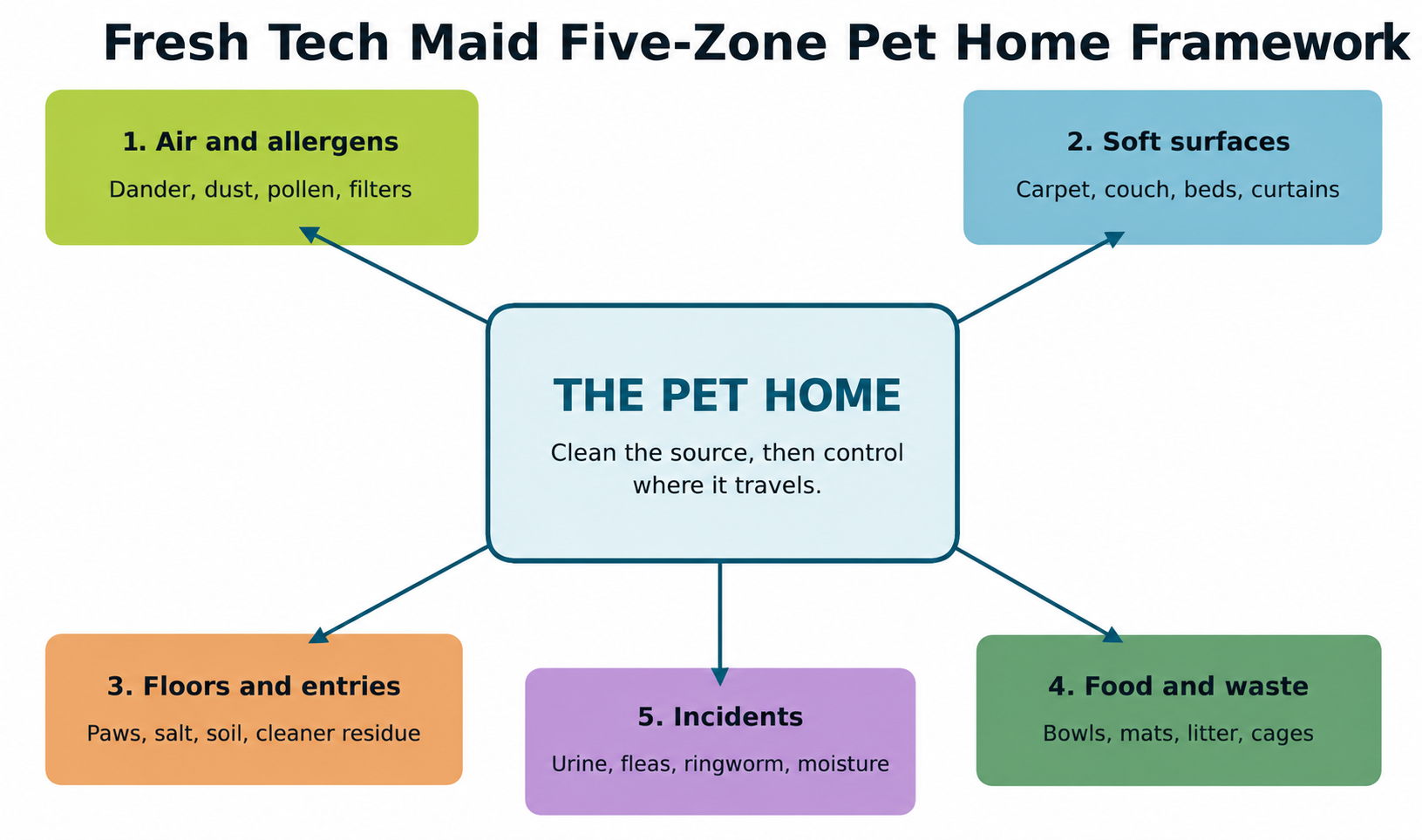
Figure 1. The Fresh Tech Maid Five-Zone Pet Home Framework. Source: Fresh Tech Maid framework informed by the supplied internal methodology and cited public-health sources
Air and allergen control: remove the source before chasing the air
The first decision is whether anyone in the home has diagnosed or suspected pet allergy or asthma.
The NIEHS notes that pet allergies can make asthma harder to control, so breathing symptoms belong with a physician or allergist, not with a cleaning claim.
For an allergy-sensitive household, I would protect the sleep zone first. The AAAAI recommends keeping pets out of the bedroom, using HEPA filtration, and cleaning carpet often or choosing easier-to-clean flooring. These steps reduce exposure; they do not create an allergen-free home.
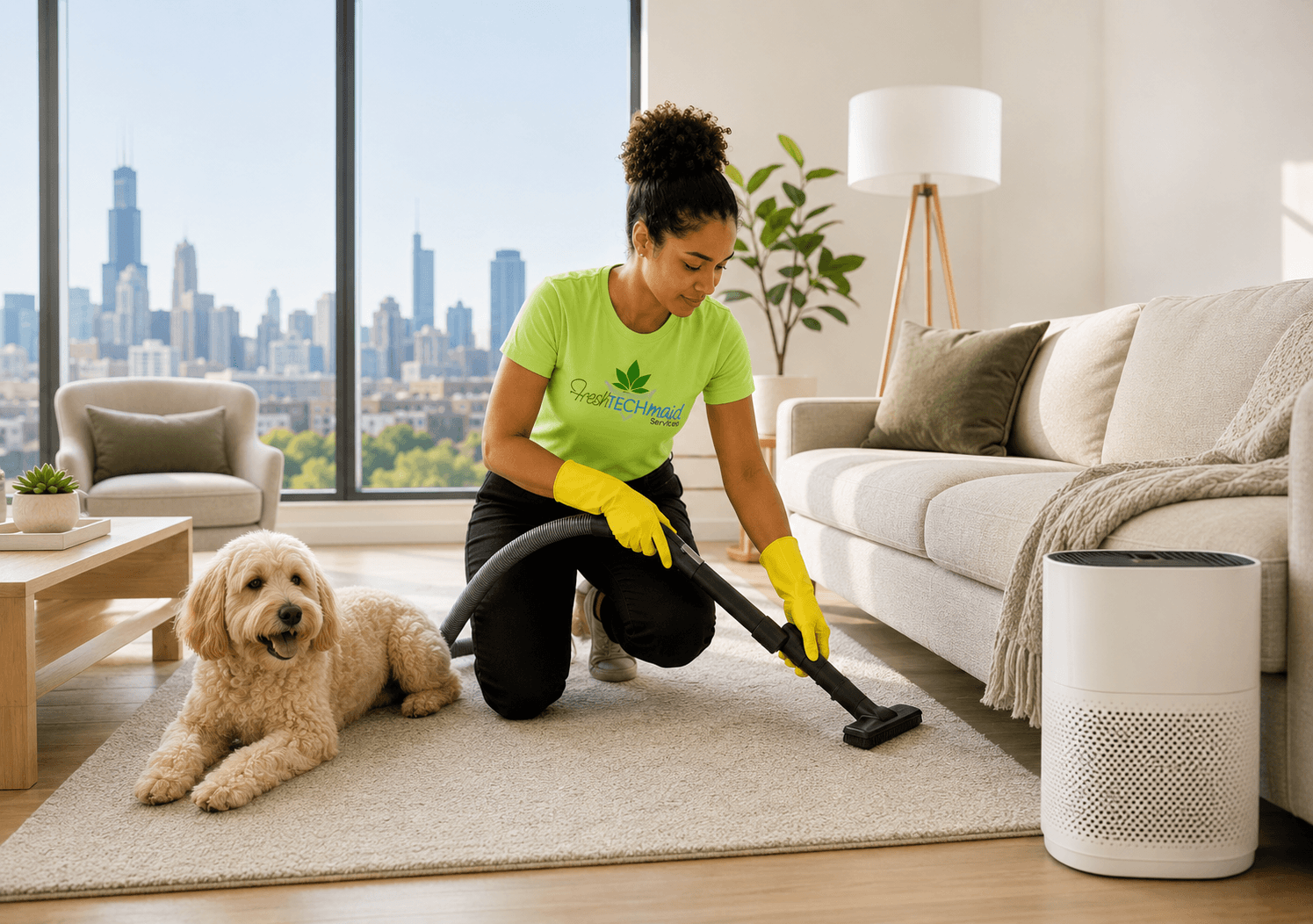
A sealed HEPA vacuum matters because the goal is to capture fine material instead of blowing it through leaks.
Slow passes are more useful than racing across a rug. The vacuum should also reach sofa seams, under cushions, baseboard edges, and the place where the pet sleeps.
After dry removal, damp microfiber can collect settled dust from shelves, window sills, wall edges, and washable vertical surfaces. Always check paint, wallpaper, and finish compatibility before wiping a large area.
Parents with Children should give the play area and bedroom priority because hands, toys, and blankets move between floors and faces. Allergy-sensitive households should also reduce fabric clutter around the main sleep and seating zones.
The reward is measurable in the home even without medical promises: less loose hair, less visible dust, cleaner filters, fewer fabric reservoirs, and a routine that makes each later cleaning easier.
Soft-surface reservoirs: the couch is often a bigger problem than the air

A sofa hides the problem because the top can look clean while seams, cushion undersides, and the frame collect hair.
A pet bed can be worse because it concentrates skin flakes, saliva, outdoor soil, and moisture in one warm place.
Research on allergen reservoirs found carpet to be a major storage area in pet homes, while walls, smooth floors, and finished furniture can also hold cat and dog allergens. See the PubMed summary on distribution and removal from smooth surfaces.
"Pet hair is what we see. The bigger cleaning job is often the invisible material held in sofas, rugs, bedding, and dust." Wells Ye, Founder, FreshTechMaids.com
I would begin with a removable layer.
Washable couch throws, pet-bed covers, and entry mats reduce the number of surfaces that need deep treatment. Remove hair before washing so it does not simply move into the machine and drain system.
Use a vacuum tool that matches the fabric and work in more than one direction when the weave traps hair. Check the care label before using moisture or heat. Steam is not a universal answer for velvet, delicate upholstery, adhesives, laminate, or unknown backing.
Young Professionals in Chicago apartments often gain the most by focusing on three reservoirs: the couch, the pet bed, and the entry rug. Those three areas control what guests see and smell without turning every evening into a full-house clean.
Empty Nesters and Seniors may reduce strain by choosing lighter washable covers, smaller rugs, and a recurring schedule for low furniture, stairs, and heavy cushions.
The best plan is one the household can keep without repeated lifting or kneeling.
Floors, entries, and cleaner residue
Pets live close to the floor.
They walk through wet cleaner, lie on the surface, and may lick their paws later.
Crawling children share much of the same contact zone, which is why residue control matters to Parents with Children as much as to pet owners.
The EPA reports that many VOC concentrations are higher indoors than outdoors, and cleaning or disinfecting products can be one source. That does not mean every cleaner is unsafe. It means spray format, ventilation, dose, storage, and label directions matter.
The most reliable safety step is simple: read the label before buying, storing, and using a cleaner around pets.
Never mix products. Keep pets and children away during use. Follow dilution, contact-time, rinse, ventilation, and drying directions.
Species matter.
The Merck Veterinary Manual advises avoiding phenol-based disinfectants in feline environments. Birds can also be highly sensitive to aerosols and fumes, so a bird household needs veterinary guidance and tighter control of airborne products.
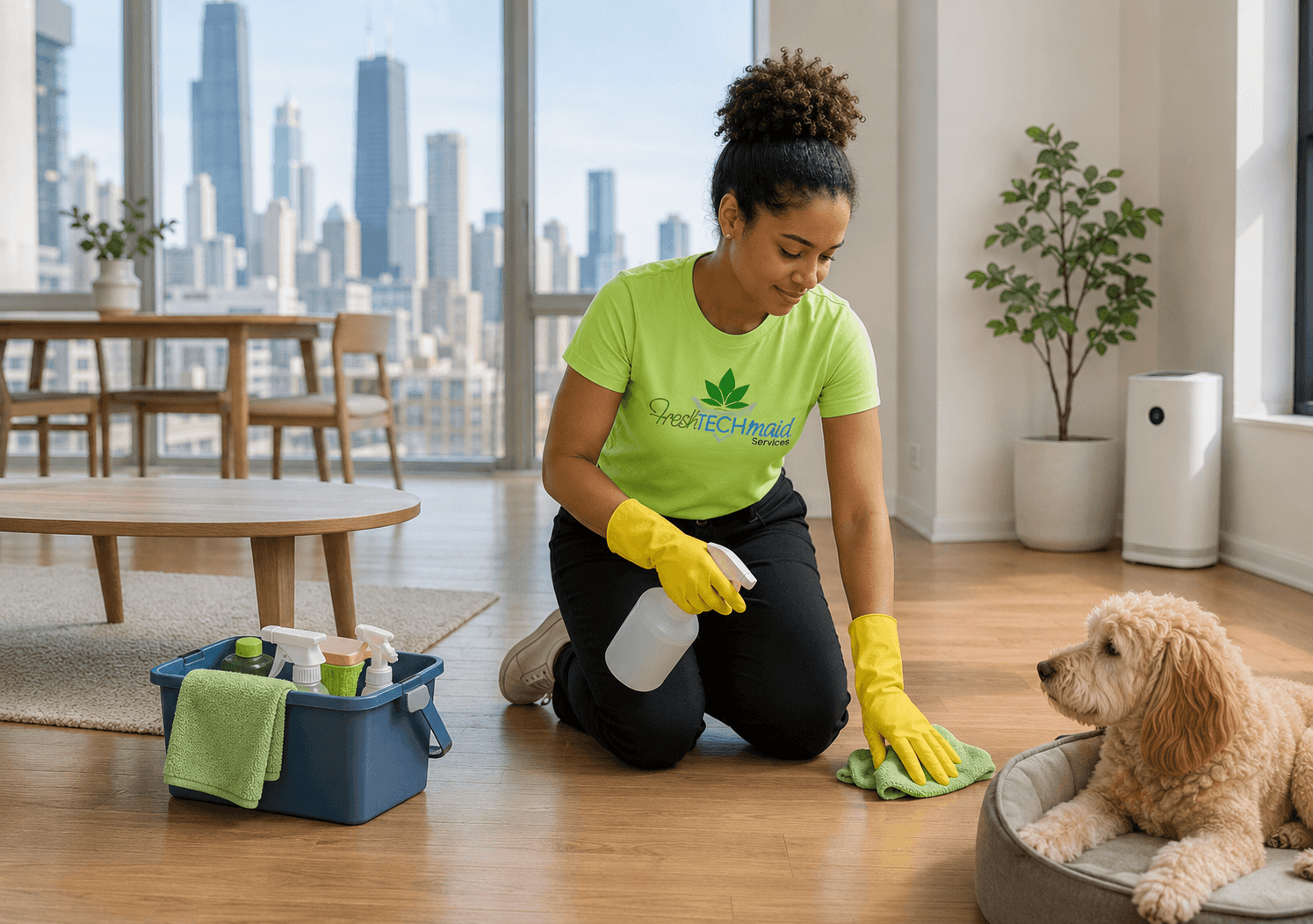
For routine hard-floor soil, DI water and split microfiber can reduce added product residue when the floor manufacturer allows water-based cleaning.
DI water is a cleaning aid, not a disinfectant, and it will not solve grease, urine crystals, or a disease-control problem by itself.
When chemistry is needed, an EPA Safer Choice product can be a useful screening step for routine cleaning ingredients. It is not a blanket pet-safety seal, so the product label and the veterinarian still outrank marketing language.
Chicago entries deserve their own small system: an outside mat when building rules allow it, a washable inside mat, a towel for paws, and a hard-floor pass after salt or mud dries. Source control at the door saves more time than chasing the same grit through every room.
Food, water, litter, and other waste zones
The CDC says cleaning is usually enough for most pet items, with disinfection added in selected situations.
That is a useful guardrail because over-disinfecting can add work and residue without solving a defined problem.
For bowls, empty old food and water, wash the full inside and outside surface, clean the feeding mat, and wipe the wall or cabinet edge where splashes land. Do not keep topping off a slimy water bowl.
Drying matters because a wet film gives residue more time to stay in place.
If pet dishes are washed in the kitchen sink, clean the sink and nearby counter after the task. Keep a separate brush or sponge for pet items, and replace it when it becomes worn or hard to clean.
Litter areas need daily waste removal, tracked-litter control, and a cleanable border around the box. The CDC explains that Toxoplasma in cat feces usually takes 1 to 5 days to become infectious, which is why daily litter removal is a meaningful risk-reduction step.
A pregnant or immune-suppressed person should ask another household member to handle litter when possible and follow current medical guidance. When that is not possible, gloves, daily cleaning, and careful handwashing matter.
"Pets live close to the floor, then clean their paws with their mouths. That is why residue control matters as much as visible shine." Wells Ye, Founder, FreshTechMaids.com
Cleaning advice cannot replace a clinician's advice for a high-risk person.
University Students and Renters often share kitchens and bathrooms. A labeled pet-supply bin, a dedicated brush, and a written roommate routine can prevent the common problem of nobody knowing who last cleaned the bowl, mat, or litter edge.
Accidents, odor return, fleas, ringworm, and moisture
Pet urine odor often returns because the visible spot is smaller than the contaminated area.
Liquid can move through carpet backing, padding, floor gaps, grout, or unfinished wood. Fragrance may cover the smell for a day without removing the source.
For urine, blot fresh liquid, identify how far it traveled, and use a product made for that material and type of organic soil. Follow the enzyme product label for saturation, dwell time, extraction, and repeat use. Do not add steam or another chemical unless the surface and product instructions allow it.
Repeated or unexplained accidents can be a health, mobility, stress, territory, or litter-box problem.
That is the point to call a veterinarian instead of assuming the cleaning failed.
Fleas are a pet-and-environment problem. The CDC recommends treating every pet and thoroughly cleaning bedding, rugs, carpet, floors, and wall edges. Vacuum contents should be removed in a way that does not spread the problem back into the home.
Ringworm can spread between pets, people, and shared surfaces. The CDC advises veterinary care for a pet with a suspicious rash. Environmental cleaning supports the treatment plan but does not replace diagnosis or medication.
Moisture changes the decision.
The EPA says mold control begins with moisture control and recommends drying water-damaged materials within 24 to 48 hours when possible. Recurring growth, soaked drywall, contaminated padding, or a hidden leak belongs with a qualified building, restoration, or mold professional.
The reward for correct escalation is time and money saved.
It prevents the cycle of buying stronger products for a problem that cleaning alone cannot solve.
Which cleaning method fits each pet-home problem?
The best method starts with four questions:
- What is the soil?
- What is the surface?
- Who or what could be exposed?
- What result do I need: visible cleaning, allergen reduction, odor-source removal, or disinfection?
"The right cleaning method depends on the soil, the surface, and how far the problem traveled." Wells Ye, Founder, FreshTechMaids.com
I prefer to separate cleaning from disinfection because the two jobs are often confused.
The CDC notes that routine cleaning with soap and water removes most germs in many home situations. Disinfection should follow cleaning when illness or a defined contamination risk makes it useful.
A sealed HEPA vacuum is strongest when the problem is dry particles in carpet, fabric, edges, and vents. It is not a disinfectant and it will not remove a urine source below carpet backing.
Split microfiber with deionized water is useful for routine hard-surface soil when the material allows it.
The benefit is low added residue. The limit is equally important: water alone is not a broad degreaser, enzyme treatment, or registered disinfectant.
Dry steam can loosen soil and apply heat on compatible surfaces, but the safe use depends on the tool, surface, temperature, contact, and manufacturer instructions.
Do not make a universal kill claim and do not use heat on unknown adhesives, finishes, electronics, or delicate fabrics.
A targeted disinfectant, including an HOCl product when the EPA label matches the target and surface, needs the correct concentration, storage, pre-cleaning, wet contact time, and ventilation.
The word HOCl is not a substitute for reading the actual product label.
An enzyme treatment is the practical choice for pet urine and other organic residues when the product is made for the material.
Hot-water laundry is useful for washable covers and bedding when the care label permits it.
Source note: CDC cleaning guidance, EPA label guidance, manufacturer instructions, and Fresh Tech Maid methodology. No method is recommended without surface and product compatibility checks.
Common myths and mistakes that make pet homes harder to clean
Myth 1 is that visible hair is the whole allergy problem.
Hair is a carrier. Allergen proteins can remain in fine dust, fabric, saliva residue, and urine even after the room looks fur-free.
Myth 2 is that a strong scent proves the home is clean.
Scent can mask urine or stale fabric without removing either one. It can also make it harder to tell whether the source is still present.
Myth 3 is that "natural" means safe for every species.
The ASPCA reminds pet owners that even products marketed as natural still contain chemicals and require label-based use. Essential oils and homemade mixtures are not automatically safer.
Myth 4 is that every pet surface should be disinfected.
Routine cleaning is enough for many items. Disinfect when there is a reason, and clean first so soil does not block the process.
Myth 5 is that more water and more heat create a deeper clean.
Too much moisture can push contamination into padding or damage wood. Heat can set or spread a problem when the product or surface does not allow it.
Myth 6 is that one air purifier can solve a whole-home allergen problem.
It can help the air that passes through it, but it cannot wash bedding, clean a couch, remove dust from walls, or stop the pet from entering a bedroom.
The fix is a boring but reliable sequence: source control, dry removal, compatible wet cleaning, targeted treatment, full drying, and a check of the result.
Source note: AAFA, AAAAI, CDC, EPA, ASPCA, Merck Veterinary Manual, and Fresh Tech Maid interpretation.
A Chicago seasonal pet cleaning plan for pet hair, salt, pollen, and humidity
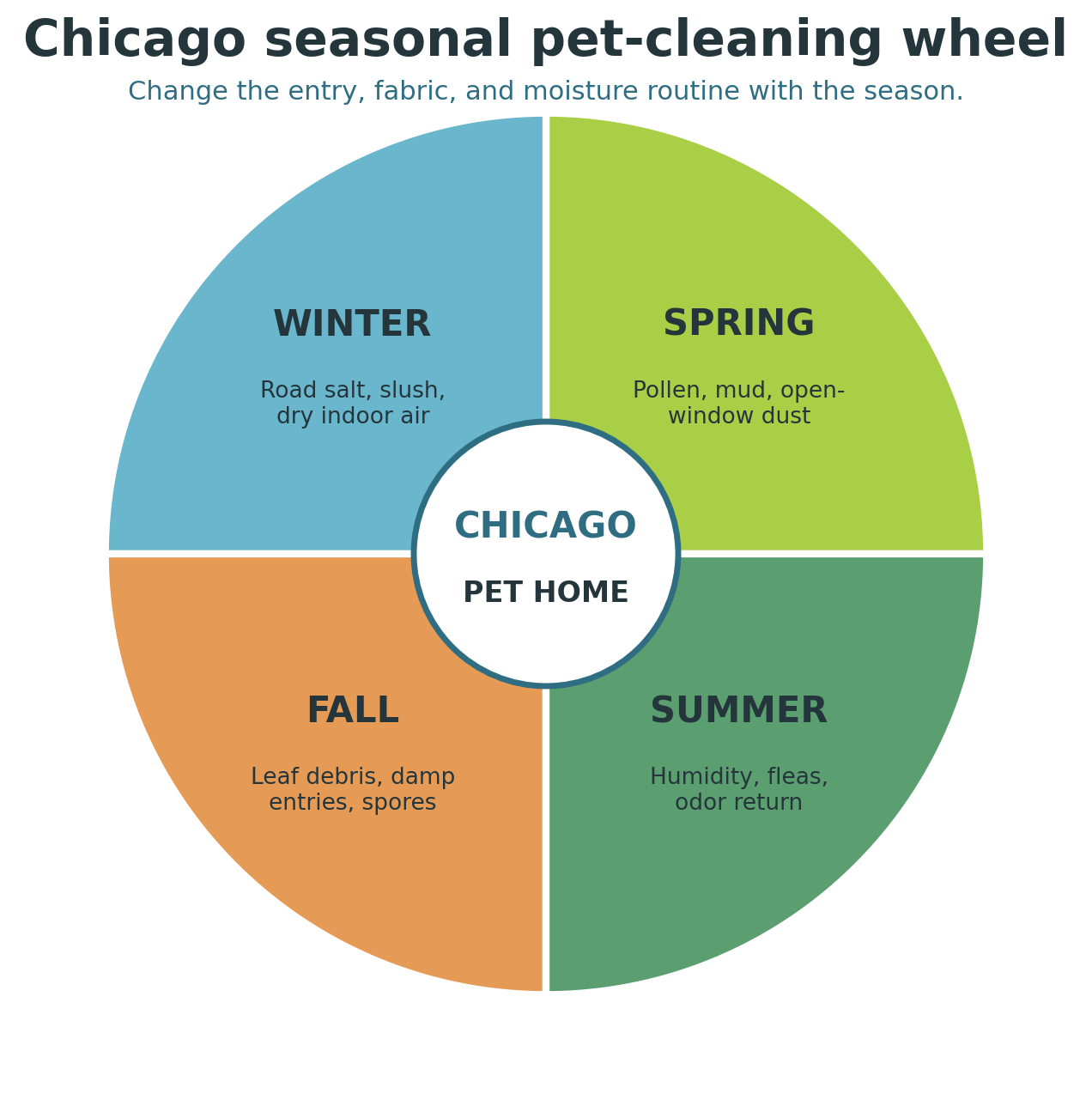
In winter, road salt and ice-melt material can move from sidewalk to paw to floor in minutes. Wipe paws, remove gritty soil before wet mopping, and clean entry mats often enough that they do not become a salt reservoir.
In spring, focus on fur, paws, screens, window tracks, and the couch. Pollen enters through open windows and on outdoor clothing. A damp capture step after HEPA vacuuming keeps the settled layer from moving back into the air.
In summer, inspect pet beds and rugs for slow drying. Lake Michigan humidity and closed air-conditioned rooms can make odor more noticeable. Flea prevention and veterinary care matter before an infestation reaches fabric and wall edges.
"Good pet cleaning changes when the soil changes - from winter salt to spring pollen to summer humidity." Wells Ye, Founder, FreshTechMaids.com
In fall, leaf debris and damp soil collect at entrances. Clean and dry the entry before Chicago moves into long periods of closed windows and recirculated indoor air.
A condo or high-rise may need a quieter, more compact routine because of shared halls, elevators, and limited storage.
A bungalow or single-family home may need stronger entry control because pets move through yards, porches, basements, and more than one door.
The seasonal reward is less emergency cleaning.
Small changes at the source prevent a winter salt film, a spring pollen load, or a summer odor from turning into a whole-home reset.
Source note: Fresh Tech Maid seasonal planning framework. Follow current product, weather, building, and veterinary guidance.
What different Chicago households should do first
Parents with Children: clean the play floor after upper surfaces, control cleaner residue, wash shared blankets, and keep pet bowls and litter tools away from child food zones. The goal is not a sterile home. It is a predictable floor and fabric routine.
Pet Owners or Allergy-Sensitive Households: protect the bedroom, use sealed HEPA removal, wash bedding, and reduce soft-surface reservoirs. Track symptoms with a clinician instead of using cleaning as a medical test. Air purifier can help too.
Young Professionals: set a 15-minute daily reset for the entry, couch, bowl, and litter edge. Use digital reminders and washable barriers so the routine survives a busy workweek.
Empty Nesters: choose lighter washable covers, reduce loose rugs that trap hair, and schedule help for low furniture, stairs, and heavy upholstery. A guest-ready home should not require a day of kneeling before family arrives.
Traditionists or Seniors: use a printed schedule, labeled tools, and a clear contingency plan for accidents. Keep product labels and emergency numbers easy to find, and ask family members to help with lifting or strong-product tasks.
University Students or Renters: agree on who cleans bowls, litter, and shared floors. Photograph pre-existing pet damage, follow lease rules, and do not use unapproved steam or chemicals on landlord-owned surfaces.
The right first step is the one that removes repeated work. A clean entry and washable couch cover may save more time than buying a new gadget.
Source note: Recommendations are mapped to the supplied Fresh Tech Maid customer-avatar files and the Five-Zone Pet Home Framework
The 30-day pet-safe home reset
During Week 1, walk the pet's real path. Mark sleep spots, favorite windows, feeding areas, litter or cage zones, accident history, damp materials, and the route from the outside door to the couch.
During Week 2, work high to low. Dust and vacuum upper surfaces, vents, wall edges, upholstery, carpet, and bedding before the final floor pass. Wash compatible covers and pet bedding, then dry them fully.
During Week 3, reset the entry, hard floors, bowls, mats, litter edge, waste container, and pet-storage area. Remove unused products and keep only cleaners with readable labels and a defined job.
During Week 4, assign daily, weekly, monthly, and seasonal tasks. Decide which person handles litter, who checks filters, how accidents are reported, and when the household calls a veterinarian, pest professional, or building specialist.
"Start with the zone that affects your family most, then build a routine you can repeat." Wells Ye, Founder, FreshTechMaids.com
Measure simple outcomes.
Look for less loose hair at wall edges, fewer odor returns after humidity changes, cleaner mats, less floor film, and a shorter weekly reset. Those are honest household measures that do not pretend to be medical outcomes.
If the reset is too large for the available time or physical ability, a professional deep cleaning service in Chicago can handle the initial reservoir removal.
A recurring cleaning plan is more useful when hair, dust, and floor soil return every week.

When to clean it yourself and when to call someone else
Choose DIY when the problem is small, visible, recent, and within the tools you already know how to use.
Stop when the material is unknown, the contamination has reached padding or subfloor, or the cleaner label conflicts with the surface or species in the home.
Choose a residential cleaning service when the work is broad rather than specialized: whole-home HEPA vacuuming, high-to-low dust removal, hard-floor cleaning, washable surface work, and a repeatable maintenance plan.
Fresh Tech Maid is a Chicago-area residential cleaning company with employee-based service teams. Our physics-first, low-residue approach uses methods such as deionized water, split microfiber, sealed HEPA filtration, and targeted HOCl protocols when disinfection is appropriate.
A professional cleaner should also be clear about limits.
We are not a veterinarian, pest-control company, mold remediator, or restoration contractor. A trustworthy scope sends those problems to the right specialist instead of hiding the boundary.
For apartments and condos, Fresh Tech Maid apartment cleaning can support routine pet hair, dust, floors, kitchens, and bathrooms. For a one-time reset, use the one-time cleaning service.
The decision is not DIY versus professional pride.
It is which option controls the source with the least risk, rework, and strain.

Frequently asked questions
What is the safest floor cleaner for dogs and cats?
There is no universal safest product. Start with dry soil removal and the least aggressive method that the floor allows. DI Water can be a great choice. Ask a veterinarian about species-specific concerns.
Is pet hair the same as pet dander?
No. Hair is visible fiber. Dander is made of tiny skin flakes and attached proteins, while other allergen proteins can come from saliva and urine. Hair can carry those proteins, pollen, mold, and dust.
How often should I wash pet bedding?
Clean it often enough that hair, odor, moisture, and visible soil do not build up. The CDC suggests cleaning pet items as often as comparable household items. Follow the care label, remove hair before washing, and dry the bedding fully.
Can I use steam around pets?
Steam can help on selected heat-safe surfaces, but pets should be away from the work area and the surface must be compatible. Steam can damage finishes, adhesives, laminate edges, electronics, and delicate fabric. It is not a universal pet-safe or germ-kill claim.
Who should clean the litter box during pregnancy?
The CDC recommends that someone else handle litter when possible. Daily waste removal matters because Toxoplasma usually takes 1 to 5 days to become infectious. A pregnant or immune-suppressed person should follow current clinician guidance.
Why does pet urine smell come back?
The visible spot may not show how far liquid moved into backing, padding, grout, seams, or wood. Humidity can also make old residue easier to smell. Treat the full contaminated layer with a compatible enzyme product and call a veterinarian for repeated unexplained accidents.
When does pet cleaning become a professional job?
Hire routine cleaning help when the work is widespread, physically hard, or beyond your time and equipment. Call a veterinarian for illness or repeated accidents, a licensed pest professional for infestation control, and a building or mold specialist for recurring moisture or damaged materials.
A calmer pet home starts with the right first zone
Start with one high-impact zone this week. For most Chicago households, that means the entry, the couch, the pet bed, or the bedroom. When the buildup is whole-home or the physical work is too much, book a Fresh Tech Maid cleaning with a clear pet, surface, and household-health brief.
You can also review the Fresh Tech Maid pet-owner apartment cleaning comparison, the chemical-free cleaning guide for Chicago families, and the spring allergy cleaning guide.
Download companion: Chicago Pet-Safe Home Cleaning Checklist