You're moving.
The boxes are piling up, the deadline is looming, and somewhere between transferring utilities and saying goodbye to your neighborhood, you're expected to deep-clean an entire apartment.
But here's what most Chicago tenants don't realize.
Under Chicago's RLTO, routine cleaning fees are generally NOT a valid security deposit deduction.
Landlords can only deduct for unpaid rent or damage beyond normal wear and tear.
Yet insufficient cleaning remains the number one deduction factor after unpaid rent.
That's because landlords blur the line between "cleaning" and "damage." Cleaning costs rank among the most frequently cited reasons for security deposit deductions nationwide.
I've watched this play out hundreds of times across Chicago.
A tenant moves out thinking the place looks fine.
Two weeks later, they got a letter with $600 in deductions for "oven damage" that was really baked-on grease.
This guide gives you everything you need.
The legal protections most tenants don't know they have.
A clear path whether you DIY or hire a pro.
And the timeline to coordinate both your old AND new place during the chaos of moving week.
You're Moving — But What Are You Really Feeling Right Now?

Short Answer: Moving is one of life's most stressful events. You're juggling packing, logistics, deadlines, and emotions all at once. The cleaning feels impossible because you literally cannot be in two places at once. What you're feeling is completely normal — and there is a clear path forward.
The stress is real.
I talk to Chicago tenants every week who are mid-move.
The panic in their voices is always the same.
They've got a lease ending on the 30th, movers booked for the 28th, and somehow they're supposed to deep-clean an entire apartment in between.
Adding a full move-out cleaning on top of everything — scrubbing ovens, wiping baseboards, deep-cleaning bathrooms — feels like asking someone to run a marathon while packing for a road trip.
The excitement is real too.
Whether you're a Young Professional upgrading from a Lakeview studio to a Lincoln Park one-bedroom, or an Empty Nester downsizing from the suburbs to a Gold Coast condo, there's a new chapter waiting.
But the deadline pressure is uniquely intense.
Unlike spring cleaning or a regular deep clean, move-out cleaning in Chicago has a hard stop.
Miss it, and you risk losing hundreds — sometimes thousands — in security deposit deductions.
Or worse, an extra month of rent if you can't vacate on time.
Here's the impossible math every Chicago renter faces during moving week.
You need to pack your old apartment.
Clean your old apartment.
Coordinate movers.
Set up utilities at the new place.
And somehow make sure your new apartment is clean before furniture arrives.
Parents with Children feel this double.
You're managing all of this while keeping kids on schedule, fed, and safe during the chaos.
And here's the irony most tenants miss.
While obsessing over move-out deposit recovery, they move into their next apartment without cleaning it first.
Don't assume your new place is clean just because it looks tidy.
Previous tenants' chemical residue, dust, and unknown contaminants are still there.
The same diligence that saves your deposit at move-out should protect your health at move-in.
Dr. Paula Cannon, professor of microbiology at USC's Keck School of Medicine, has emphasized that heat-based cleaning can effectively kill pathogens including viruses and bacteria.
That's one reason I rely on steam as the backbone of my cleaning method — especially during the vulnerability of a move, when families are exposed to a new environment.
"The emotional toll of a move goes beyond logistics — it's the cognitive load of managing a dozen deadlines simultaneously that breaks people down." — Dr. Susan Krauss Whitbourne, Professor Emerita of Psychological and Brain Sciences, University of Massachusetts Amherst
That stress you're feeling?
It's pointing you toward the most important question of your move-out: what exactly are you trying to accomplish with this clean?
What's Your Real Goal — Getting Your Deposit Back or Leaving It Right?
Short Answer: Most Chicago tenants fall into one of two camps: those focused purely on recovering their $1,500–$2,500 deposit, and those who want to leave the apartment in excellent condition out of personal standards. Both share the same deadline pressure, but the cleaning scope differs. Understanding your camp determines your entire strategy.
I see two types of clients walk through my door every single month.
SCENARIO A: "I Just Want My Deposit Back"
You're focused on one thing.
Recovering that $1,500–$2,500 sitting in your landlord's account.
You want to do what's necessary to pass inspection — no more, no less.
You're not emotionally attached to this place. You want your money and to move on.
This is incredibly common among Young Professionals and University Students who've lived somewhere for a year or two.
What you need is simple: exactly what landlords inspect, the legal standard you must meet, whether DIY or hiring makes financial sense, and how to document and dispute unfair deductions.
SCENARIO B: "I Want to Leave This Place Right"
Maybe you lived here for years.
Maybe your family has memories here.
Maybe you simply have personal standards that won't let you hand back keys to a dirty apartment.
This mindset is especially common among Empty Nesters who've spent a decade or more in a home.
And Seniors who take pride in how they leave things behind.
A thorough move-out clean sends a clear message.
You respect the space.
You're responsible.
You're the kind of tenant landlords remember.
What you need here is different.
A comprehensive room-by-room approach.
Solutions for Chicago-specific challenges like hard water and road salt buildup.
Coordination with move-in cleaning at your new place.
And chemical-free options that leave the space genuinely clean — not just smelling like bleach.
The Overlap
Both scenarios share common ground.
The deadline is non-negotiable.
The stress is real.
The excitement of what's next is real.
About 30–40% of our Chicago move-out cleaning clients fall into Scenario B.
If that's you, the cleaning standard you're aiming for is essentially the same as a move-in deep clean.
Understanding these standards works both ways.
When you move into your next apartment, "move-in ready" legally means you shouldn't need to clean anything before unpacking.
If your new place isn't clean, document it immediately and request professional cleaning from your landlord before furniture arrives.
"A clean handoff isn't just courteous — it's financially strategic. It reduces the likelihood of disputes." — Marcia Stewart, Co-author, Every Tenant's Legal Guide, Nolo Press
Whichever scenario you identify with, the foundation of protecting your deposit starts with understanding what Chicago law actually says about it.
Most tenants have no idea how much legal leverage they already have.
What Does Chicago Law Actually Say About Your Security Deposit?
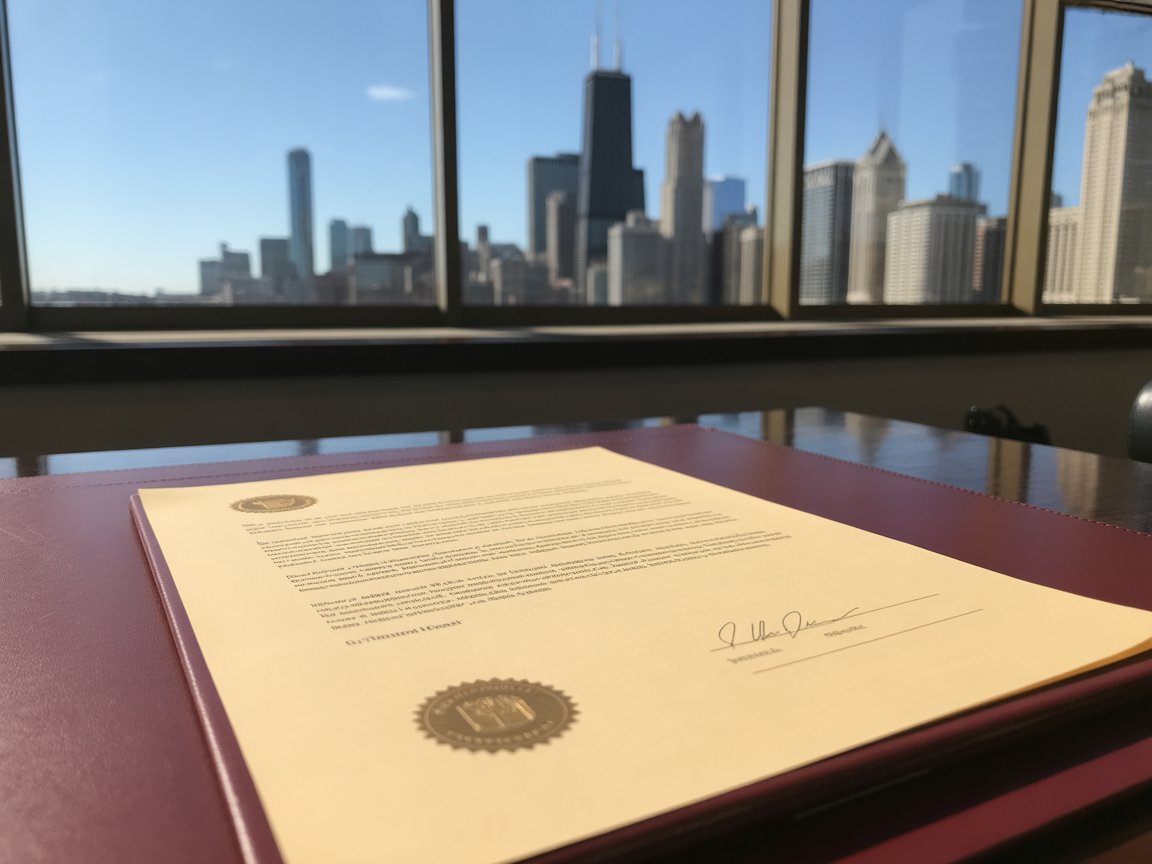
Short Answer: Chicago's Residential Landlord and Tenant Ordinance (RLTO) gives tenants some of the strongest deposit protections in the country. Your landlord must return your deposit within 45 days, provide itemized deductions with receipts within 30 days, and face a penalty of twice your deposit amount for violations. Routine cleaning is generally not a valid deduction.
Chicago's RLTO was approved in 1986 and has been amended over the years.
It gives you protections that tenants in most American cities simply don't have.
Your landlord must return your deposit within 45 days of move-out. That's the law. Not a suggestion.
If they make ANY deductions, they must provide an itemized list with actual receipts within 30 days.
No vague claims.
No round numbers without documentation.
If your landlord violates these rules, you may be entitled to twice your deposit amount plus attorney fees.
The law firm Levin Ginsburg notes that these penalty provisions are so significant that many Chicago landlords have stopped collecting security deposits altogether.
Landlords must also pay you annual interest on your deposit.
For 2026, the City Comptroller has set the rate at 0.01% — the same rate it's been since 2017.
Your deposit must be held in a federally insured, interest-bearing account at an Illinois bank.
It cannot be commingled with the landlord's personal funds.
The Legal Nuance Most Chicago Tenants Don't Know
Under Chicago's RLTO, routine cleaning fees are generally NOT a valid deduction from your security deposit.
Landlords can only legally deduct for two things: unpaid rent that has not been validly withheld, and damage beyond normal wear and tear.
What this means is simple.
You don't technically need to hire a professional cleaning service to get your deposit back.
You need to leave the apartment without damage beyond normal wear and tear.
However — and this is the critical part — landlords often blur the line between "cleaning" and "damage." A truly filthy oven might be called "damage." Grout stained beyond normal wear might be called "damage." Heavy grease left in the oven is a textbook example of something landlords reclassify from cleaning to damage.
That's where proper cleaning becomes your insurance policy.
Security deposits in Chicago typically range from $1,200 to $2,500, depending on neighborhood, unit size, and landlord requirements.
These same RLTO protections apply when you move IN.
Your new landlord must provide a receipt for your deposit, disclose the bank holding it, and document pre-existing damage.
Take move-in photos immediately to establish your legal baseline.
Now that you know your legal protections, the next question is practical.
What standard of cleaning does your specific lease actually require?
What Does "Move-Out Clean" Really Mean in Your Lease?
Short Answer: Your lease likely requires one of three cleaning standards: "broom clean" (minimum floors swept, trash removed), "professionally cleaned" (professional-grade results, possibly requiring a receipt), or "same condition as move-in minus normal wear and tear" (the strictest standard). The difference determines your cleaning strategy and budget.
I ask every new move-out client the same question. "What does your lease actually say about cleaning?"
Nine out of ten don't know.
The first standard is "broom clean." That's the minimum.
Floors swept, trash removed, personal belongings gone.
No deep cleaning explicitly required.
The second is "professionally cleaned." Your landlord expects professional-grade results.
Whether you hire someone or DIY to that standard is your choice.
Some leases require a receipt from a professional service — and a receipt from a reputable cleaning company can prevent arguments entirely.
The third — and strictest — is "same condition as move-in" minus normal wear and tear.
Your move-in condition report becomes the legal baseline.
Documentation matters enormously.
This is where long-term Seniors and Empty Nesters face the biggest challenge, because after 10+ years, even normal wear looks significant in an empty room.
How I Think About Move-Out Cleaning vs. Standard Cleaning
Standard cleaning focuses on visible surfaces and common areas.
It's the kind of cleaning most people do weekly.
It's about living comfortably.
Move-out cleaning is an entirely different animal.
It dives into the hidden grime, stains, and buildup that accumulated over months or years.
It's about landlord inspection standards.
It often takes two to three times longer than a routine clean.
I've seen it include work inside kitchen appliances — yes, even the oven and fridge.
Window tracks and blinds.
Inside cabinets and drawers.
Behind and under appliances.
Baseboards hand-wiped rather than just dusted.
And every surface in rooms that are now fully empty and fully exposed.
Some landlords have a strict checklist and comb through every inch.
Others are satisfied with a surface-level walkthrough.
As I've learned from working with hundreds of Chicago landlords, it's always better to exceed the standard than assume leniency.
Normal Wear and Tear vs. Damage
Normal wear and tear includes things landlords CANNOT charge for.
Minor scuffs on walls.
Slightly worn carpet in high-traffic areas.
Small nail holes.
Faded paint from sunlight.
Minor scratches on hardwood floors.
Damage includes things landlords CAN charge for.
Large holes in walls.
Carpet stains from spills or pets.
Broken fixtures.
Excessive grime requiring professional remediation.
Mold growth from tenant negligence.
"The distinction between 'normal wear and tear' and 'damage' is one of the most contested areas in landlord-tenant law." — Marcia Stewart, Every Tenant's Legal Guide, Nolo Press
The EPA has documented that concentrations of common organic pollutants from cleaning products are consistently two to five times higher inside homes than outdoors.
That's why I use chemical-free methods.
The goal is a genuinely clean space, not one masked by chemical residue the next tenant will breathe.
Understanding what "clean" actually means in your lease brings you to the fork in the road every moving tenant faces.
Should you do it yourself, or bring in a professional?
Should You Clean It Yourself or Hire a Professional?
Short Answer: The answer depends on your time, budget, physical ability, and apartment condition. DIY works if you have 8–16 hours and a manageable situation. Hiring professionals makes sense when your deposit exceeds the cleaning cost or your timeline is tight. A hybrid approach can be DIY the basics, hire pros for high-impact areas that often deliver the best return.
When you clean your home for yourself, "clean enough" is fine.
For a move-out, the standards skyrocket.
Landlords have a checklist in hand.
They're often looking for spotless interiors.
I've seen firsthand why DIY move-out cleaning often fails the final inspection.
The areas that get missed are almost always the same: inside kitchen appliances (the number one deduction item), baseboards and door frames, window tracks and blinds, behind and under heavy appliances, bathroom grout lines, and carpet edges and corners.
A failed inspection doesn't just cost money.
It could affect your ability to rent again.
Many Chicago landlords now communicate through centralized databases and references.
Take This Quick Assessment
I created this simple test to help my clients decide their path.
If you answered Yes to four or more, PATH A (DIY) is probably right for you.
If you answered No to three or more, PATH B (hiring a professional) makes more sense.
If your answers were mixed, consider a hybrid — DIY the straightforward tasks, hire professionals for the high-impact areas.
The Real Cost Comparison
DIY supplies run $50 to $100 if you're starting from scratch.
But the real cost is time — 8 to 16 hours for a typical two-bedroom apartment.
And the risk factor matters too.
If you miss something, deductions can easily exceed what you "saved."
Professional move-out cleaning in Chicago runs $150 to $220 for a studio, $180 to $250 for a one-bedroom, $220 to $350 for a two-bedroom, and $300 to $450 for a three-bedroom.
Heavy buildup, pet hair, carpet cleaning, inside-appliance deep clean, and same-day service all push the cost higher.
In almost every case, the cost of hiring professional move out house cleaners is less than the cost of doing it wrong.
"The hidden cost of DIY move-out cleaning isn't the supplies — it's the opportunity cost. During moving week, every hour scrubbing is an hour not managing logistics." — Author: Wells Ye
Most people budget for move-out cleaning but ignore move-in cleaning — a costly mistake.
You're accomplishing TWO deep cleans in the same week, often at overlapping locations.
The strategic approach is to hire professionals for the time-critical move-out where your deposit is on the line.
Then DIY your move-in if you have flexibility.
Or hire both and eliminate moving-week stress entirely.
If you chose PATH A, here's exactly how I recommend tackling a Chicago apartment yourself — room by room, with the specific challenges this city throws at you.
How Do You Clean a Chicago Apartment Yourself? (PATH A: The Complete DIY Guide)
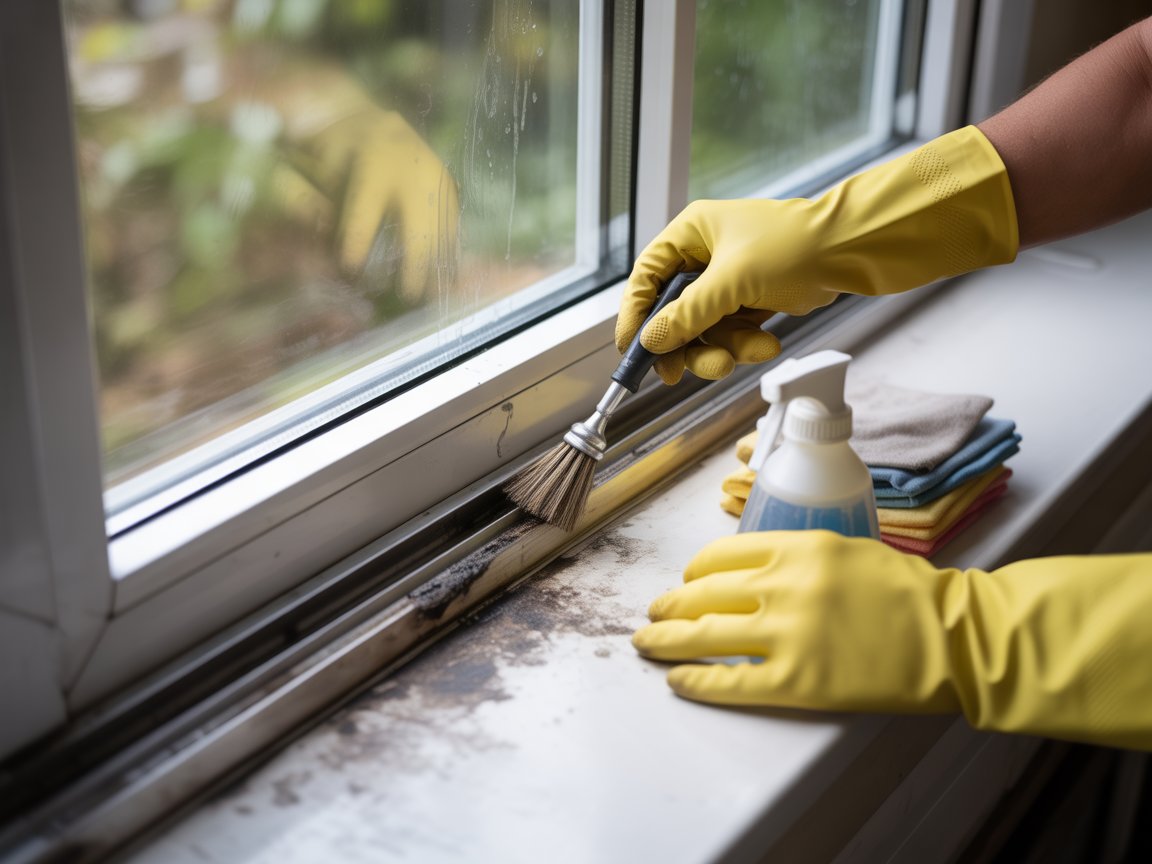
Short Answer: Clean top to bottom, back to front, and empty rooms first. Focus energy on the kitchen as landlords look there first. Then bathrooms, then living areas. Chicago apartments have unique challenges including hard water at 130–150 PPM from Lake Michigan, winter road salt residue, and old building quirks. Budget 8–16 hours for a two-bedroom.
I teach my technicians the same strategic approach I'm about to share with you.
Start high, work low. Dust falls down. Clean high surfaces before low ones and you won't have to redo anything.
Start from the back of each room and work toward the door.
That way you're not walking through areas you already cleaned.
And the most important rule: empty the room first.
Furniture-free rooms reveal everything.
Clean after belongings are moved out, not before.
How I Approach the Kitchen
The kitchen is where landlords look first.
Inside appliances is the number one deduction item on Chicago move-out inspections.
I follow a strict eight-step kitchen protocol that I've refined over a decade.
Step 1: Inside oven and stovetop.
I apply a baking soda paste, let it sit 30 minutes, then scrub thoroughly.
Removing black, burnt grease from racks can take up to an hour alone.
I use steam cleaning because it eliminates baked-on residue without leaving chemical film — something Chicago families with allergies desperately need.
Step 2: Inside refrigerator.
I remove shelves, wash them separately, wipe the entire interior, and sweep dust behind the unit.
I always pull the fridge away from the wall.
The dust back there is always worse than people expect.
Step 3: Inside dishwasher.
I run an empty cycle with white vinegar and wipe the gaskets and edges by hand.
Step 4: Cabinet interiors.
I wipe all shelves, remove liner paper, and wipe crumbs from every drawer.
Landlords open every single one.
Step 5: Countertops and backsplash.
I degrease completely and pay close attention to grout lines between tiles.
Step 6: Sink and fixtures.
These need special attention in Chicago because of hard water buildup.
Chicago's Lake Michigan water averages 130–150 PPM hardness.
That white chalky scale on your faucets is calcium and magnesium deposits.
White vinegar or CLR works well for removal.
Step 7: Under and behind appliances.
I pull out the fridge and stove to clean the floor underneath.
This is where landlords find the worst buildup in every apartment I service.
Step 8: Exhaust hood and filter.
I degrease the range hood — it gets incredibly sticky over time and is overlooked in almost every DIY attempt.
How I Approach the Bathroom
The bathroom tells a story of neglect faster than any other room.
Step 1: Grout lines.
These are the first things I check.
Mold and mildew here signals "not clean" immediately.
I address this aggressively before anything else.
Step 2: Toilet — all surfaces.
I clean from every angle — including the base, behind the tank, and the tank top.
Landlords check all of it.
Step 3: Shower and tub.
These get full attention for hard water stains, soap scum, and caulk lines.
I scrub glass shower doors to remove the white chalky buildup that Chicago's hard water leaves behind.
Step 4: Vanity and mirror.
Water spots need removing and sink faucets need polishing.
Step 5: Exhaust fan.
Dust buildup there is obvious and signals neglect.
How I Approach Living Areas and Bedrooms
Step 1: Baseboards.
These are highly visible in empty rooms.
They're the first thing that catches my eye — and your landlord's eye.
Step 2: Closet interiors.
Shelves, rods, and floors all need wiping down.
Step 3: Light fixtures.
These collect dust and dead insects.
Step 4: Window tracks.
Dirt accumulation here shows immediately.
Step 5: Door frames and light switches.
Fingerprints and scuffs are visible on every one.
Step 6: Walls and floors.
Walls need spot cleaning for marks and small nail holes filled with putty.
Floors need vacuuming, mopping, and stain treatment.
The 7 Areas Landlords Inspect First
Based on what I see across hundreds of Chicago move-out inspections, these are the seven areas that trigger deductions more than any others.
1. Inside the oven and appliances.
2. Baseboards.
3. Behind and under appliances.
4. Window tracks and sills.
5. Door frames and light switches.
6. Bathroom grout lines.
7. Carpet edges and corners.
If you only have time for seven things, make it these seven.
How I Handle Chicago's Hidden Cleaning Challenges
Every city has its cleaning quirks. Chicago has more than most.
Winter salt stains are a constant problem.
Chloride residue from tracked-in road salt leaves white marks on floors, especially near entryways.
I use a white vinegar solution for light buildup.
Heavy staining needs a specialized product.
Hard water buildup is the other big one.
Lake Michigan water at approximately 148 PPM leaves white scale on every fixture.
At Fresh Tech Maids, I use deionized (DI) water instead of tap water because DI water has zero mineral content.
It actually pulls existing deposits off surfaces rather than adding new ones.
That's the physics behind why our clients' fixtures come out spotless without CLR or harsh acids.
Old building quirks are everywhere in Chicago.
Original hardwood floors in vintage apartments need gentle cleaning — no excessive water.
Plaster walls mark easily.
Radiators in older buildings collect dust in crevices that are nearly impossible to reach without proper tools.
High-rise logistics add another layer.
You need to coordinate elevator time for equipment, respect building quiet hours, and some buildings require proof of insurance from trusted cleaning services.
Fresh Tech Maids carries full coverage for exactly this reason.
"Chicago apartments have their own cleaning personality. A vintage Wicker Park two-flat is completely different from a Loop high-rise. Road salt, hard water, radiator dust, old hardwood — these aren't in cleaning guides written for Phoenix or Miami." — Author: Wells Ye
This same checklist applies to your move-in, but with reversed priorities.
At move-out, you clean to impress a landlord.
At move-in, you clean to protect your family.
Focus on disinfecting surfaces before your kids touch them, removing chemical residue from previous tenants, and sanitizing bathrooms and kitchens before first use.
Clean your new place BEFORE furniture arrives. You can't clean under a bed once it's in place.
Tools I Recommend for DIY Move-Out Cleaning
If that DIY scope feels overwhelming — or if your timeline simply doesn't allow it — here's exactly how I recommend finding a reliable professional and what to ask before you book.
How Do You Choose a Reliable Move-Out Cleaning Company? (PATH B: The Complete Hiring Guide)

Short Answer: Look for W-2 employees (not contractors), transparent pricing, a documented move-out checklist, a satisfaction guarantee, and proof of insurance. Ask about backup staffing otherwise one missed cleaning day can cost you an extra month's rent. Chemical-free methods leave no residue and signal genuine cleanliness.
Professional move-out cleaning in Chicago runs $150 to $220 for a studio, $180 to $250 for a one-bedroom, $220 to $350 for a two-bedroom, and $300 to $450 for a three-bedroom.
Heavy buildup, pet hair or odor, carpet cleaning, inside-appliance deep clean, and same-day service all push costs higher.
The 5 Questions I Tell Every Client to Ask Before Booking
Here are five questions I tell every client to ask before booking and the first one is the question nobody thinks to ask.
Question 1: "What happens if my assigned cleaner is sick on my scheduled day?"
One missed cleaning day can trigger another month's rent if you don't vacate on time.
You need a company with backup staff — not a solo operator who might cancel.
At Fresh Tech Maids, every client has an assigned technician plus two trained backups.
Your cleaning happens on schedule, period.
Question 2: "What's your move-out cleaning checklist? Can I see it in advance?"
Professional companies have documented processes.
Vague answers signal inexperience.
Question 3: "If my landlord identifies cleaning issues during inspection, will you come back?"
Reputable companies stand behind their work.
Question 4: "Are you fully insured for liability and worker's compensation? Can you provide proof?"
This protects you if something is damaged.
Many Chicago high-rises require it.
Question 5: "Do you use employees or contractors?"
Contractors can be less consistent and less vetted.
Companies using trained W-2 employees deliver more accountability.
I only hire employees at Fresh Tech Maids — never contractors.
Red Flags I Tell Clients to Watch For
No written estimate or contract.
Cash-only payment.
No online reviews.
Can't answer questions about their process.
Unusually low prices that suggest corner-cutting.
No backup plan for sick or unavailable staff.
Contractors instead of employees.
The Hybrid Approach That Often Delivers the Best ROI
I recommend this to clients who want to save money without sacrificing results.
DIY the straightforward stuff — general dusting and wiping, removing belongings and trash, light vacuuming and mopping.
Then hire professionals for the high-impact areas: inside oven and appliances, deep bathroom cleaning including grout and hard water, carpet cleaning, and behind and under heavy appliances.
This typically costs $100 to $200 and saves hours while addressing the areas most likely to trigger deductions.
Why I Built Fresh Tech Maids Around Chemical-Free Cleaning
Some landlords interpret strong chemical smells as "cover-up" rather than "clean." Chemical-free methods look and smell genuinely clean.
They eliminate odors without masking them with synthetic fragrances.
The EPA confirms that common cleaning products release VOCs that elevate indoor pollutant levels two to five times above outdoor concentrations.
Those elevated levels persist long after cleaning is complete.
Chemical-free cleaning is even more critical at move-in than move-out.
At move-out, you're satisfying a landlord's visual inspection.
At move-in, you're protecting your family from months or years of accumulated bleach, ammonia, and harsh degreaser residue left by previous tenants.
Parents with Children understand this instinctively.
Children crawl on floors.
Pets lick surfaces.
Everyone breathes the air.
A published study in the journal Indoor Air documented that cleaning products — even "green" labeled ones — can significantly raise VOC concentrations during and after use.
At Fresh Tech Maids, I use DI water, steam vapor at temperatures that kill up to 99.9% of bacteria, HEPA filtration vacuums, and HOCl — hypochlorous acid, the same molecule your immune system produces to fight pathogens.
No bleach.
No ammonia.
No synthetic fragrance.
Just physics and chemistry working the way nature intended.
"Some clients ask why chemical-free matters for a place they're leaving. I tell them: your landlord's nose knows the difference between clean and cover-up. A space that smells like nothing smells cleaner than one that smells like a chemical factory." — Author: Wells Ye
Whether you go full DIY, full professional, or hybrid, the next challenge is coordinating timing across two apartments simultaneously.
Here's the timeline I give every client.
How Do You Coordinate Cleaning at Both Your Old and New Place?

Short Answer: Start four weeks before move-out with a dual-location timeline. Book professional cleaners early as quality companies fill up at month-end. Schedule move-out clean 2–3 days before lease end to maximize landlord inspection time. Schedule move-in clean 1 day before furniture arrives. Document everything with timestamped photos at BOTH locations.
This is the part where most tenants fall apart.
Not because they don't try hard enough.
But because they don't plan far enough ahead.
The 4-Week Timeline I Give Every Client
Four weeks out, I tell clients to do two things at the old apartment: request a pre-inspection from your landlord, and get quotes from two or three professional cleaners.
Only about 46% of Chicago tenants request a pre-inspection — and that's a mistake.
Start decluttering room by room.
At the new apartment, confirm your move-in date and key pickup.
Take photos immediately upon getting access.
Assess cleaning needs.
Three weeks out, book professional cleaners if you're using them.
Quality move-out cleaning companies fill up fast, especially at the end of the month.
Begin room-by-room deep cleaning if DIY.
Start patching small nail holes.
At the new apartment, book move-in cleaning one to two days before furniture arrives.
Two weeks out, do a pre-inspection walkthrough at the old apartment if your landlord agreed.
Continue deep cleaning.
Address any issues the landlord identified.
Confirm your new apartment cleaning schedule.
One week out, it's final push time.
Pack remaining items.
Clean as you empty each room — but don't clean while packing.
That leads to double work.
At the new apartment, professional cleaning happens, or DIY clean with empty access.
Three days before move-out, professional cleaning happens if you're using a service.
This gives maximum time for landlord inspection and your own final walkthrough.
Take move-out photos and videos with timestamps.
On move day, do a final check after furniture is removed.
Document with timestamped photos.
Return keys.
Get written confirmation.
At the new apartment, do a final wipe-down before furniture arrives.
Take move-in photos of empty rooms.
When I Tell Clients to Call Professionals
You're fine if you have two or more weeks remaining with a manageable condition, a reasonable landlord, and can dedicate full days.
Time to call professionals if you have less than a week remaining, your landlord rescheduled with short notice, your leases overlap with minimal gaps, you haven't deep-cleaned in months, or a large deposit is at stake with a strict landlord.
How I Tell Clients to Document Everything
Move-in photos create your legal baseline.
Move-out photos prove compliance.
Request a pre-move-out inspection.
Make sure your landlord has your forwarding address.
If deductions are disputed, you have a resolution path under the RLTO.
Send a written dispute first.
Cite the 2x penalty provision.
Pursue small claims court if needed.
"Pre-move-out inspections are the single most underused tenant right in Chicago. They give you a roadmap of exactly what the landlord will flag — before your deposit is at risk." — Author: Wells Ye
Take photos at BOTH locations during your move.
Move-out photos protect your deposit at your old place.
Move-in photos at your new place protect you from the next landlord charging you for damage you didn't cause.
Same process applied twice.
Wide-angle shots plus close-ups of any pre-existing damage.
Timestamps.
Video narration.
Store both sets — you'll need the move-in photos when you eventually move out of that unit years later.
You've got the timeline.
You've got the legal knowledge.
You've got the cleaning strategy.
Now let's turn it all into a concrete action plan for this week.
What Should You Do This Week to Protect Your Deposit and Ensure a Smooth Move-Out?
Short Answer: Review your lease's cleaning language. Request a pre-move-out inspection. Decide your path (DIY, pro, or hybrid) using the assessment above. Take move-in photos at your new place immediately. Book cleaning early because quality companies fill up at month-end.
You now know what most Chicago tenants don't.
Your legal rights under the RLTO give you 45 days for deposit return, 2x penalties for violations, and protection against improper cleaning deductions.
Your cleaning standard is defined by your lease — and now you know the difference between "broom clean" and "same as move-in."
Your path forward is clear — DIY, hire a pro, or hybrid — based on your time, budget, and situation.
Your timeline is realistic — a plan that addresses both apartments during the same hectic week.
The same professional standards that satisfy landlords also protect your family's health.
That's not a coincidence.
It's the foundation of how I built Fresh Tech Maid.
What Everyone Should Do This Week
Review your lease's specific cleaning language.
Take the assessment in Section 5 if you haven't decided DIY vs. pro.
Request a pre-move-out inspection from your landlord.
Take move-in photos at your new place immediately upon access.
If You're DIYing
Download our room-by-room checklist below.
Gather supplies, especially for Chicago challenges like CLR for hard water, degreaser for appliances, and hard water remover for fixtures.
Block more time on your calendar than you think you'll need.
First-time DIY move-out cleans always take longer than expected.
If You're Hiring
Get quotes from two to three companies.
Ask the five reliability questions from Section 7.
Book early.
Quality companies fill up, especially at the end of the month.
The Bottom Line
Moving is chaotic.
But losing your deposit doesn't have to be part of that chaos.
You now have the RLTO protections most tenants never learn about.
You have the room-by-room checklist that covers what Chicago landlords actually inspect.
You have a realistic timeline that accounts for both apartments.
And you have the assessment to decide whether DIY, professional, or hybrid is the right fit for your situation.
The tenants who get their full deposit back aren't the ones who clean the hardest.
They're the ones who start early, document everything, and focus on the seven areas that actually trigger deductions.
Whether you tackle this yourself or bring in help, the knowledge in this guide puts you ahead of 90% of Chicago tenants walking out their door this month.
Start this week.
Your deposit is worth it.
Frequently Asked Questions
How much does move-out cleaning cost in Chicago?
Professional move-out cleaning in Chicago typically costs $150 to $450 depending on unit size, condition, and services needed. Studios start around $150 to $220 and three-bedroom units range $300 to $450.
What is included in a standard move-out cleaning checklist in Chicago?
A thorough move-out clean covers inside kitchen appliances, cabinet and drawer interiors, bathroom deep cleaning including grout, baseboards, window tracks, light fixtures, door frames, closet interiors, and all flooring.
Can my Chicago landlord keep my deposit for cleaning?
Under Chicago's RLTO, routine cleaning is generally not a valid deduction. Landlords can only deduct for unpaid rent or damage beyond normal wear and tear. However, excessive grime that could be classified as "damage" is a gray area.
How long does a move-out clean take for a two-bedroom Chicago apartment?
DIY typically takes 8 to 16 hours. Professional teams usually complete the same job in 4 to 6 hours.
What areas do Chicago landlords inspect first during move-out?
The seven most inspected areas are inside the oven and appliances, baseboards, behind and under appliances, window tracks and sills, door frames and light switches, bathroom grout lines, and carpet edges and corners.
How far in advance should I book move-out cleaning in Chicago?
Book 2 to 3 weeks ahead, especially for end-of-month moves. Quality cleaning companies fill fast during the last week of every month.
What's the difference between move-out cleaning and deep cleaning?
Move-out cleaning meets landlord inspection standards and includes inside appliances and areas hidden behind furniture. Deep cleaning is intensive maintenance done while you're still living in the space.
Should I hire the same company for move-out and move-in cleaning?
Yes, a single company can coordinate both locations, often at a bundled rate. Fresh Tech Maids offers dual-location packages for exactly this situation.
How do I fight unfair security deposit deductions in Chicago?
Document the apartment with timestamped photos at both move-in and move-out. Request a pre-move-out inspection. If your landlord violates the RLTO's 45-day or 30-day requirements, you may be entitled to 2x your deposit plus attorney fees.
Free Download: The Ultimate Chicago Move Out Cleaning Checklist
The Ultimate Chicago Move-Out Cleaning Checklist — Free PDF Download

Protect your deposit. Check off each task. Get your full security deposit back.
✅ The 7 areas Chicago landlords inspect first
✅ Room-by-room checklist with 40+ tasks
✅ Chicago-specific tips
✅ Final steps...
Get Your Chicago Move-Out Checklist!