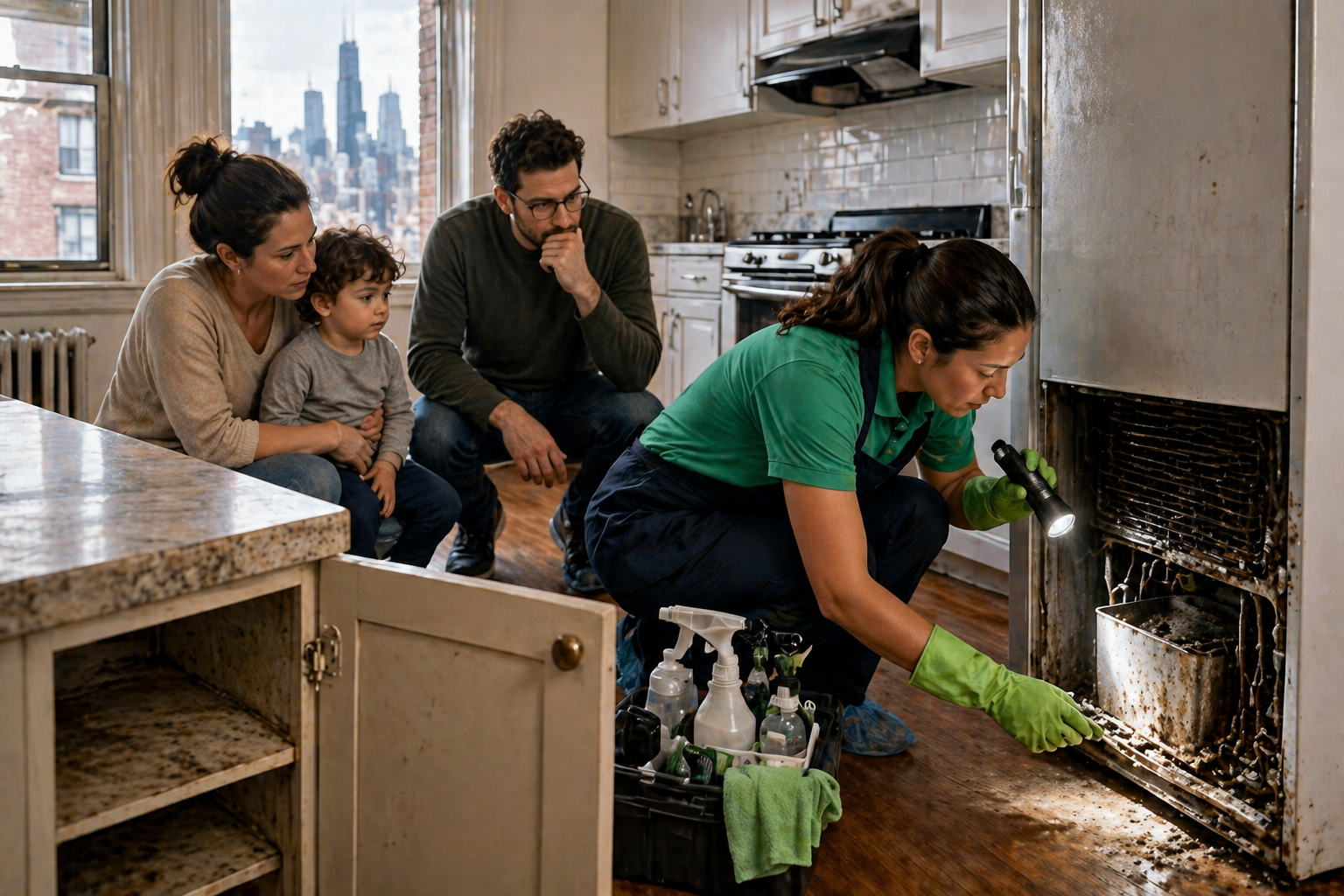
You're moving.
The boxes are piling up.
The deadline is looming.
And somewhere between transferring utilities and coordinating movers, you're expected to make sure your new home is actually safe to live in.
But here's what most Chicago renters and homeowners don't realize.
That "move-in ready" place likely has months — or years — of previous tenants' contamination layered into every surface.
Bacteria from toilets and kitchen sinks.
Viruses on door handles and light switches.
Mold spores in bathroom grout.
Dust mites and pet dander in carpets.
Chemical residue from cleaning products.
And children are uniquely vulnerable to all of it.
They breathe more air per pound of body weight than adults, breathe closer to the ground where contaminants settle, touch the floor constantly, and put their hands in their mouths all day long.
The real issue isn't any single contaminant.
It's that most "move-in cleaning" only addresses what's visible — missing the bacteria, allergens, and chemical buildup that actually affect your family's health.
This guide gives you everything you need: the health risks most families don't know exist, the room-by-room DIY method if you choose that path, the decision framework for DIY versus professional cleaning, and the timeline to coordinate both your old AND new place during the chaos of moving week.
1. You're Moving Into Your New Chicago Home — But Is It Actually Clean?
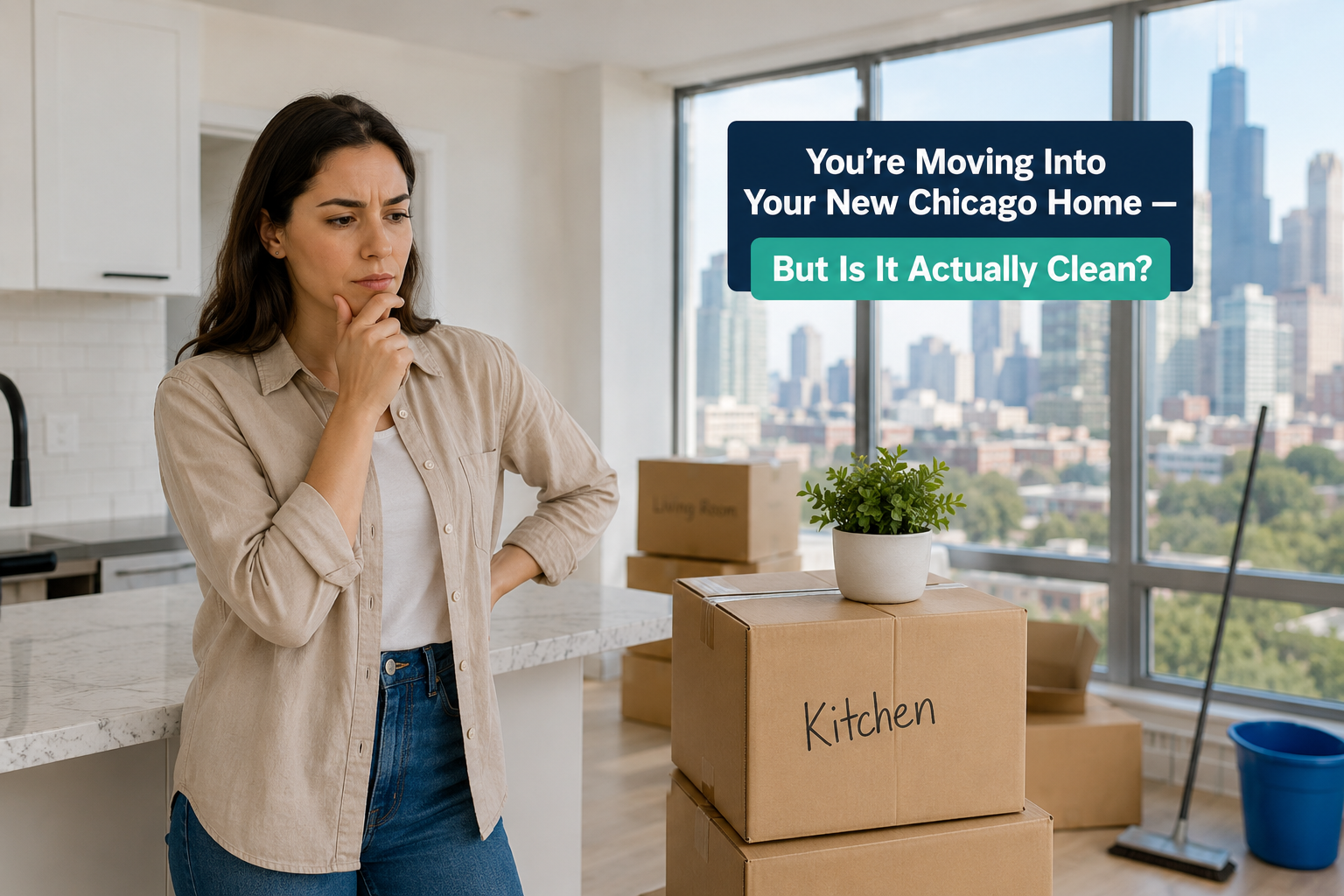
The first thing I tell every Chicago family is this: "move-in ready" is a marketing phrase, not a cleanliness standard.
Your landlord's cleaning crew swept the floors, wiped the counters, and sprayed something that smells like lemons.
That's usually it.
Inside the cabinets, under the fridge, behind the toilet, around the stove hood — that's where the last tenant's life is still living.
Here's how I've seen this play out across Chicago for twenty years.
A young family closes on a vintage Logan Square two-flat.
The place "smells clean" because the seller ran bleach through the bathroom the night before.
Two weeks after move-in, mom calls me — her toddler has a rash, and dad has a sinus headache that won't quit.
I come out, run my test kit, and find surfactant residue under a thin layer of shine.
Chicago compounds this in ways other cities don't — pre-1970s buildings carry decades of layered waxes, multi-unit buildings have years of pest-spray residue under sinks, and high-rises share ventilation between units.
Whatever your neighbor sprays in 14B is circulating in your new 15B.
This is why move-in cleaning matters more than move-out cleaning, even though almost every family I meet thinks it's the other way around.
At move-out, you're cleaning to pass a landlord inspection.
At move-in, you're cleaning to protect your family's health.
For Parents with Children, this matters most — Sara already reads food labels and chose the right pediatrician, and she deserves to know her new home doesn't come with a hidden chemistry project.
For Young Professionals signing their first solo lease, the rule is simpler: clean the day you get keys, not the day you move in.
For Empty Nesters, Seniors, and Traditionalists, a proper move-in clean protects both a major financial investment and decades of accumulated chemical tolerance.
For University Students and Pet Owners, the bacterial layer from previous groups and the dander trapped in carpets is usually the worst I see anywhere in the city.
Coordinating both places at once also solves the "I can't be in two places" problem — our move-out cleaning pillar guide walks through the deposit-protection side of the same move.
"The place that smells cleanest is the one I worry about most, because someone sprayed fragrance to cover something I haven't found yet." — Author: Wells Ye, Founder of FreshTerchMaids.com
2. What's Really Lurking in Your 'Clean' Home — And Why It's Worse for Your Kids?
The thing I wish every new parent knew is this: indoor air quality in the average home is a lot worse than the air outside — and that isn't my opinion.
The EPA's Total Exposure Assessment Methodology studies — the gold standard on indoor air — found common organic pollutants run 2 to 5 times higher indoors than outdoors, regardless of whether you live in the city or the country.
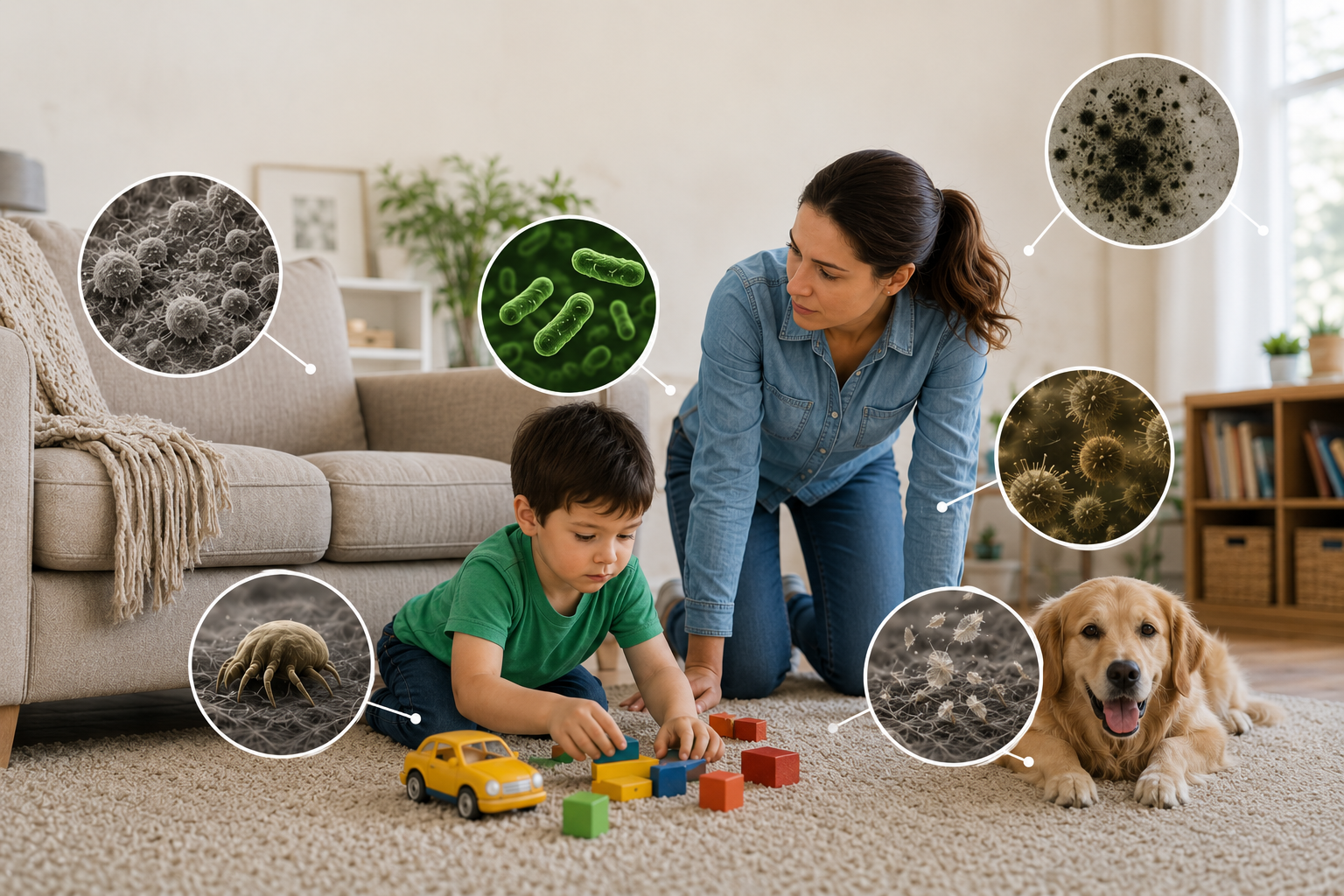
When I break down what's actually on those surfaces, four categories show up every time.
First, biological contamination — fecal bacteria from toilets like E. coli and salmonella, kitchen bacteria like listeria in sink traps and dishwasher seals, and mold spores in bathroom grout and caulk, especially in older Chicago buildings without strong bathroom fans.
Flu and cold viruses can survive 24 to 48 hours on hard surfaces like doorknobs, light switches, and stainless steel — a detail that matters a lot when you're taking over a space someone just moved out of.
Second, chemical residue — and this is the category most families never think about.
Bleach doesn't just disappear after the bathroom dries.
Research published in Environmental Science & Technology shows bleach-based products form VOCs — chloroform and carbon tetrachloride among them — every time they mix with surfactants or fragrance.
A Singer et al. study in Indoor Air found even "green" cleaning products significantly raise VOC concentrations during and right after use.
And Nazaroff and Weschler (2004) showed the terpenes in fragranced cleaners react with indoor ozone to make formaldehyde, ultrafine particles, and secondary aerosols — pollutants your new home didn't have until someone sprayed "lemon fresh" on everything.
Third, allergens — dust mites in carpets, pet dander in upholstery, and cockroach proteins in older Chicago buildings.
Fourth, reactive byproducts — the things that form when ammonia meets bleach residue, or when old floor wax meets the solvent someone used to strip it.
Children take the hardest hit from every one of these.
According to the American Academy of Pediatrics, children breathe more air per pound of body weight than adults, they breathe closer to the ground where heavier pollutants settle, and they're still developing — which makes early exposures stick.
A Canadian Medical Association Journal study of more than 2,000 infants found kids in homes with frequent cleaning-product use had significantly higher rates of wheeze and asthma by age three.
"Frequent use of common household cleaning products in early life is associated with higher risk of childhood wheeze and asthma by age three." — Canadian Medical Association Journal
This is why I tell parents with children the same thing every time — the "clean smell" is a warning sign, not a success signal.
A genuine clean has no smell, or at most the faint smell of water and microfiber.
"Fresh linen," "spring breeze," and "ocean mist" are fragrance compounds covering something your eyes can't see.
At Fresh Tech Maid, this is exactly why we built our methodology around steam, deionized water, HOCl, and HEPA filtration — none of them leave a residue, a smell, or a reactive byproduct.
Remove contamination, don't add new contamination to cover it up.
3. Should You Clean Your New Place Yourself or Hire a Chicago Move-In Cleaning Pro?
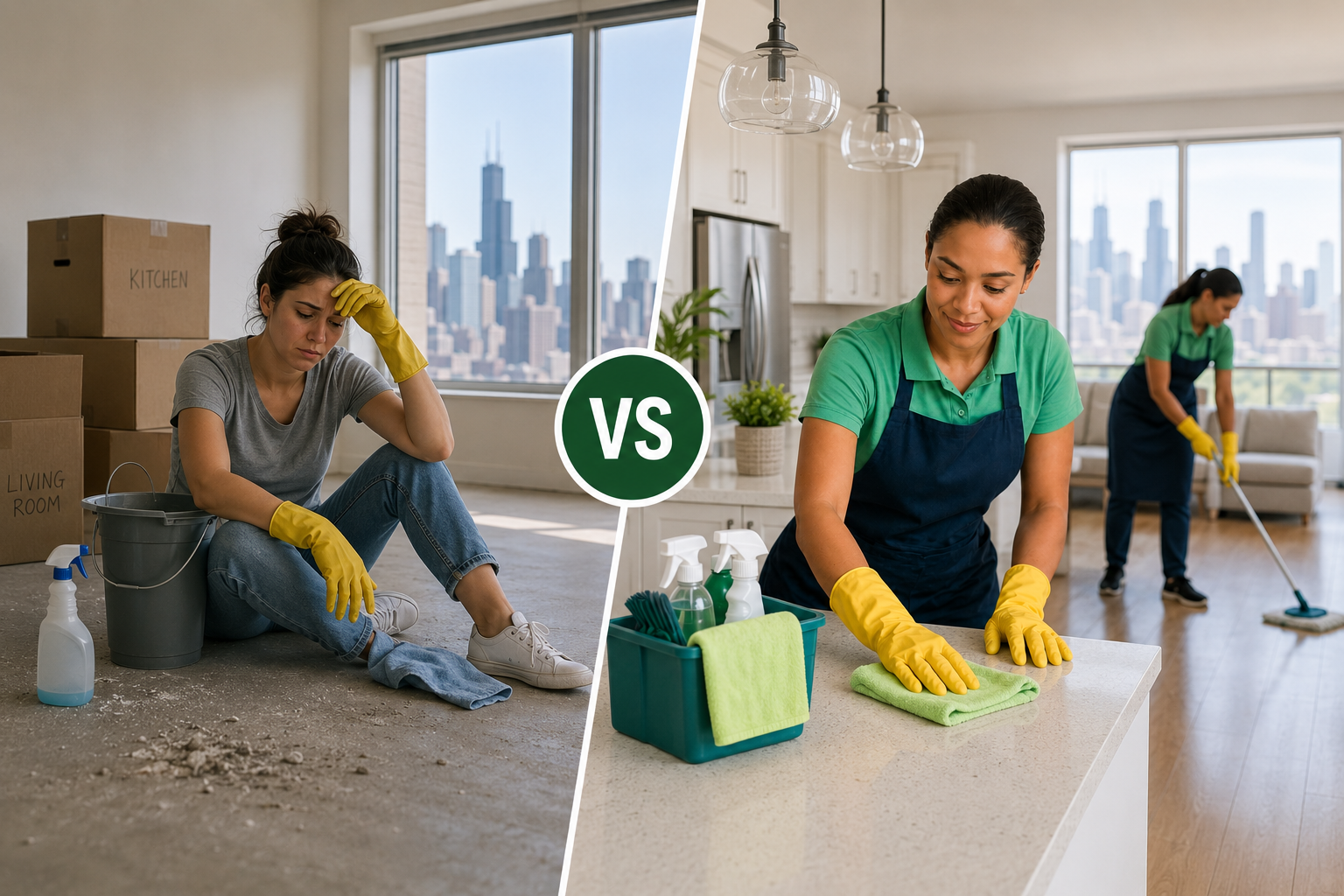
After twenty years, I can tell within five minutes whether a family should DIY their move-in clean or call someone.
The decision doesn't come down to money — it comes down to time, physical capacity, and honest self-knowledge.
Here are the five questions I walk every client through.
- Do you have seven or more days before move-in?
- Can you realistically dedicate 12 or more hours to cleaning before the furniture arrives?
- Is the place in decent shape already — no visible mold, no heavy grime, no pest evidence?
- Is this the only place you need to clean this week, or are you coordinating a move-out at the old apartment too?
- Are you free of children under five and pets that can't be out of the house for a full day?
Four or five yeses means DIY is realistic.
Two or three yeses means a hybrid approach — handle the easy rooms yourself and hire a professional for kitchens and bathrooms, which are the most health-critical and the most time-consuming.
Zero or one yes means professional move-in cleaning is the smart call, and I say that without any sales pitch attached.
The honest math on DIY: 8-16 hours of labor, $50-100 on supplies you'll barely use again, physical exhaustion during the exact week you also need to pack and drive, and the near-certainty of missing things you've never cleaned like a professional does.
A professional move-in cleaning service for a Chicago apartment typically costs $150 to $400 depending on size, includes all supplies, and uses a checklist that doesn't forget the spots you've never heard of.
The pattern I see over and over — what I call "paying twice" — goes like this.
A family starts DIY, gets the furniture in on day two, and realizes they never cleaned inside the kitchen cabinets.
Now the dishes are inside those cabinets and the bed is on top of the floor they skipped.
So they call a cleaning service to re-clean the accessible areas, and they pay for a full service plus a lot of disruption.
Doing it once, before the truck shows up, is almost always cheaper and calmer.
If you're hiring move-in cleaning, I always recommend booking the move-out cleaning at the old place with the same company the same week — same standards at both ends, one point of contact, usually a better combined price.
4. How Do You DIY Move-In Cleaning the Chemical-Free Way — Room by Room?
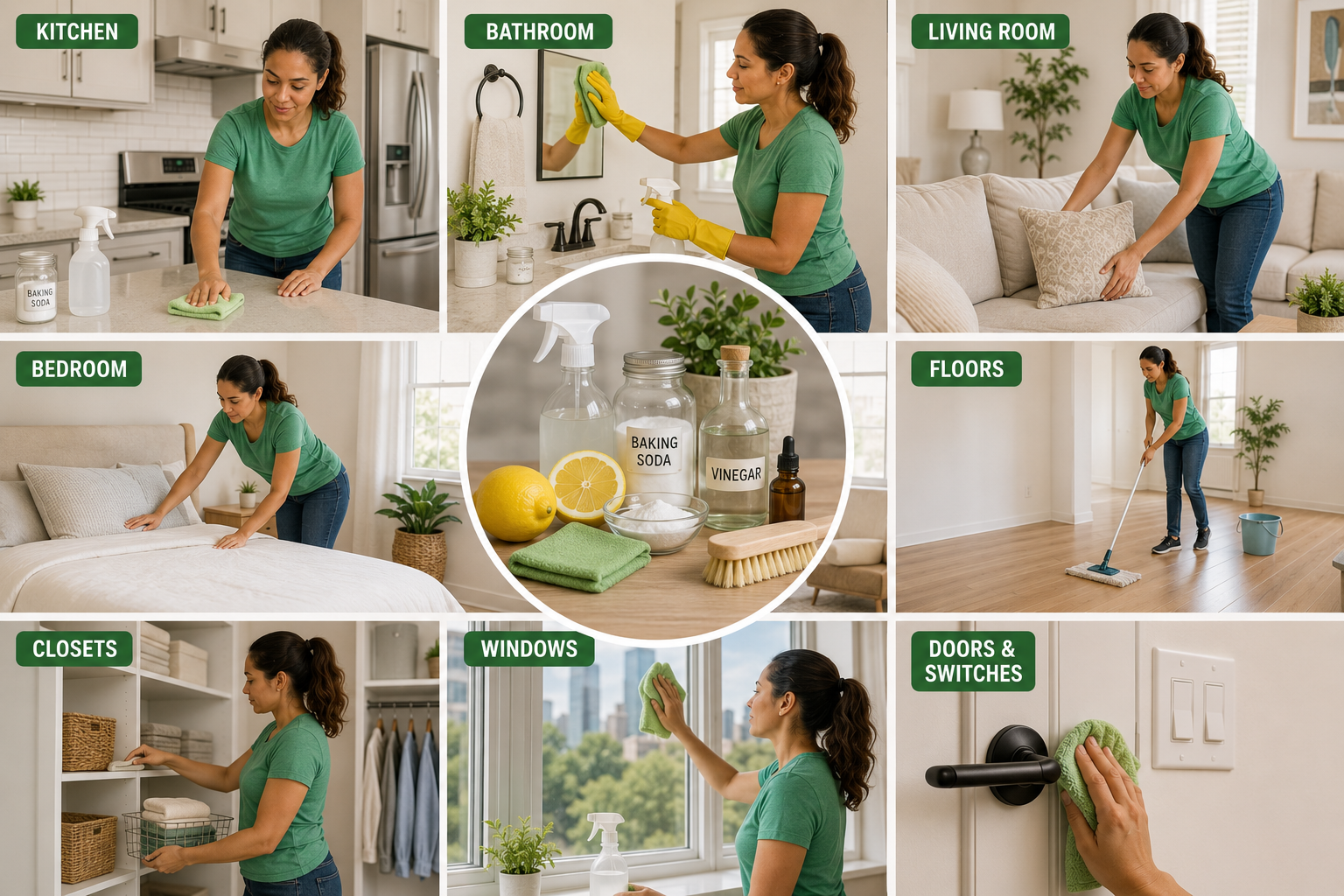
When I train new technicians, I teach four rules before I let them touch a rag.
Top to bottom — dust falls downward, so ceiling fans come before countertops, and countertops come before floors.
Back to front — start at the back of each room and work toward the door.
Empty first — clean before furniture arrives, because you can't clean under a bed once it's on the floor.
Health priorities first — kitchens, bathrooms, and floors get the most attention.
My supply list is short on purpose: microfiber cloths color-coded by room, a HEPA vacuum that traps 0.3-micron particles, a microfiber mop, a two-step ladder, chemical-free solutions, and our miracle disinfectant: hypochlorous acid (HOCl) or 3% hydrogen peroxide.
Skip bleach, ammonia, and anything labeled "all-purpose."
The realistic time budget: a studio or one-bedroom takes four to eight hours, a two-bedroom takes six to ten, and a three-bedroom takes eight or more and should be split across two days.
In the kitchen, I use an eight-step method built around dusting high to low, wet-wiping with DI water or steam, and disinfecting only after cleaning is complete.
Critical kitchen areas: inside the oven, inside the fridge, inside the dishwasher, cabinet interiors, backsplash, sink, under and behind appliances, and the exhaust hood.
Bathrooms follow the same method and take about two hours each — with critical focus on grout lines, the toilet (base, behind, tank top), the tub (hard water, soap scum, caulk), and the exhaust fan.
Living areas and bedrooms use a six-step method focused on allergen removal: HEPA dust from ceiling down, wipe surfaces, then floors last.
Critical areas in living spaces: baseboards, closet interiors, window tracks, door knobs and switches, and the floors.
There are seven places previous tenants almost always leave contamination: inside appliances, inside cabinets, baseboards, behind and under appliances, window tracks, door knobs and switches, bathroom grout, and carpet edges along walls.
Chicago throws three wrenches into all of this.
Winter salt needs vinegar solution first — never plain water, because water dissolves salt into brine that soaks into wood grain.
Lake Michigan's 148 ppm hard water leaves calcium scale on every fixture and needs vinegar to dissolve it.
Old Chicago buildings need gentle care — original hardwood hates excessive water, plaster walls mark easily, and cast-iron radiators collect decades of dust in the crevices.
The six DIY mistakes I see most: wrong order (floor first, then dusting), too much product (sticky residue attracts dirt), not letting disinfectant sit five to ten minutes, cross-contaminating cloths, forgetting hidden areas, and moving furniture in before floors have dried two to four hours.
It's okay to switch to a professional mid-DIY — four hours in and only one room done, mold you can't remove, exhaustion, or a furniture truck closer than you thought.
Switching is cheaper than moving into a half-cleaned apartment.
5. When's the Best Time to Schedule Move-In Cleaning — And How Do You Coordinate Both Places?
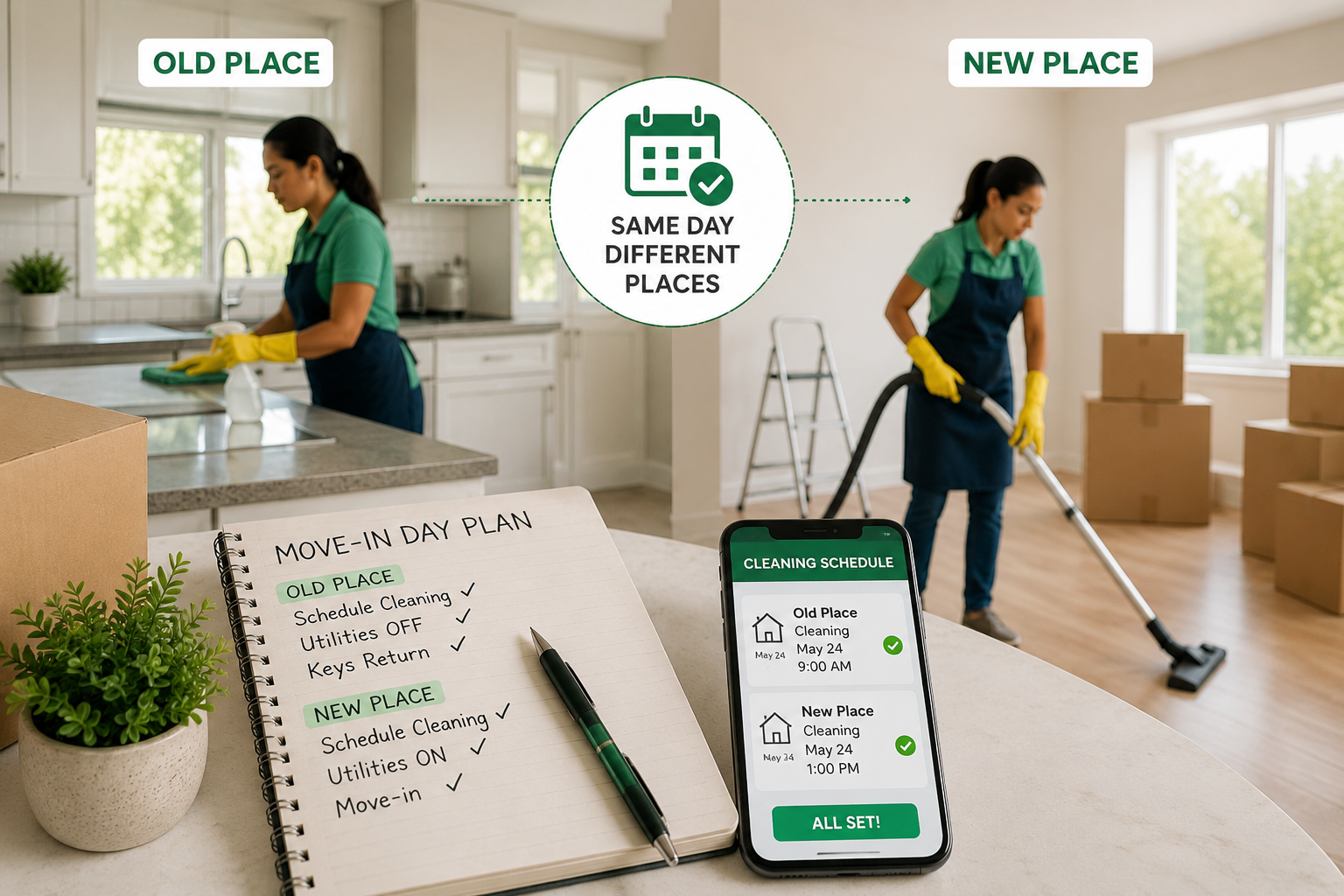
The best move-in timeline looks like this when you have the luxury of notice.
Two to three weeks before move-in: book the cleaning service and ask the landlord for early access — many Chicago landlords allow cleaning access before the lease officially starts if you ask.
One week before: confirm the appointment and coordinate key pickup.
Two or three days before is the narrow window where the previous tenant moves out, your lease starts, and you need to move in.
Clean as early in that window as you possibly can.
One day before: cleaning complete, final inspection, move-in photos, furniture delivery scheduled after cleaning is verified.
Move day: furniture into a truly clean home, no mop required.
The real Chicago timeline is almost always tight — less than a week of notice is the norm, not the exception.
Same-day moves happen, which makes professional service essentially mandatory because DIY can't move that fast.
Overlapping leases where you have a few days at both places are the best-case scenario — use that window to clean both before anyone moves anything.
Here's the impossible math most Chicago renters face.
Your old lease ends the same day the new one begins.
You need to pack, clean the old place, drive across the city, clean the new place, and unpack — and you cannot be in two places at once.
The cleanest solution is synchronized dual-location scheduling with one company: old place cleaned 2-3 days before lease end, new place cleaned one day before furniture arrives, one point of contact for the whole week.
The alternatives involve trade-offs — professional at only one location and DIY at the other works if one place is small or already in decent shape, but risks either deposit or family health.
Take photos at both locations — wide shots plus close-ups of any damage, timestamped, with a video walkthrough.
Move-in photos become your defense against unfair deductions years later, and Chicago's RLTO requires itemized deductions — photos prove what was pre-existing versus what you caused.
Call the professional early if you have less than a week remaining, a short-notice inspection, overlapping leases with minimal gap, months since the last deep clean, a large deposit at stake, or young kids.
"The day you get keys is the day you clean. Not the day you move in. By the time the truck pulls up, it's already too late." — Author: Wells Ye
6. What Does a Professional Chicago Move-In Cleaning Actually Include — And What's Left Out?
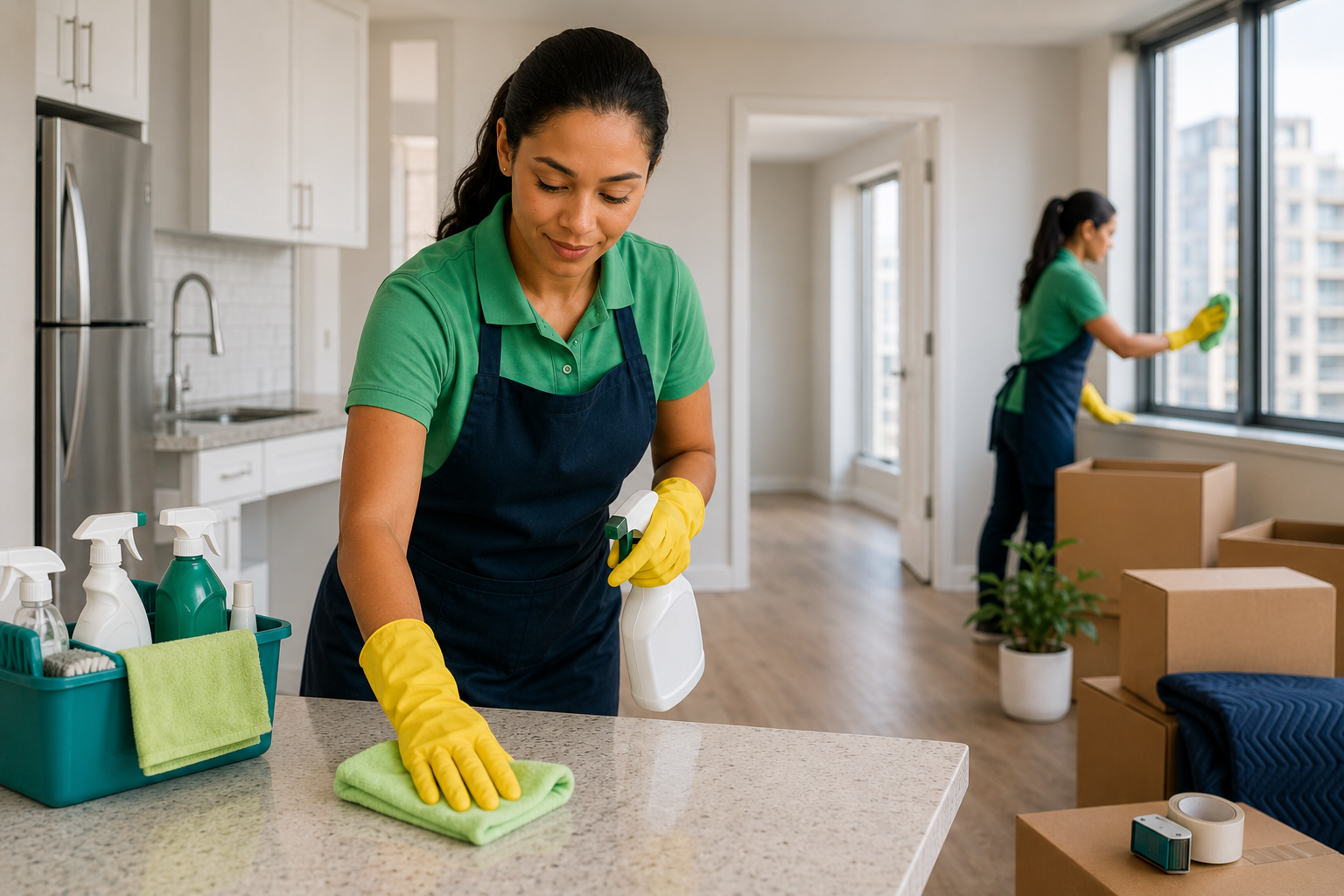
Here's the truth most cleaning companies don't spell out clearly.
Every company offers a standard package, an upgraded package, and a list of add-ons — and the differences are where people get surprised.
The standard move-in package in Chicago usually covers: kitchen counters wiped, outside of appliances, sinks cleaned and disinfected, outside of cabinets, floors vacuumed and mopped; bathroom toilets (bowl, tank, base), sinks and faucets, tubs and showers, mirrors cleaned to streak-free, floors; horizontal surfaces dusted, baseboards dusted (not hand-wiped).
What's usually an add-on: inside the refrigerator, inside the oven, inside the dishwasher, inside the microwave, inside cabinets and drawers, inside windows, blinds hand-wiped, disinfection beyond surface cleaning, and carpet deep cleaning.
What no cleaning company includes, regardless of promises: structural repairs, patching holes, fixing broken fixtures, painting, pest treatment, major appliance repair, and replacing broken items.
Common Chicago add-ons with rough pricing: a heavily soiled oven that needs overnight pre-treatment ($25 to $50 extra), garage or basement cleaning ($50 to $100), exterior windows, and closet shelf wiping if the closets are empty.
Here's how to verify you're getting what you paid for.
First, ask for an itemized checklist before the service — not a verbal "don't worry, we do everything."
Second, ask the crew to text photos of cabinet interiors, the fridge, and the baseboards after cleaning.
Third, do your own walk-through before the furniture arrives, because it's far easier to catch missed areas when the place is still empty.
Fourth, confirm the guarantee policy in writing — a reputable Chicago company comes back within 24-48 hours at no charge if something is missed.
Understanding what's included at move-in also helps at move-out.
Your lease probably says "same condition as move-in, normal wear excepted" — so if move-in included clean cabinet interiors, clean fridge, and hand-wiped baseboards, that's the standard you'll be held to.
Document your move-in cleaning scope with photos — that's your receipt for years later.
"We clean everything" is the most expensive sentence in cleaning. Get the checklist in writing, or assume it's not included." — Author: Wells Ye
7. How Do You Find a Reliable Chicago Move-In Cleaning Company — And Avoid the Sketchy Ones?
After twenty years, I can tell within one phone call whether a cleaning company should be trusted with a key to your new home.
The red flags are these: independent contractors instead of W-2 employees (no background checks, no company insurance, often a different person every visit), cash-only operations (no paper trail, likely uninsured), reviews that are all generic five-stars with no specifics, pricing that's too good to be true, reluctance to share a certificate of insurance, vague scope that can't answer "is the inside of the cabinets included?", and no written guarantee.
The green flags are just as clear: W-2 employees who are background-checked and insured by the company, transparent pricing in writing, an itemized checklist, a written satisfaction guarantee (come back within 24-48 hours at no charge), proof of general liability at one million dollars plus workers' comp, real reviews across Google, Yelp, BBB, and Facebook, and a published backup-staffing policy.
Chicago adds a few local wrinkles.
High-rise buildings often require a certificate of insurance before allowing any cleaning company into the building — contractors without proper insurance get denied at the front desk and your morning is ruined.
Doormen and key pickup from property management need coordination.
Familiar technicians who know your building's quirks make every visit faster and cleaner.
At move-in time, the single biggest thing I tell people is this: timeline reliability is non-negotiable.
Your lease start, your movers, and your delivery schedule don't care about a no-show cleaner.
A professional Chicago company with a backup-staffing policy — the way Fresh Tech Maid guarantees the clean happens on schedule regardless — is worth more than any discount a cheaper competitor offers.
The same reliability criteria apply at move-out — in fact, move-out is even more critical because the deadline is immovable, the deposit is measured in thousands, and you're usually not there to supervise. Booking both with the same one-time cleaning service provider is the cleanest way to keep standards consistent at both ends.
"A cleaner no-show on move-in day isn't a scheduling issue. It's a crisis. Companies with backup-staffing policies are the only ones I recommend at move-in." — Author: Wells Ye
8. What Happens If Your New Home Isn't Actually 'Move-In Ready' — And What Are Your Rights?
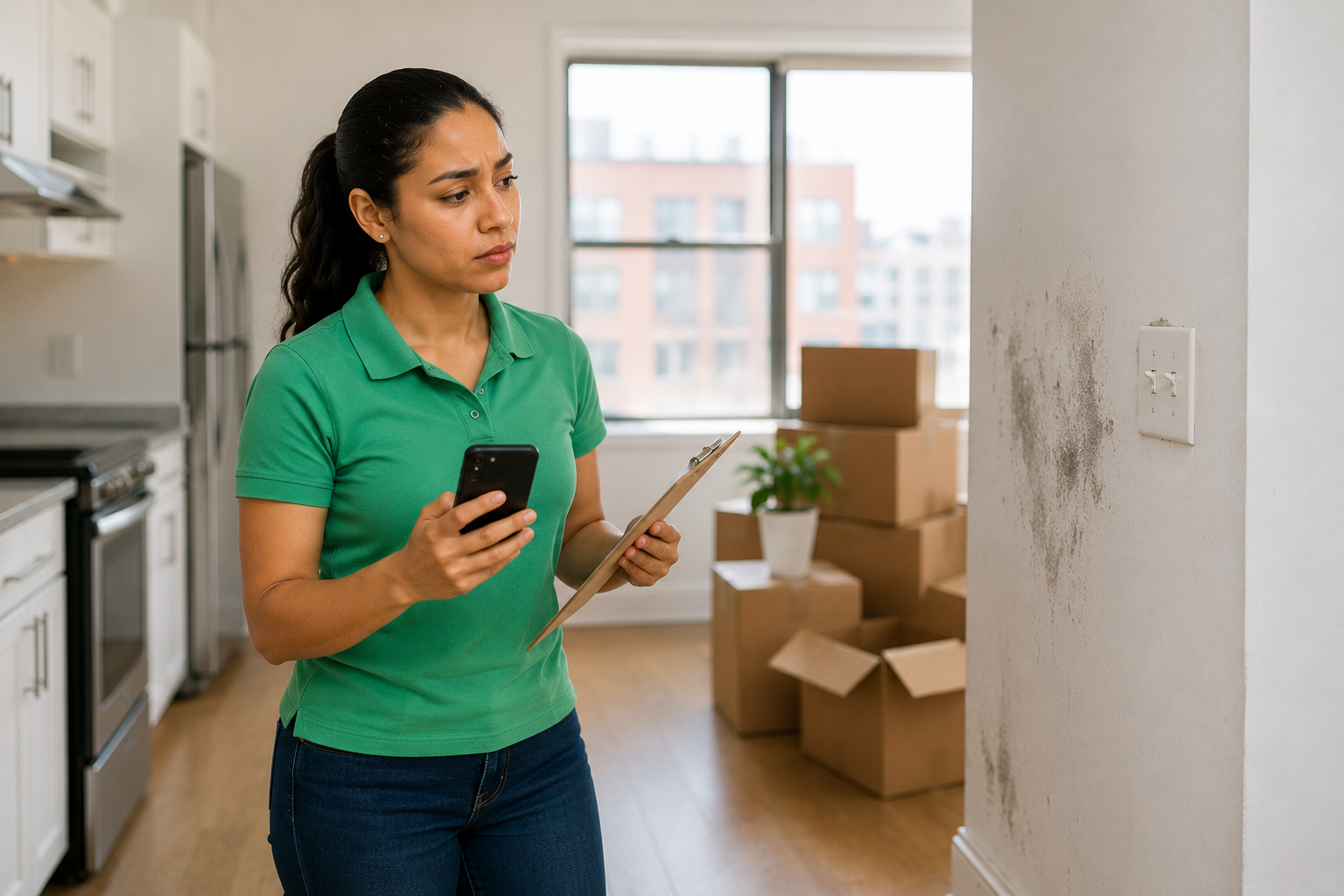
Here's what the law says in Chicago, and here's what actually happens.
The Chicago Residential Landlord and Tenant Ordinance requires landlords to provide units that are fit and habitable, free of health hazards, and in compliance with the city's building code.
That's the law.
The reality is that "habitable" and "professionally cleaned" are not the same thing — and enforcement is tenant-initiated, which means the legal process takes weeks while you're trying to move in tomorrow.
Here's what I've seen across thousands of Chicago moves.
If you find it's not clean before signing the lease, that's your best leverage — negotiate cleaning into the deal or walk away.
If you find it after signing but before moving in, document everything with photos and send written notice to the landlord, knowing they'll likely refuse.
If you find it after moving in, photos still protect you at eventual move-out, but demanding immediate action is much harder.
Your realistic options: hire cleaning yourself ($150-$400), document the cost, and request rent reduction (usually unsuccessful but worth a try); or pay for cleaning and consider it a health investment; or pursue a legal battle, which is only realistic for actual health hazards like mold, pests, or no heat — not just "dirty."
The documentation that makes everything else work is move-in photos taken before you clean, before you move a single box in.
Wide shots plus close-ups of any dirt or damage, date-stamped via phone metadata or a narrated video walkthrough.
Also take photos after your cleaning — those prove the condition you maintained and become the baseline for eventual move-out.
When to involve the city: call 311 for actual health hazards like mold, pest infestation, or loss of heat and water — don't bother them for "dirty but not unsafe."
When to get a lawyer: only if the deposit is large ($2,500+), if there are repeated RLTO violations, or if the landlord is clearly acting in bad faith.
9. Ready to Move Into a Truly Clean Chicago Home? Here's Your Next Step.
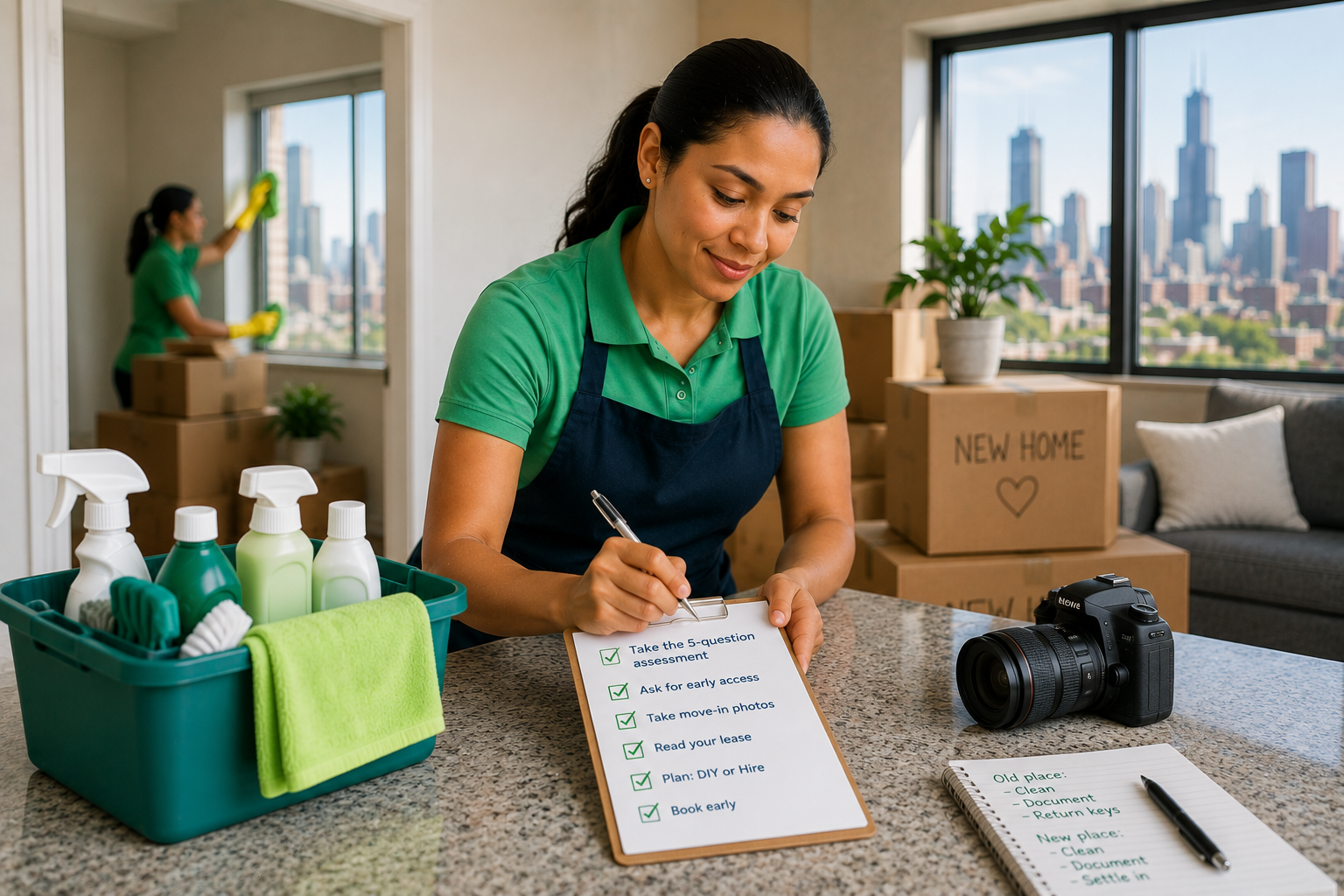
Here's what you know now that most Chicago renters don't.
Previous tenants leave chemical residue that raises indoor VOCs well above outdoor levels, and children absorb more of it because of how they breathe and move.
DIY versus professional is a personal decision driven by time, budget, home condition, and family priorities — not a moral stance.
Coordinating the old place and the new place solves the "can't be in two places" problem that wrecks most moving weeks.
Documentation at both ends protects your deposit years before you actually need it.
Your action items this week: take the five-question assessment, ask your landlord for early access, take move-in photos before you clean anything, and read your lease's cleaning expectations.
If you're going DIY, gather the six-item supply kit and block 8-16 hours before the truck arrives.
If you're hiring, get quotes from two or three companies, confirm W-2 employees and chemical-free methods, and book early.
The thoroughness that protects your family's health at move-in is the same thoroughness that protects your deposit at move-out.
Move with your eyes open, and the place you move into will actually feel like home.
"The greatest protection Chicago tenants have at move-in is documentation — photos, written communication, and receipts create the paper trail landlords can't dispute later." — Illinois Legal Aid Online
Frequently Asked Questions (FAQ)
Is hiring a professional cleaning service worth it when moving into a new home in Chicago?
Yes for most Chicago families, especially those with children, pets, or a dual-location move. A professional move-in cleaning service in Chicago typically costs $150 to $400 depending on size, uses chemical-free methods that remove rather than add residue, and frees up the 12 to 16 hours you would otherwise spend cleaning during an already exhausting week.
What harmful chemicals do previous tenants leave behind in a home?
The most common leftover chemicals are bleach and ammonia residue, quaternary ammonium disinfectants, synthetic fragrance compounds (including phthalates), and halogenated VOCs like chloroform and carbon tetrachloride formed when bleach mixes with surfactants. These compounds can remain on cabinet interiors, grout, and under-sink areas for weeks after application.
Can regular cleaning products make indoor air quality worse when moving in?
Yes. EPA data shows indoor VOC concentrations run 2 to 5 times higher than outdoor levels, largely because of cleaning products. Even products labeled "green" raise VOC concentrations during and after use. True chemical-free cleaning — using steam, deionized water, HOCl, and HEPA filtration — removes contamination without adding new chemicals to the air.
How do I protect my family from chemical exposure when moving into a rental in Chicago?
Five steps: request early access to clean before furniture arrives, use chemical-free methods (steam, DI water, HEPA, 3% hydrogen peroxide for disinfection), ventilate heavily during and after cleaning, avoid fragranced products entirely, and consider professional move-in deep cleaning in Chicago if your family includes children under five, pets, or anyone with asthma or chemical sensitivity.
What is included in a professional move-in deep cleaning vs regular cleaning?
A professional move-in deep cleaning in Chicago covers everything a regular cleaning does plus inside appliances (fridge, oven, dishwasher, microwave), inside cabinets and drawers, hand-wiped baseboards, inside window glass, blinds, and disinfection of high-touch surfaces. Always get the scope in writing — "we clean everything" is never specific enough.
Should I clean my new apartment myself or hire a service before moving in?
Use the five-question test from section three: seven-plus days of lead time, 12+ hours available, place in decent shape, only one place to clean, and no kids under five or pets at home. Four or five yeses means DIY works. Zero or one yes means a professional move-in cleaning service Chicago provider is worth the cost to prevent paying twice.
What cleaning methods remove chemical residue left by previous tenants?
Steam at 212°F+ dissolves and flushes chemical residue without adding anything new. Deionized (DI) water attracts and removes residue through physics rather than chemistry. HOCl (hypochlorous acid) disinfects without leaving VOCs. HEPA vacuuming captures 0.3-micron particles. Together, these are the core of VOC-free cleaning in Chicago.
How long does move-in cleaning take for a 2-bedroom apartment in Chicago?
A professional team can complete a 2-bedroom move-in deep cleaning in Chicago in four to six hours. DIY typically takes 12 to 14 hours spread across one long day or two shorter days — 3.5 hours for the kitchen, 4 hours for two bathrooms, 4 hours for bedrooms and living areas, and 1.5 hours for inspection and touch-ups.
FREE DOWNLOAD: The House Cleaner Thank-You Card Pack
The Ultimate Chicago Move-In Cleaning Checklist - Free PDF Download
.png)
The printable room-by-room checklist that covers everything in this guide — the 8-step kitchen method, the 5-step bathroom method, the 6-step living area method, the 7 contamination hot spots, and Chicago-specific challenges (winter salt, hard water, vintage buildings, high-rise ventilation).
✅ Room-by-room printable checklist
✅ 7 contamination hot spots most renters miss
✅ Chicago-specific challenges checklist
✅ Move-day timeline + photo documentation guide
Get Your Chicago Move-In Cleaning Checklist!
.png)