


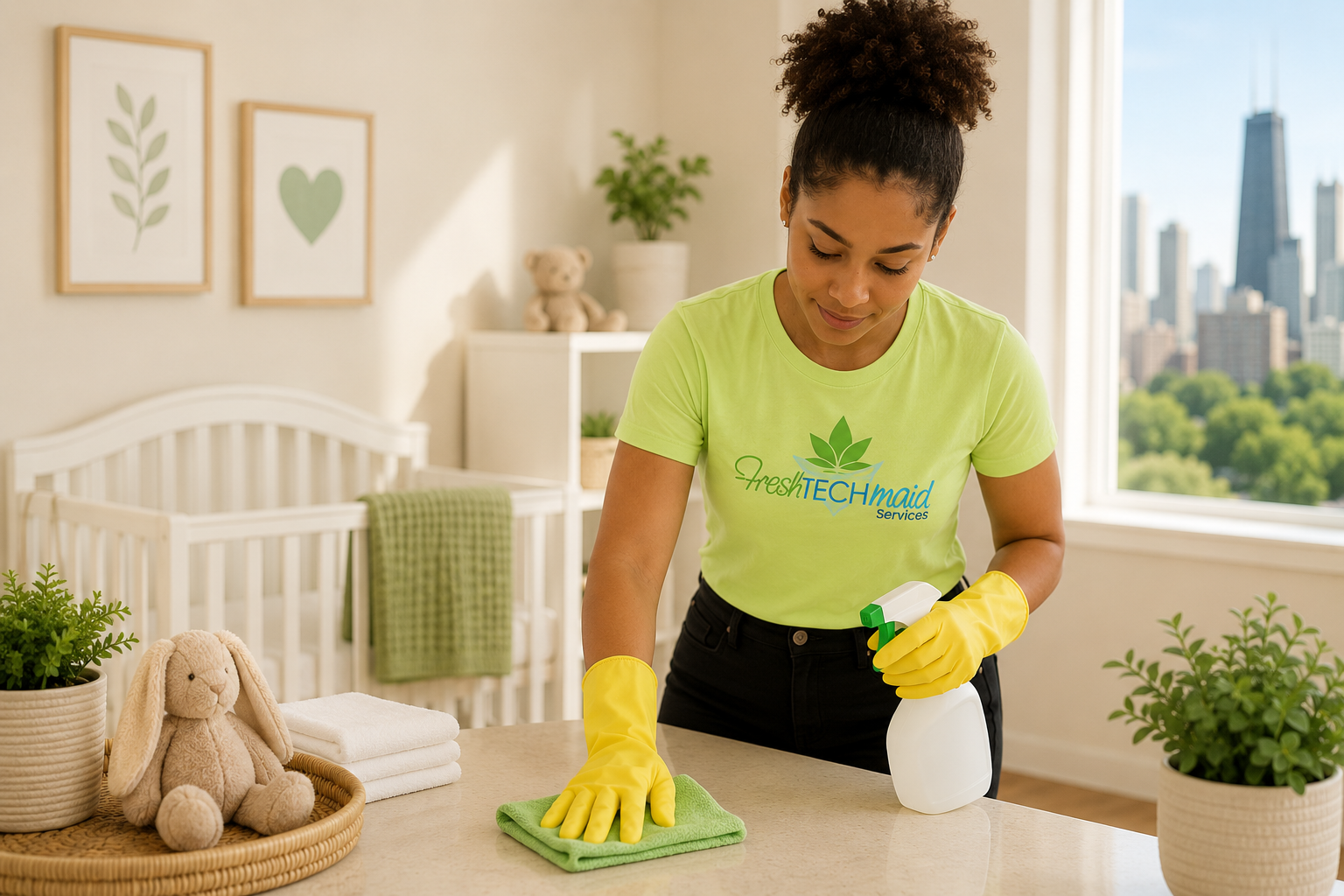
What if the nursery looks perfect, but the dust that matters is hiding in the cabinet, the window track, the vent, and the bottle-prep drawer?
That is the question I ask before every newborn cleaning in Chicago.
I am Wells Ye, founder of Fresh Tech Maid, and I have spent about 20 years inside homes where families are trying to make life safer, cleaner, and calmer.
The CDC says cleaning removes germs, dirt, and impurities, and that surfaces should be cleaned before sanitizing or disinfecting. The EPA warns that many VOCs can be higher indoors than outdoors, and that matters when a baby will sleep, eat, and breathe in the same room for hours.
This post is not medical advice, and it is not lead remediation advice. If I see possible lead paint, renovation dust, or peeling pre-1978 paint, I tell the family to pause and call the right licensed professional.
My job is different.
I prepare the normal home environment with chemical-free house cleaning Chicago families can understand: soil removal first, HEPA vacuuming, microfiber, DI water, steam when safe, and targeted HOCl when sanitizing is truly needed.
All for the health and safety of new babies and new Moms.
Here is how I prepare Chicago homes for a new baby without turning the home into a cloud of harsh cleaner smell.
What Should Chicago Parents Clean Before Baby Comes Home?
In one Ravenswood two-flat, I opened the lower kitchen cabinet and found construction dust behind the bottle storage bin.
The baseboards had gray dust, the bathroom faucet handles had old soap film, and the changing table lamp had a dust ring around the base.
I follow the Fresh Tech Maid basic cleaning method: prep the bucket, remove trash and rugs, dust high to low, do the dry trip, do the wet trip, then disinfect high-touch points.
That order matters because dust falls down. If I mop first and dust later, I make the floor dirty again.
For expecting parents, I use that order inside the areas that matter most: crib zone, bottle zone, recovery bathroom, floor path, door handles, light switches, cabinet pulls, and laundry surfaces.
Parents with children need this because older siblings bring school dust, playground soil, crumbs, and sticky hands into the baby's space.
Young Professionals and University Students in Chicago apartments need it because storage is tight, so bottle items often sit near shoes, pets, and old cabinets.
This is why I link this work to Fresh Tech Maid's Expecting Parents Cleaning package when a family wants the whole reset done before the due date.

Table 1: Baby-Prep Priority Map
Action Steps
I map five zones: nursery sleep, feeding, bathroom recovery, floors, and touchpoints.
I dust high to low before any wet wiping or mopping.
I open cabinets and drawers that will hold bottles, pump parts, diapers, and linens.
I finish with door handles, faucet handles, light switches, cabinet pulls, and fridge handles.
"The nursery is not ready until the hidden dust zones are ready." - Wells Ye, Founder, Fresh Tech Maid
The reward is a home that feels calm before the first hard night.
The crib area is not just cute; the hidden dust zones are handled, the bottle station is ready, and the birthing parent is not trying to scrub a bathroom after delivery.
With the first priority map clear, the next question is why I choose this low-residue process instead of a stronger-smelling shortcut.
Why Does Chemical-Free Cleaning Matter for Expecting and New Parents?
Chemical-free does not mean weak cleaning.
It means I remove the soil first instead of covering it with scent.
Here is the part that matters for a newborn's lungs: the EPA found that levels of common pollutants run two to five times higher inside homes than outside, and cleaning sprays are one of the sources. (source).
The EPA says many VOCs are emitted by household products, including cleaning and disinfecting products, and many VOCs can be up to ten times higher indoors than outdoors.
For a newborn home, I do not want to trade dust for odor. Strong fragrance can make a room feel clean while leaving more in the air.
Fresh Tech Maid's Chemical-Free Cleaning page explains why we use deionized water, microfiber, and other physics-based tools instead of relying on harsh residue.
When I use HOCl (hypochlorous acid), I use it as a targeted disinfectant for the right surface, with the right dwell time, after soil is removed.
That is important for Parents with Children, Pet Owners, and Seniors who may visit and have asthma, allergies, or a lower tolerance for strong smells.
Table 2: Clean, Sanitize, Disinfect, and Sterilize - My Baby-Prep Ladder
Chart 1: Three Data Points I Keep in Mind Before Baby Comes Home
Action Steps
I remove loose dust and soil before any sanitizing step.
I avoid scented sprays in the nursery and feeding zone.
I choose DI water and microfiber for general cleaning where it fits.
I reserve HOCl for disinfecting high-touch and feeding-related areas that need them.
"I do not want a newborn home to smell clean. I want it to be clean." - Wells Ye, Founder, Fresh Tech Maid
The reward is a home that smells like home, not cleaner.
Parents get less residue, clearer air, and a cleaning plan that feels safe enough for a baby crawling on the same floor later.
Once the method is clear, the nursery becomes the place where that method has to be quiet, careful, and practical.

How Do I Clean a Nursery Without Leaving Harsh Residue?
The nursery is a small room, but it has many dust shelves: window sills, blinds, vent covers, lamp bases, closet shelves, crib legs, baseboards, and the top of the changing station.
I start high because the dust on a shelf becomes the dust on the floor.
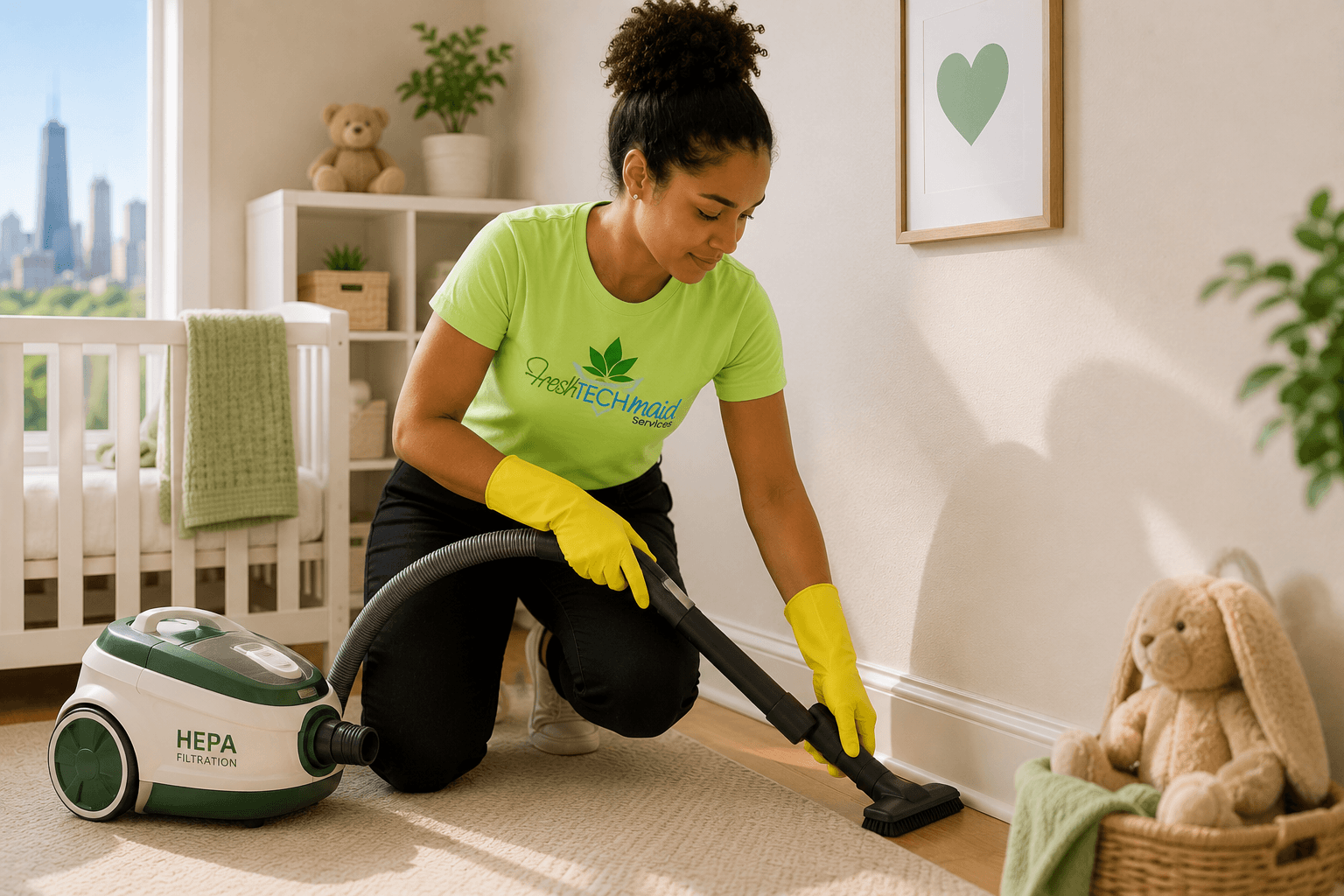
Then I HEPA vacuum the floor edges, rugs if present, and the path from the door to the crib.
The CDC says dust mites can trigger asthma and recommends washing bedding weekly, vacuuming with a HEPA filter, and keeping indoor humidity around 30% to 50% for control.
For newborn prep, I also remind parents that safe sleep is not about more nursery items.
CDC and AAP safe-sleep guidance focuses on a firm, flat sleep surface and keeping soft items out of the sleep space.
For Parents with Children, I also clean the older sibling touch path: door knob, toy shelf, rocker arm, hamper lid, and light switch.
For Empty Nesters helping their adult children, this is a perfect support task: wash textiles, clear closet shelves, and make the nursery easy to maintain.
Action Steps
I HEPA vacuum floor edges, vent areas, rug edges, and baseboards.
I damp-wipe window sills, blinds, shelves, lamps, and closet ledges.
I wash baby linens before use and keep extra textiles out of the crib.
I steam only washable, heat-safe surfaces and avoid sealed wood or delicate finishes unless approved.
The reward is a nursery that feels quiet.
The shelves are not shedding dust, the crib is simple, and parents are not guessing whether a strong smell means clean.
After the nursery, I slow down for one Chicago-specific issue that no family should ignore: older-home lead dust.
What Should Chicago Families Know About Lead Dust in Older Homes?
This is the section I never rush, especially in Chicago apartments, two-flats, bungalows, and older condos.
The CDC says homes built before 1978 probably contain lead-based paint, and peeling or cracking paint can make lead dust.
Lead Safe Chicago says lead paint and the dust made when it cracks or peels is the leading cause of lead poisoning in Chicago.
The Illinois Department of Public Health says the most common exposure for children is paint chips and contaminated dust from deteriorated or disturbed lead-based paint in homes built before 1978, and about 53% of Illinois pre-1978 homes contain some lead-based paint.
EPA data also shows why age matters: 87% of homes built before 1940 may contain lead-based paint, compared with 24% of homes built from 1960 to 1978.
This is why I do not dry dust peeling paint, scrape windows, sand trim, or treat renovation dust like normal dirt.
If there was recent work on old windows, doors, trim, radiators, or walls, I tell parents to stop and call a lead-safe certified contractor or the right local health resource.
Fresh Tech Maid can help with normal non-lead cleaning after the hazard is addressed, but we do not replace testing, abatement, or medical guidance.
Table 4: Chicago Lead Dust Decision Table
Action Steps
I ask the build year and whether any paint, window, or renovation dust was disturbed.
I look for peeling paint, dusty window troughs, old trim dust, and radiator dust without disturbing it.
I avoid dry sweeping or dry dusting suspect areas and recommend lead-safe testing or contractors.
After clearance or proper guidance, I use wet-cleaning methods for normal dust and touchpoints.
"In older Chicago homes, the safest cleaning sometimes starts with saying no until the right pro checks it." - Wells Ye, Founder, Fresh Tech Maid
The reward for taking the above steps is not panic.
It is a clear decision tree: test when needed, remediate when needed, and clean normally only when the home is safe to clean normally.
After the lead question is handled, I move to the most repeated newborn task in the house: feeding-item cleaning.
How Do I Sanitize Baby Bottles and Feeding Items Without Harsh Chemicals?
Bottle cleaning is where I see the most confusion, because parents hear cleaning, sanitizing, disinfecting, and sterilizing used like the same word.
The CDC guidance is clear enough for daily life: clean feeding items after each use, and sanitize when extra germ removal is needed.
The CDC also says daily sanitizing is especially important for babies under 2 months, babies born premature, or babies with a weakened immune system.
For a chemical-free setup, I like heat because boiling or steam can sanitize without adding a scented product to the bottle path.
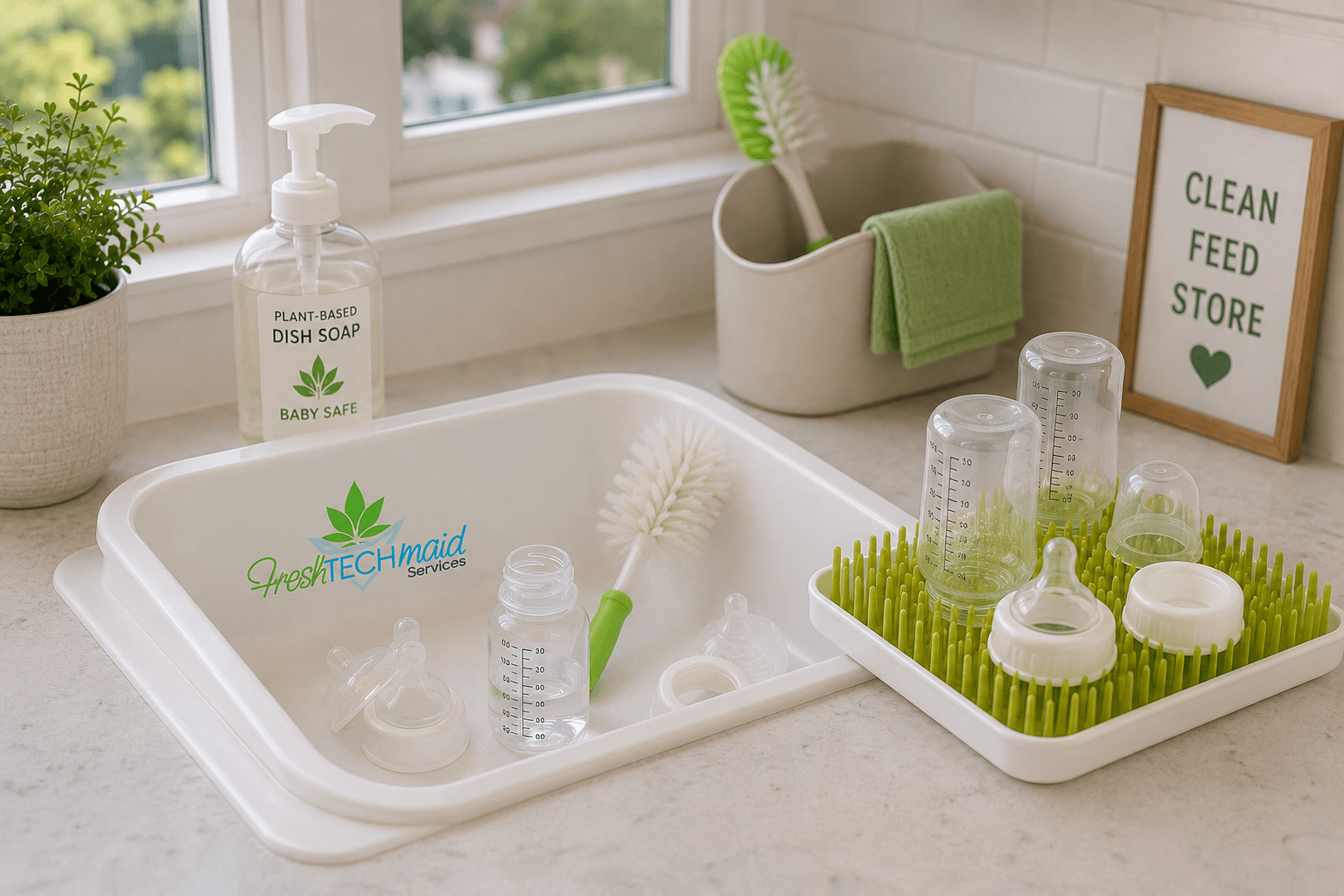
I set up a dedicated bottle basin because the sink is not automatically clean. Raw food, dishcloths, coffee grounds, and old sponge water pass through that space.
I also separate the bottle brush from the dish brush. A brush used on greasy pans should not become a newborn bottle tool.
Table 3: Tools Needed for Bottle and Feeding-Item Sanitizing
Action Steps
I rinse and separate bottle parts after feeding so milk does not dry in hidden seams.
I wash parts in a dedicated basin with a dedicated bottle brush.
I air-dry on a clean rack in a low-traffic spot, not on a used towel.
I use boiling or a steam sterilizer when CDC guidance or the baby's health status calls for sanitizing.
"For bottles, I want a boring system that works at 2 a.m.." - Wells Ye, Founder, Fresh Tech Maid
With these steps, the feeding station works when no one has slept.
Parents know what is clean, what is drying, and what is ready for the next feeding.
Once bottles have a system, the kitchen itself needs one clean lane that tired parents can trust.
How Do I Clean the Kitchen and Feeding Areas Before a Newborn Arrives?
The kitchen is not just the room with the stove after the baby arrives. It becomes a milk prep room.
I start by taking out trash and rugs, then I pre-treat hard-to-clean sink and counter areas, then dust high to low, then dry trip, wet trip, and high-touch finish.
The lane is simple: clean counter, clean basin, clean brush, clean drying rack, clean cabinet shelf, and clean hands.
The CDC feeding guidance includes cleaning, sanitizing, and proper storage because clean items can be re-contaminated when they dry or sit in a dirty spot.
That is why I clean the underside of upper cabinets, the shelf where bottles will live, the fridge handle, the drawer pull, the faucet handle, and the soap pump.
For Young Professionals in smaller Chicago apartments, I often turn one 18-inch stretch of counter into a baby station.
For University Students or young renters helping a sibling, this simple station is a gift because it keeps the system clear without a big remodel.
Action Steps
I clear one counter zone for feeding items only.
I clean and dry the sink area before the bottle basin is used.
I wipe cabinet pulls, faucet handles, fridge handles, and the drying rack area.
I store clean bottle items in a clean cabinet or closed bin after they fully dry.
The reward is speed.
A tired parent can find a clean bottle, clean nipple, clean prep space, and clean storage area without moving mail, keys, pet bowls, or yesterday's dishes.
From the kitchen, I move to the room that supports the birthing parent most directly: the bathroom.

What Bathroom and Postpartum Recovery Zones Matter Most?
I have cleaned many bathrooms where the nursery was finished but the postpartum recovery area was not.
That matters because the birthing parent may use the bathroom many times a day while healing.
Chicago's postpartum planning guidance includes physical recovery, making the bed and bathroom accessible, and household concerns such as people who can help with cleaning and cooking.
So I clean the bathroom like a recovery zone: sink, faucet handles, toilet handle, shower floor, tub edge, counter, trash bin, laundry basket, and the door knob.
I also leave space for postpartum supplies. A counter packed with old bottles, makeup, and random items makes recovery harder.
In our method, bathrooms start with trash and rugs out, soaking hard-to-clean areas, high-low dusting, dry trip, wet trip, then targeted high-touch disinfection.
For families who need the whole bathroom reset, Fresh Tech Maid's Deep Cleaning Services Chicago page is the natural internal link because bathroom buildup often needs more than a light recurring clean.
"After birth, the bathroom is part of the care plan!" - Wells Ye, Founder, Fresh Tech Maid
Action Steps
I clear and clean the counter area where recovery supplies will sit.
I clean and sanitize toilet handles, faucet handles, door knobs, and light switches.
I scrub shower floors and tub edges to reduce soap film and slip stress.
I set a simple laundry and trash flow so supplies do not pile up.
It is about dignity.
The birthing parent has a bathroom that feels ready for healing, not another room asking for work.
After the recovery zone is ready, I look low, because the floor soon becomes the baby's world.
What Is the Safest Way to Clean Floors and Surfaces a Baby Touches?
Parents often ask me about counters first, but babies teach us to look down.
The floor is where pacifiers fall, toys land, pets walk, and older siblings drop snacks.
My floor process starts with levels: I finish rooms first, then vacuum and mop after all rooms on a floor are done so I am not walking dirt back into wet areas.
For sealed floors, I use a residue-light method: HEPA vacuum, then DI water or steam when the surface can handle it.
I do not flood wood floors, and I do not use steam on surfaces that the manufacturer says should not take heat or moisture.
Pet Owners need a cross-contamination plan.
Pet bowls, litter areas, paws, and floor throws should not share the baby's main crawl zone.
"A clean floor should not leave a chemical film on tiny hands later." - Wells Ye, Founder, Fresh Tech Maid
Young Professionals in apartments often need the same idea in a smaller space: shoes stop at the door, pet gear has one zone, and the baby play mat has another.
EPA VOC guidance is one reason I avoid heavy sprays on floors.
A shiny look and smell is not worth adding more air pollution to a newborn room.
Action Steps
I vacuum with HEPA before mopping or steam work.
I use DI water and microfiber on washable low surfaces.
I keep pet bowls, litter tools, and shoe storage away from baby floor zones.
I sanitize high-touch surfaces only after cleaning and only where the surface needs it.
The reward is a floor parents can trust for tummy time later.
It is not sterile, but it is clean, low-residue, and easier to keep that way.
Once floors and surfaces are low-residue, I look at the air the baby will breathe in that room.

How Do I Keep the Air Clean for a Newborn?
Air cleaning starts with a quiet question: what am I adding to this room?
A nursery can have dust from textiles, furniture boxes, old vents, renovation work, candles, plug-ins, sprays, and scented laundry products.
The EPA says portable air cleaners and HVAC filters can reduce indoor air pollution, but no air cleaner removes every pollutant.
EPA also says a HEPA filter can theoretically remove at least 99.97% of dust, pollen, mold, bacteria, and other airborne particles at 0.3 microns.
That does not mean a filter replaces cleaning. It means filtration and source control work together.
I use HEPA vacuuming to remove particles from surfaces before they become airborne again.
Then I ask parents to avoid scented cleaners, candles, and air fresheners in the baby's room, especially in the last weeks before birth.
Parents with Children often need this because older kids bring pollen and school dust home.
Seniors and grandparents visiting may also be more sensitive to strong scents and indoor air changes.
Action Steps
I HEPA vacuum the nursery, hall path, and soft dust zones before wet wiping.
I recommend a correctly sized HEPA air cleaner if the family wants filtration support.
I avoid scented cleaners, plug-ins, and spray-heavy products in baby zones.
I ventilate when outdoor air is safe and keep windows closed during poor air, heavy pollen, or smoke days.
These actions bring parents and babies cleaner breathing space.
Parents are not trying to cover odor; they are removing dust and avoiding new pollutants.
When the air plan is set, I put the work on a timeline so it does not become a last-minute scramble.
What Is the 30-Day Baby-Prep Cleaning Timeline?
The biggest mistake I see is waiting until the last weekend.
A late panic clean turns small choices into big stress, especially if the baby comes early or the birthing parent is tired.
I prefer a 30-day plan because it matches how real homes work.
There is ordering, folding, moving furniture, washing baby clothes, and making space in cabinets.
At 30 days, I want the deep work done: baseboards, bathrooms, cabinet interiors, vents, old dust, and decluttering.
At 14 days, I want the nursery and feeding station reset so supplies have a clean place to land.
At 7 days, I want laundry systems, towels, sheets, and high-touch points finished.
At 48 hours, I want only light refresh work: bottle area, bathroom handles, floors, and trash.
After the baby arrives, the plan shifts from deep cleaning to maintenance.
That is where Recurring Maid Service Chicago can help a family keep the system stable.
"A timeline gives parents back the one thing they feel losing: control." - Wells Ye, Founder, Fresh Tech Maid
Table 5: 30-Day Baby-Prep Cleaning Timeline
Action Steps
I schedule deep cleaning before the last two weeks when possible.
I finish the nursery and feeding station before all supplies arrive.
I save final touchpoints and floors for the last 48 hours.
I set a weekly maintenance rhythm after baby arrives.
The reward is control. Parents can handle surprise changes because the hard cleaning is already behind them.
With the timeline in place, the next honest question is whether the family should do the work or get help.
When Should Parents Hire Cleaning Help Instead of Doing It Themselves?
But I do tell the truth when the home needs more than they have time or energy to do.
Hire help if the pregnancy is late-stage, if bending and lifting are hard, if there are older siblings, if the home has pets, or if the family is moving.
Hire help if there was renovation dust. And if that dust may involve old paint, hire the right lead-safe professional before any normal cleaner enters that problem.
Hire help if the parents keep saying, 'We will do it this weekend,' but the due date keeps getting closer.
Chicago's own postpartum planning page names household concerns like cleaning and cooking as part of the support plan.
That matters because cleaning help is not about being fancy.
It is about lowering stress and protecting recovery time.
Fresh Tech Maid uses trained employee teams, not random gig labor, and that matters when a family is opening a newborn home to a service provider.
The natural next step is Parents with Babies Cleaning if the baby is already home, or Book a Cleaning if parents need a date on the calendar.
Survey 1: Do I Need Cleaning Help Before Baby Arrives?
Action Steps
I ask whether the family has time, energy, and safe mobility to clean.
I ask whether there are pets, older siblings, moving boxes, or recent work dust.
I separate normal cleaning needs from lead, mold, or construction hazards that need specialists.
I recommend a professional reset when cleaning is blocking rest, recovery, or bonding.
"The right time to book is before cleaning becomes a fight between rest and guilt." - Wells Ye, Founder, Fresh Tech Maid
The reward is relief without guilt.
Parents can spend their limited energy on medical visits, sleep, meals, and each other.
If parents need help, grandparents and friends can make that help practical instead of stressful.

How Can Grandparents and Friends Help Without Adding Stress?
I meet many Empty Nesters and Seniors who want to help, but they do not want to step on the parents' plan.
The best help is not vague.
It is specific, scheduled, and easy to accept.
Instead of saying, 'Tell me what you need,' say, 'I can cover a bathroom reset, two loads of laundry, or a cleaning gift card. Which helps most?'
For grandparents, a house cleaning gift is often better than another item the parents must store, wash, return, or explain.
Fresh Tech Maid's Gift Card page fits this moment because it gives time, not clutter.
Friends can also help by taking tasks that do not require holding the baby: empty trash, wipe bottle station, walk the dog, fold towels, or restock snacks.
For influencers and parenting bloggers, this is a link-worthy point: support that removes work is often more useful than support that creates decisions.
Action Steps
I suggest one exact task instead of a vague offer.
I schedule help in a time window the parents choose.
I avoid strong smells, surprise visitors, and unscheduled cleaning projects.
I give practical help such as a cleaning gift card, laundry help, or bottle-station reset.
These actions will make support that feels like support.
The new parents get a calmer home, and helpers know they gave something useful.
After the support plan, I bring everything into one printable checklist parents can use or share.
What Printable Baby-Safe Cleaning Checklist Should Chicago Homes Use?
I like a checklist because it stops the home from becoming one giant worry.
The point is not to make parents clean every inch. The point is to clean the right zones in the right order.
Start high, move low, clean first, sanitize only when needed, and do not disturb suspect lead dust.
If the house is simple, this can be a DIY weekend plan with a partner, grandparent, or friend.
If the home is large, older, pet-heavy, or late in pregnancy, use it as a service scope for Expecting Parents Cleaning or Parents with Babies Cleaning.
For a Chicago family, the most important line is the lead line: if the home is pre-1978 and there is disturbed paint or dust, pause and get proper help first.
For everyone else, the checklist creates a cleaner, calmer landing zone before the baby comes home.
Action Steps
I print the checklist and mark the five zones that matter most.
I assign DIY tasks to safe, simple areas and professional help to heavy zones.
I flag older-home risks before anyone cleans aggressively.
I finish with a 48-hour refresh of floors, touchpoints, bottles, and bathrooms.
The reward is a ready home without overcleaning. Parents know what was cleaned, why it matters, and what to maintain after the baby arrives.
Before I close, I answer the baby-prep questions Chicago parents ask me most often.
Frequently Asked Questions
Is chemical-free cleaning safe for newborns?
I use the phrase chemical-free to mean low-residue, zero to low cleaner film, and process-first cleaning. The work still must match the surface and the family needs. For sanitizing, I clean first and use targeted steps only where needed, following label directions and public health guidance.
Should I deep clean before or after the baby arrives?
I prefer the deep clean 30 to 14 days before the due date, then a light refresh in the final 48 hours. After the baby arrives, weekly maintenance is easier than another big reset.
Can Fresh Tech Maid clean lead dust?
Fresh Tech Maid is not a lead remediation company. If the home has peeling pre-1978 paint, disturbed paint dust, or renovation dust, I recommend licensed lead testing or lead-safe professionals first. We can help with normal cleaning after the risk is properly handled.
Do I need to sanitize baby bottles every day?
Follow the CDC and your pediatrician. CDC guidance says sanitizing daily is especially important if the baby is under 2 months, premature, or has a weakened immune system. Heat methods like boiling or steam are the chemical-free approach I prefer when the item allows it.
What should grandparents give new parents instead of more baby stuff?
A house cleaning gift card, laundry help, meal help, pet help, or a scheduled bathroom reset is often more useful than another object. Practical support lowers the work load without forcing parents to manage another gift.
48-Hour Newborn Landing Zone Reset Card
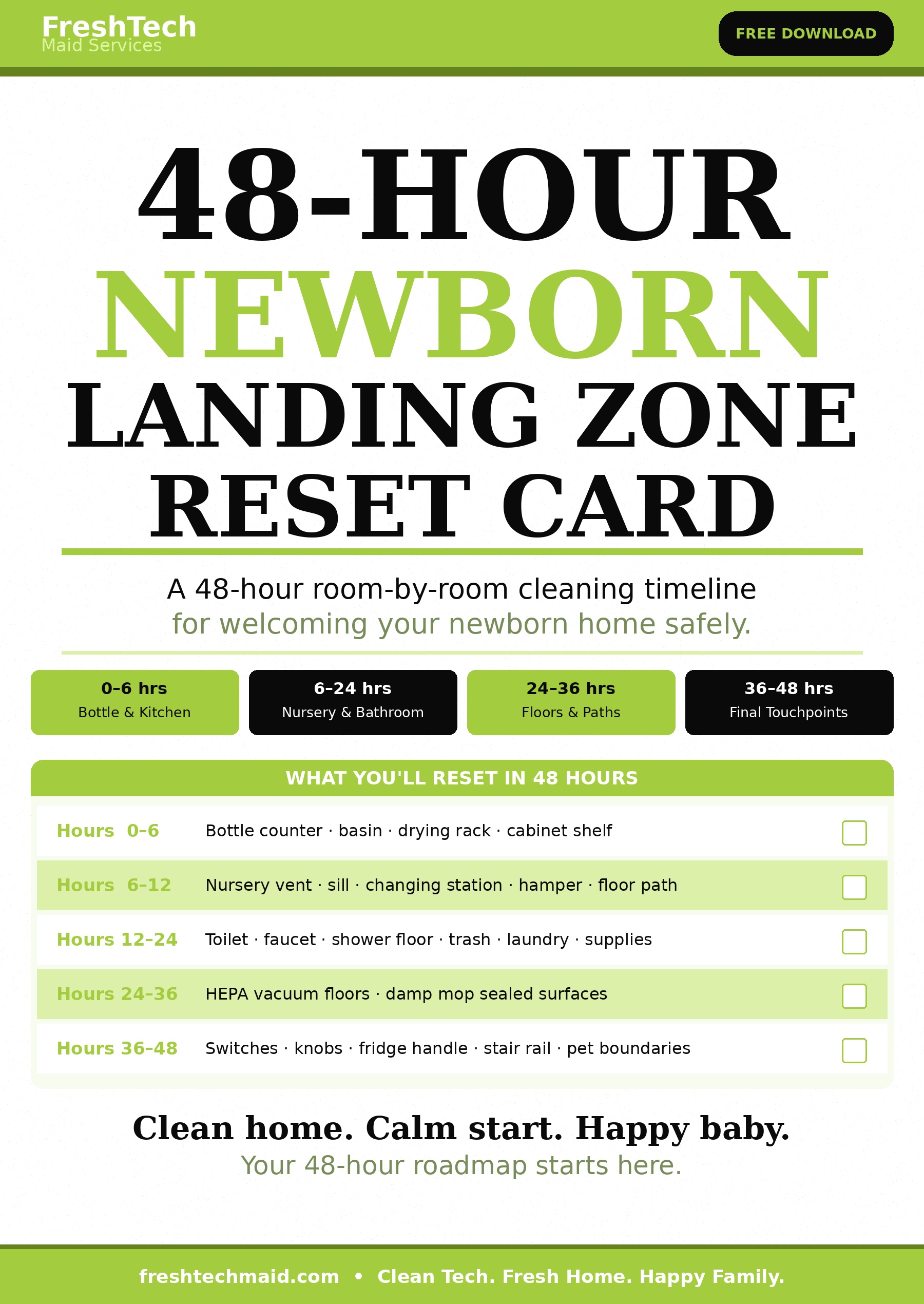
✅ Safe zones, timed perfectly — Five cleaning zones mapped across 48 hours so nothing gets missed before baby arrives home
✅ Built for new parent reality — Short, doable tasks in logical order — no overwhelm, no guesswork.
✅ Newborn-safe by design — Every step is sequenced to reduce VOCs, allergens, and germs in the rooms that matter most.
