Short Answer: Pet-safe cleaning starts by removing soil and odor sources, then choosing a surface-compatible method that controls pet exposure. In Arlington Heights, adapt the plan to the home’s entry route, floor finishes, soft surfaces, and any basement-level moisture. Use the five zones below to prioritize work in a single-family house, townhome, condo, or apartment. Call a veterinarian, pest professional, or building specialist when routine cleaning cannot resolve the source.
Plain-English Glossary
What pet-safe house cleaning in Arlington Heights really means
Short Answer: Pet-safe house cleaning removes hair, allergen-bearing dust, food residue, waste, and odor sources while controlling exposure to products, heat, and moisture. Match the method to the soil, surface, household, and pet species.
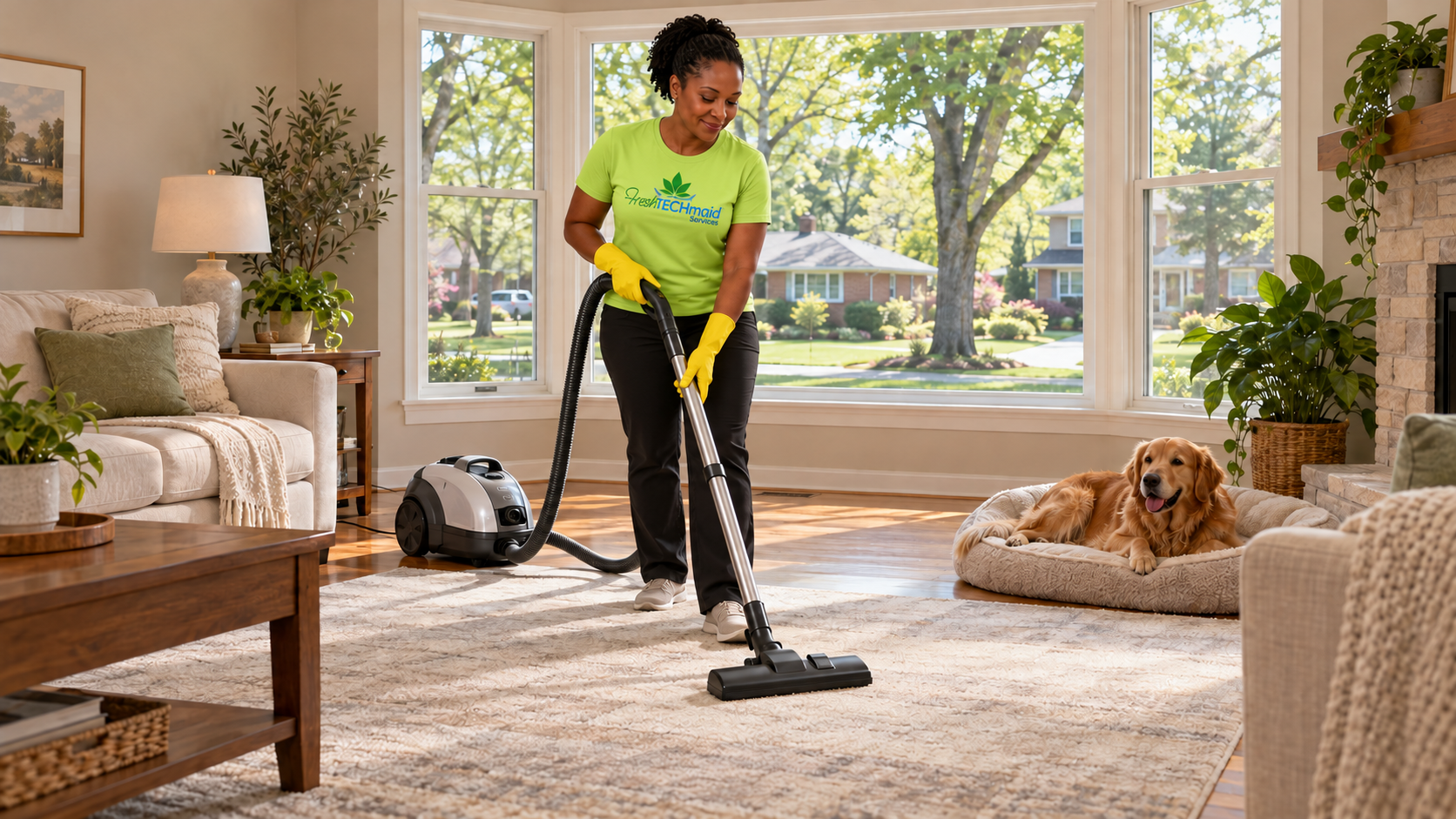
“Pet-safe” does not mean that one cleaner works harmlessly on every material and around every animal. Start with dry removal, choose the least aggressive compatible wet method, follow every label, keep pets out of the work area, and allow surfaces to dry as directed. The CDC distinguishes cleaning from disinfecting: cleaning removes dirt and germs; disinfection uses a registered product under its label conditions.
Fresh Tech Maid uses “chemical-free” to describe a physics-first, low-residue approach to routine soil, including deionized water, split microfiber, sealed HEPA filtration, and controlled steam where appropriate. Targeted chemistry may still be needed for urine or a defined disinfection task. This guide covers routine cleaning and escalation; it does not diagnose allergy, treat pets, eradicate pests, or remediate mold.
Why pet homes in Arlington Heights need a different cleaning plan
Short Answer: Pet homes have connected pathways: fur and paws carry outdoor soil, allergens settle beyond the pet’s favorite spot, and soft surfaces hold particles and odor sources longer than smooth floors.
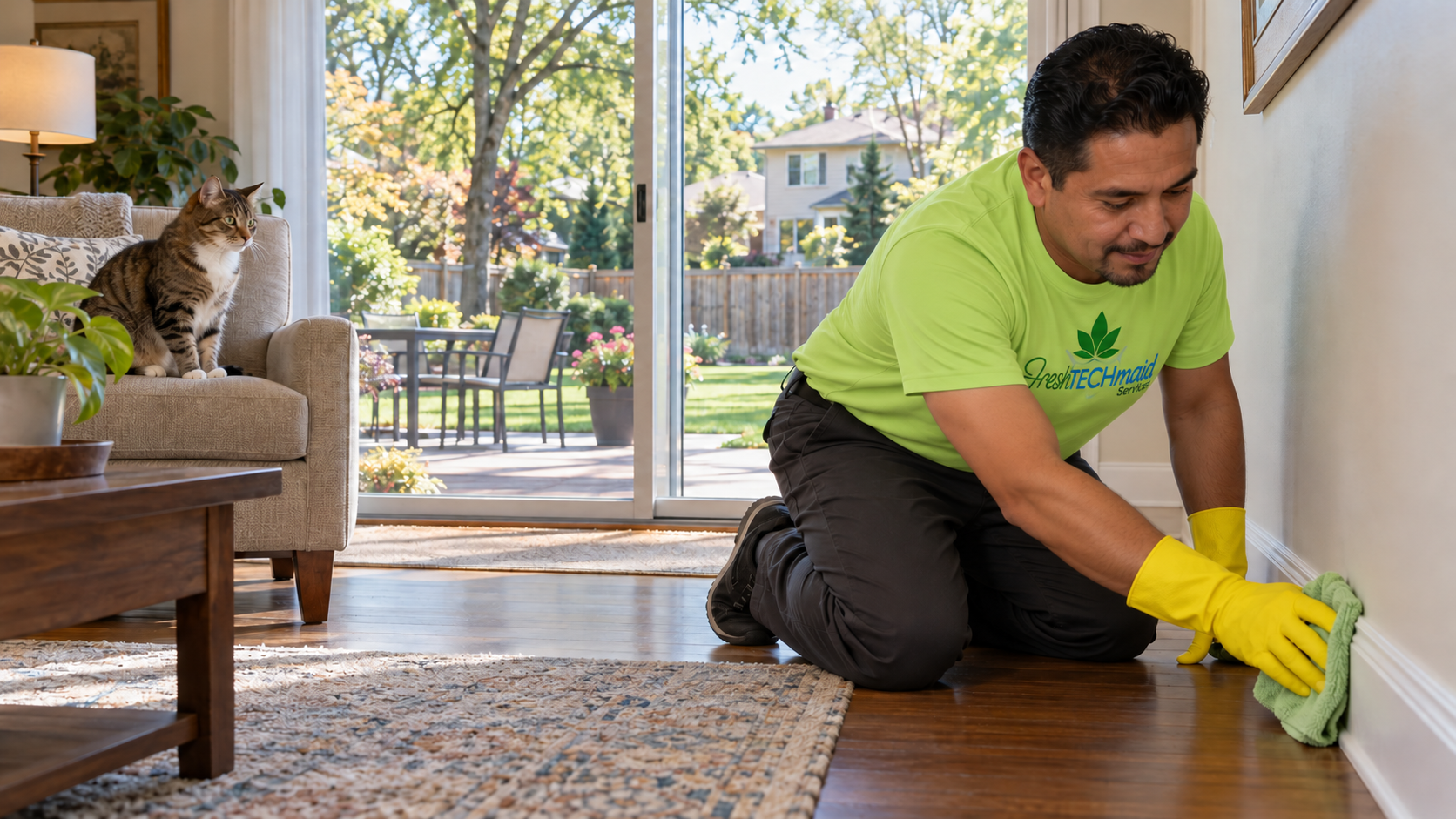
Arlington Heights is a mix of residential forms. CMAP’s community snapshot estimates 53.5% of units are detached houses, 6.7% attached houses, and about 38.5% in buildings with two or more units. An entry from a yard or garage has different soil paths from a condo corridor or apartment lobby. Neither needs an identical cleaning schedule.
The Census Bureau reports 74.0% owner occupancy and 20.0% of residents age 65 or older. A practical plan should work for long-term homeowners, older adults, busy commuters, renters, couples, and families alike. AAFA explains that animal allergen proteins occur in dander, saliva, and urine. A fur-free looking room can still contain them in fabric and settled dust.
The Five-Zone Pet Home Framework
Short Answer: Divide the work into air and allergens, soft surfaces, floors and entries, food and waste, and incidents. Give each zone its own source, method, and escalation point.
Walk the actual route from the pet’s entry to its bed, feeding area, and favorite seat. In a house, include stairs, a garage entry, and any basement-level room the pet uses. In a condo or apartment, include the door mat, hall-adjacent floor, sofa, and nearby litter or bowl area.
Work from high to low and finish floors after upper surfaces. This keeps loosened dust from falling onto a freshly cleaned pet-contact surface.
Air and allergen control: remove the source before chasing the air
Short Answer: Combine pet-area source control, sealed HEPA vacuuming, fabric cleaning, and damp dust capture. Air filtration helps with airborne particles but cannot clean a sofa or wash bedding.
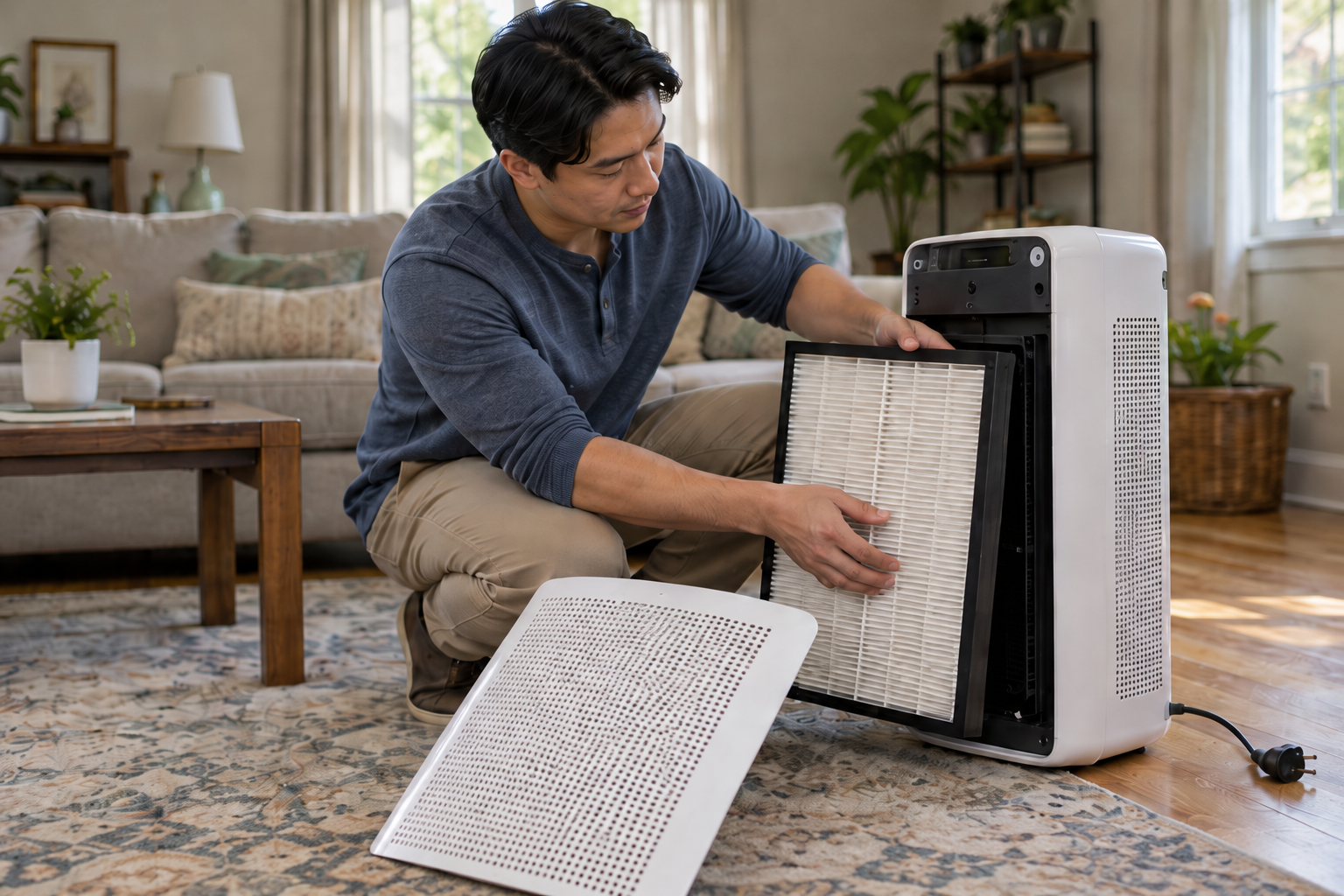
Start in the room where an allergy-sensitive person sleeps. AAAAI recommends keeping pets out of that bedroom and using filtration alongside cleaning. Persistent breathing symptoms belong with a clinician, and cleaning cannot guarantee an allergen-free space.
Vacuum slowly along carpet edges, under cushions, around pet beds, on stair treads, and at baseboards. Then collect settled dust on compatible shelves, window sills, and trim with lightly damp microfiber. In a larger house, split this work by floor; in a compact unit, focus on the bedroom, entry, couch, and pet bed. Check paint and finish before damp wiping.
Soft-surface reservoirs: the couch is often a bigger problem than the air
Short Answer: Carpet, rugs, upholstery, bedding, and pet beds hold hair and allergen-bearing dust. Repeated dry removal and washable barriers are more dependable than one aggressive treatment.
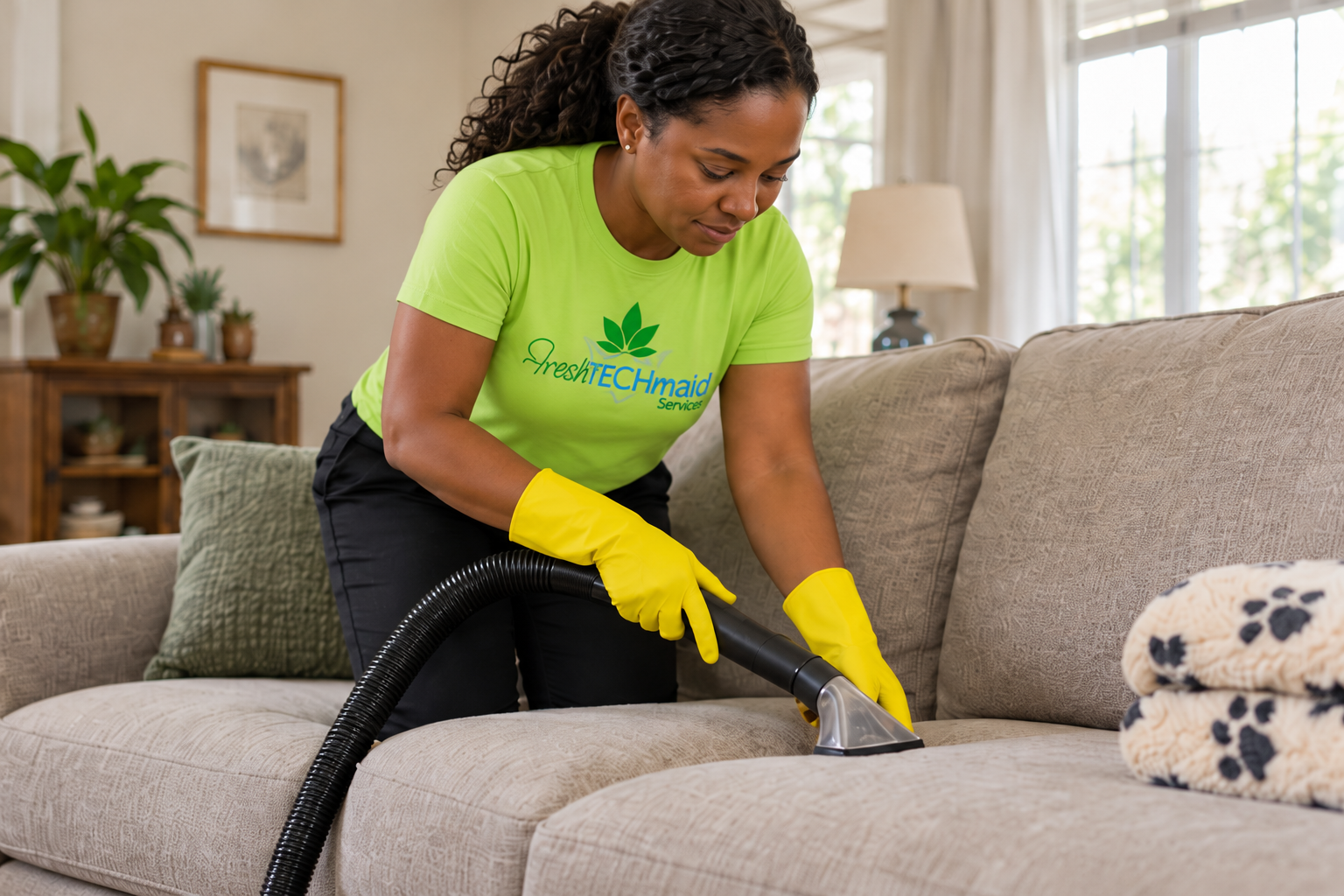
Lift couch cushions and check seams, undersides, and the frame. Remove loose fur before laundering throws or pet-bed covers; follow the fabric care label and dry completely before reuse. A washable runner between a backyard or garage door and the pet’s resting place can reduce repeated whole-home work.
Some Arlington Heights homes have carpeted stairs, finished basements, or older upholstery. A condo may have wall-to-wall carpet or a small rug near the balcony door. Do not assume unknown backing, adhesives, old wood finishes, or delicate fabric can tolerate steam or heavy moisture. If urine reached padding, surface shampooing may leave the source behind.
Floors, entries, and cleaner residue
Short Answer: For routine pet floors, remove grit first, then use a compatible low-residue method. Follow product and flooring labels, control pet access, and let the floor dry.
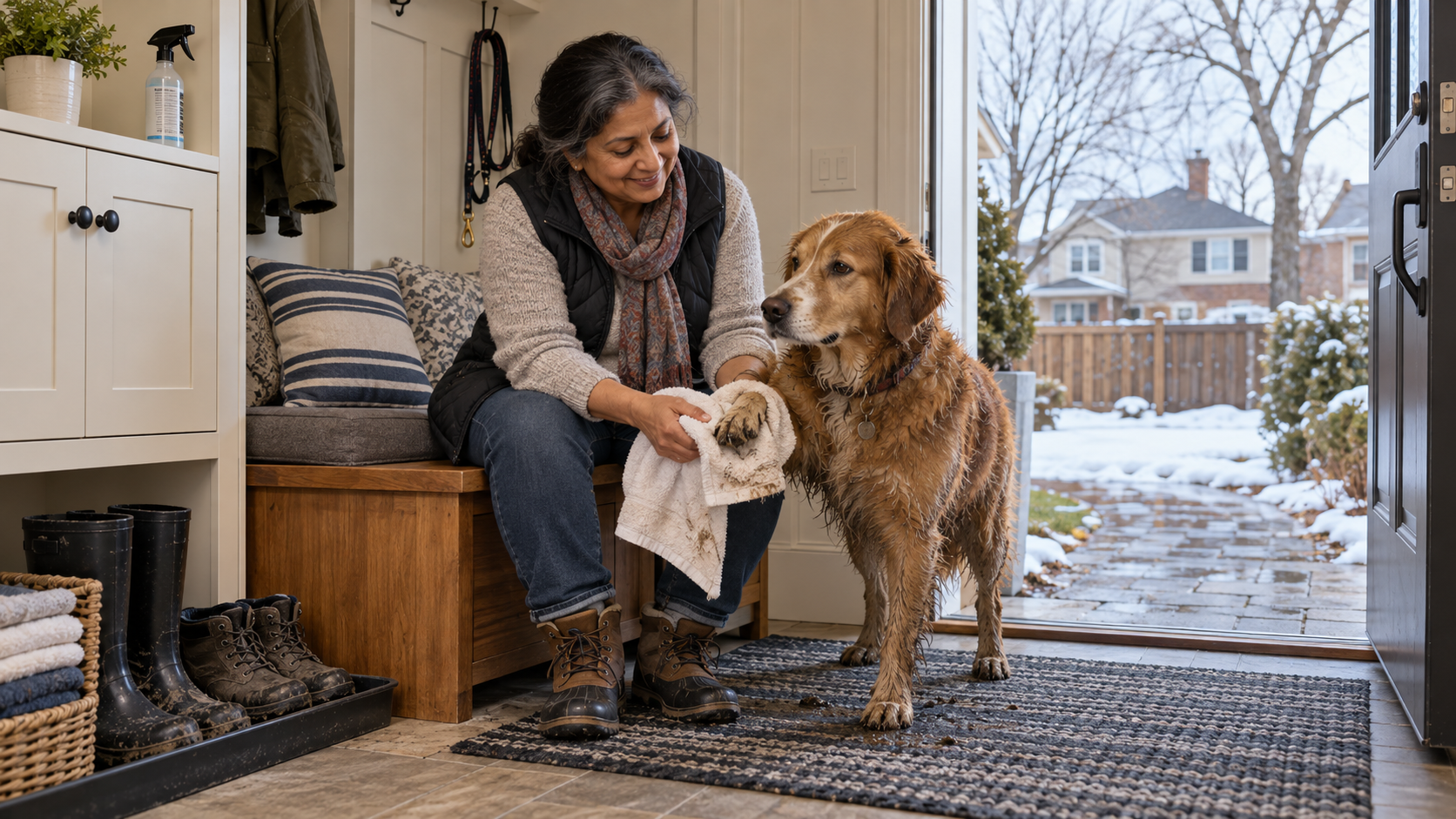
Pets walk and lie on floors, then may groom their paws. Product concentration, ventilation, rinsing, and drying therefore matter. EPA labels govern registered product use; never mix cleaners. For cats, Merck Veterinary Manual cautions against phenol disinfectants in feline settings. For birds and other sensitive species, ask a veterinarian before using aerosolized products.
Use dry pickup for salt crystals and sand at the front or garage entrance before mopping so particles do not scratch a finish. DI water with split microfiber can reduce added product residue on compatible hard flooring, but water is not a disinfectant or urine treatment. Verify the finish and manufacturer guidance on older tile, stone, wood, laminate, and sealed or unsealed flooring. A mat, paw towel, and separate clean cloth for the final floor pass help contain winter slush.
Food, water, litter, and other waste zones
Short Answer: Wash bowls, mats, litter tools, and cages at a frequency that prevents buildup. Keep tools separate from human food preparation and clean visible soil before any justified disinfection.
Empty bowls, wash the inside and outside, clean the mat and nearby splash area, and dry them. Give litter and cage tools a separate brush or container; clean the sink after washing pet supplies. Scoop litter daily. CDC notes that Toxoplasma in cat feces typically takes 1–5 days to become infectious, making daily removal meaningful. Pregnant or immunocompromised people should follow clinician guidance and ask someone else to handle litter when possible.
In a single-family home, a mudroom or utility area may make a dedicated pet-supply station practical. In an apartment, a labeled bin and a predictable routine can provide the same separation without taking over the kitchen.
Accidents, odor return, fleas, ringworm, and moisture
Short Answer: Treat accidents at the depth they reached. Repeated pet accidents, infestations, infection, and recurring dampness need the appropriate veterinarian, pest professional, or building specialist.
Blot fresh urine, identify the full affected area, and follow a compatible enzyme product’s directions for saturation, dwell time, and extraction. Liquid can reach carpet backing, grout, or wood seams; fragrance may temporarily hide an odor without removing its source. Repeated accidents may reflect a health or behavior issue, so speak with a veterinarian.
CDC flea guidance pairs pet treatment with environmental cleaning. Ringworm requires veterinary assessment and a treatment plan. Moisture calls for a separate decision: EPA advises fixing the water source and drying water-damaged materials promptly. Around basement pet beds, storage rooms, and garden-level units, inspect lower walls, floor edges, damp rugs, and musty odors after heavy rain. If there is sewage, active intrusion, significant mold, or persistent moisture, resolve it before routine cleaning.
Which cleaning method fits each pet-home problem?
Short Answer: Use sealed HEPA filtration for particles, microfiber and DI water for compatible routine hard-surface soil, enzymes for organic residue, laundry for washable reservoirs, and registered disinfectants for defined germ targets.
Ask four questions before choosing a method: What is the soil? What is the surface? Who or what may touch it? Is the goal visible cleaning, odor-source removal, allergen reduction, or disinfection?
Common myths and mistakes that make pet homes harder to clean
Short Answer: A clean scent does not prove the odor source is gone; visible fur does not measure all allergens; “natural” does not guarantee pet safety; more heat, water, or disinfectant is not always better.
Work in this order: stop new soil at the source, remove dry particles, use a compatible wet method only when needed, treat any defined contamination, dry fully, and inspect the result. Check the species and material before using essential oils or homemade mixtures. ASPCA’s poison control guidance is a useful reminder to seek veterinary advice after suspected exposure.
An Arlington Heights seasonal pet cleaning plan for pet hair, salt, pollen, and moisture
Short Answer: Winter brings salt and grit to entries; spring brings pollen and mud; summer requires bedding and moisture checks; fall concentrates leaves and wet soil at doors.
After a heavy rain, check any basement or garden-level space that pets use for staining, dampness, or musty smells. MWRD explains that basement backups can follow heavy rainfall when local sewers receive water faster than they can carry it. That is a reason to inspect a vulnerable space, not a claim that every Arlington Heights basement floods.
What different Arlington Heights households should do first
Short Answer: Choose the zone that drives the most exposure or repeated work. Property type, schedule, physical capacity, and the pet’s route through the home matter more than a generic household label.
When moving into a pet-friendly property, photograph existing damage and check lease or association rules before treatment. Do not mistake a musty basement for ordinary leftover pet odor.
Pet-safe house cleaning in Arlington Heights: The complete guide to dander, odors, germs, and floor residue
Short Answer: Apply the five zones to this village’s mixed housing: inspect pet routes and soft surfaces, verify older finishes, and treat basement moisture as a separate problem before cleaning.
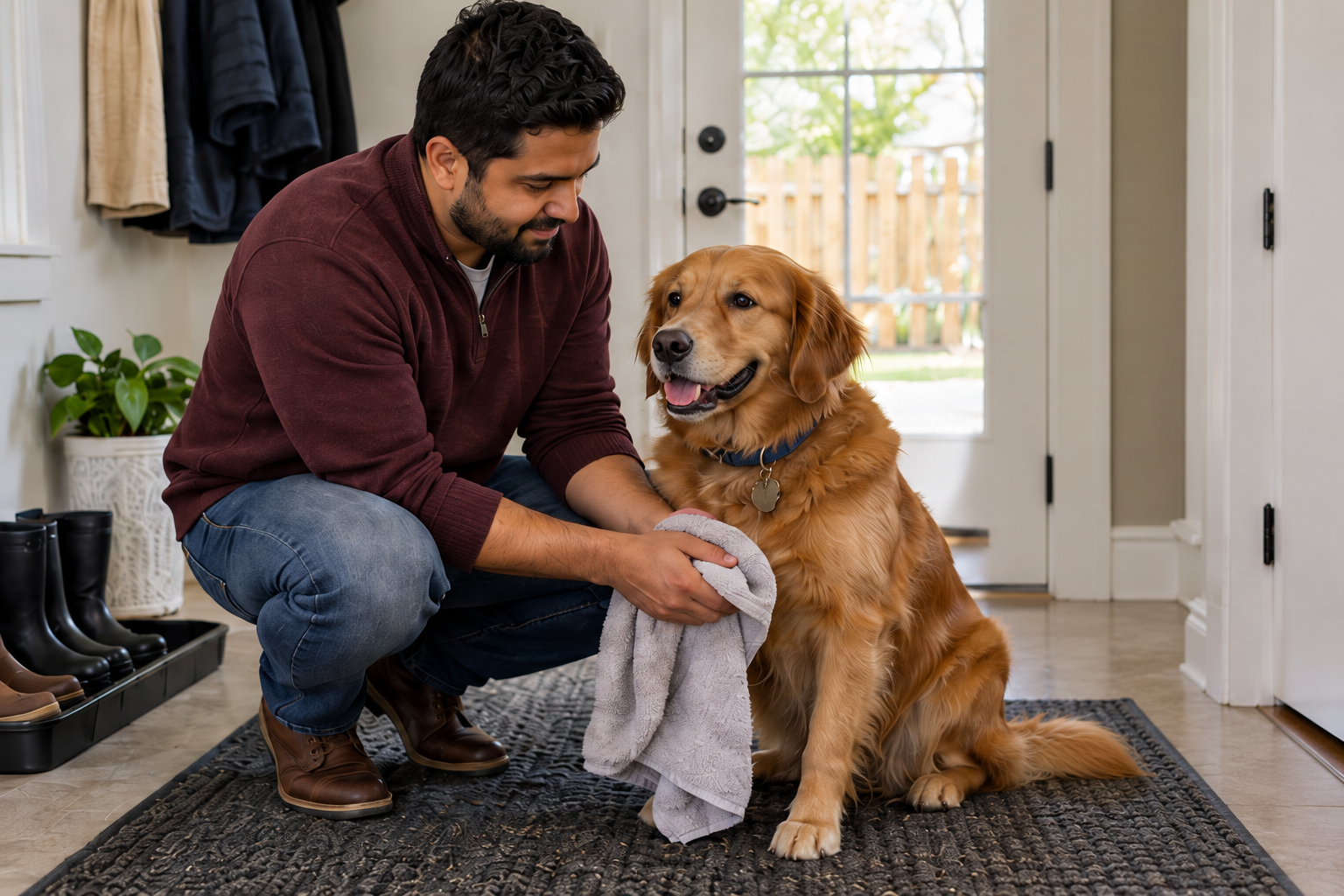
Arlington Heights housing is largely established. CMAP reports roughly 40.5% of units were built in 1970–1989 and 36.3% in 1940–1969. Age alone does not tell you how a surface was finished or renovated. Test an inconspicuous area and use the flooring or fixture manufacturer’s instructions before wet cleaning a wood floor, laminate edge, painted cabinet, countertop, or older tile.
A new homeowner can use the empty period before furniture arrives to inspect cabinet interiors, closets, appliance edges, baseboards, stair corners, and the former pet’s sleeping places. Renters can inspect bathroom grout, carpet edges, closet floors, and behind appliances after getting the keys. A pet owner remaining in the same home should prioritize recurring entry soil and washable reservoirs over a once-a-year whole-home overhaul.
If a lower-level room smells musty, inspect for staining or dampness after rain. Routine pet cleaning may remove tracked soil from an intact, dry floor; it cannot repair a leak, sewer backup, contaminated carpet padding, or active mold. Address the underlying issue first.
The 30-day pet-safe home reset
Short Answer: Week 1 maps the five zones. Week 2 removes air and fabric reservoirs. Week 3 resets entries, floors, and pet supplies. Week 4 assigns the repeatable routine and escalation plan.
Week 1: Walk the pet’s route. Mark the entrance, stair or hall, feeding and sleep areas, accident history, and any lower-level dampness. If moving, do this while rooms are empty.
Week 2: Work high to low. Vacuum edges, upholstery, rugs, and stairs with sealed HEPA filtration; wash compatible covers and dry them completely.
Week 3: Reset mats and compatible hard floors, then bowls, litter edges, pet storage, and washable waste-area surfaces. Remove products without readable labels.
Week 4: Assign daily, weekly, monthly, and seasonal tasks. Track practical results such as less loose hair, cleaner mats, reduced floor film, and fewer odor returns. If this is too much after a full workweek or a move, consider professional deep cleaning for the initial reset and recurring cleaning for maintenance.
When to clean it yourself and when to call someone else
Short Answer: DIY fits small, recent, routine soil when the material and product directions are clear. Broad buildup can justify a cleaner; medical, pest, sewage, and moisture issues belong to their specialists.
Fresh Tech Maid provides residential cleaning in the Chicago area, including Arlington Heights and the northwest suburbs. Ask for a scope that lists pets, species, surfaces, access, and any odors or lower-level concerns. A routine cleaner should not promise veterinary care, pest control, or mold remediation.
Frequently asked questions
What is the safest floor cleaner for dogs and cats?
There is no universal product. Remove dry soil first; use the least aggressive compatible method, follow floor and cleaner labels, and keep pets away until dry. Ask a veterinarian about species-specific concerns.
Is pet hair the same as pet dander?
No. Hair is visible fiber. Dander is skin flakes; allergen proteins also occur in saliva and urine. Fur can carry those materials and outdoor pollen.
How often should I wash pet bedding?
Wash before hair, odor, or dampness builds up. Follow the care label, remove loose fur first, and dry the item fully.
Can I use steam around pets?
Only on a confirmed heat-safe surface with pets away from the work area. Steam can damage adhesives, finishes, laminate edges, or delicate fabrics.
Who should clean the litter box during pregnancy?
Ask another household member when possible and follow current clinician guidance. Daily waste removal and careful handwashing matter.
Why does pet urine smell come back?
Liquid may have reached backing, padding, grout, or wood seams. Treat the full affected layer with a compatible enzyme product; consult a veterinarian for repeated unexplained accidents.
When does pet cleaning become a professional job?
Choose cleaning help for broad buildup or difficult physical work. Use a veterinarian for pet illness, pest expertise for infestations, and building or restoration expertise for recurring dampness or sewage.
A calmer pet home starts with the right first zone
Start with the entry, couch, pet bed, or bedroom this week. For widespread buildup or a move into a pet-friendly property, book a Fresh Tech Maid cleaning with a clear brief about pets, surfaces, and any moisture concerns. Explore deep cleaning or a recurring plan based on the size and frequency of the work.
Get your Arlington Heights pet-safe home cleaning checklist
A printable five-zone audit for entries, bedding, floors, bowls, incidents, and seasonal moisture checks.
Free printable checklist: Mark each zone you can maintain this week.
- Entry: remove grit; wipe paws; wash mat.
- Air and fabric: vacuum edges and pet bed; wash covers.
- Floors: check finish; remove dry soil; let cleaned areas dry.
- Food and waste: wash bowls; scoop litter; clean tools separately.
- Incidents and moisture: identify the source and refer specialist issues.
Learn The Cleaning Company Secrets, Now!